What is the goal of a college education?
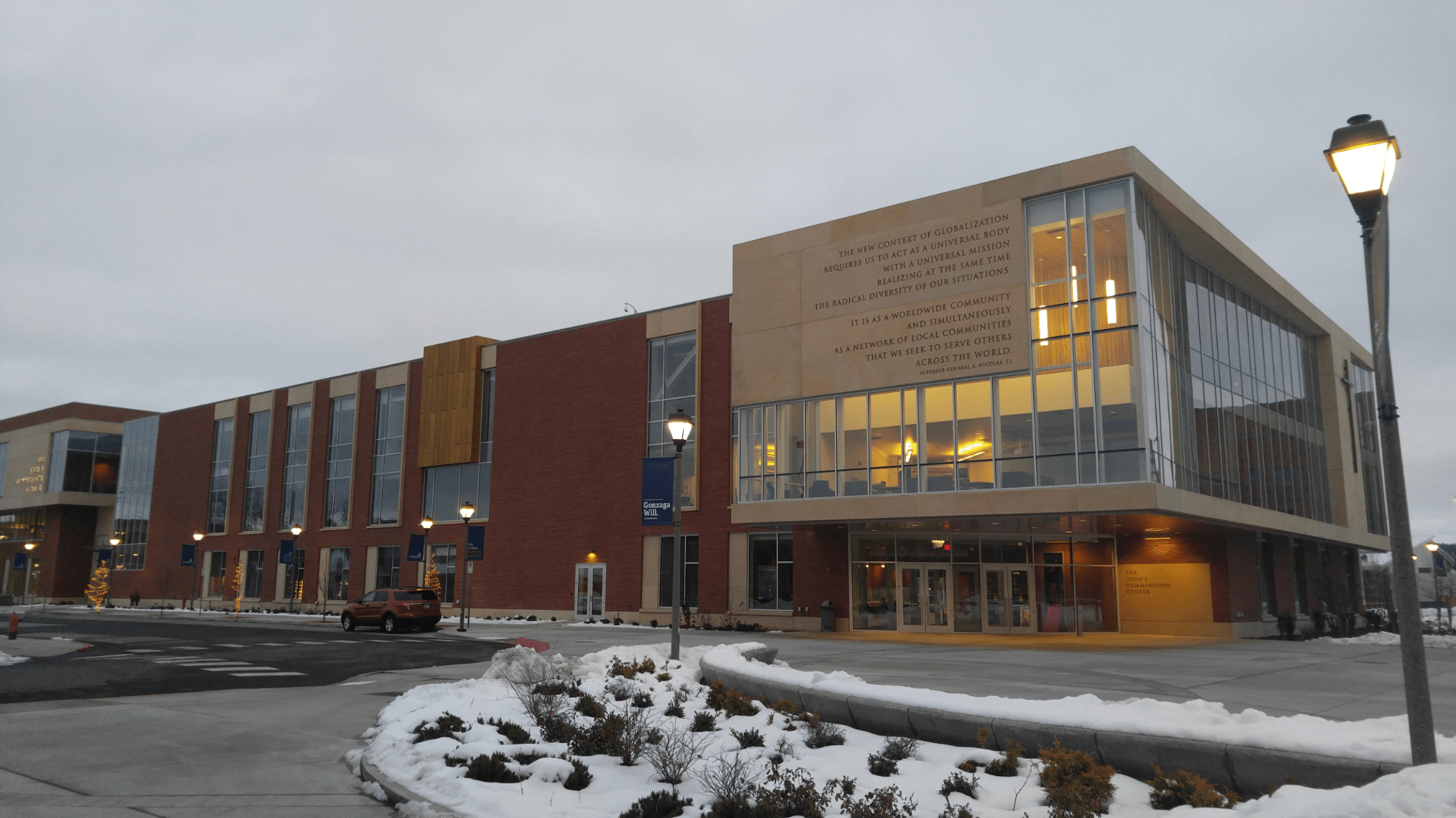
This question has been struck in my mind ever since returning to Gonzaga this semester after studying abroad in the fall.
Over the course of the 2015-16 academic year, 1.8 million students will receive their bachelor’s degree from American colleges and universities. What will they be taking away from the experience, besides a diploma and $29,000 in student debt? On the flip side, millions of high school seniors will commit to attend university in the fall. What do they expect to achieve over the next 4 years of their lives?

Senior year of high school, posing with two years of college mail (Spring 2013)
Going to college shouldn’t be about joining fraternities, going to sports events, or partying with your friends on the weekends. It shouldn’t even be about preparing yourself to get a job. It should be about discovering how to live life to your fullest potential. To do that, you need to ask big questions, take chances, explore various areas of human knowledge, and commit to figure out who you want to be, not necessarily what you want to do. The average college grad today will have 12-15 different jobs over the course of their career, according to the Bureau for Labor Statistics. So rather than trying to identify your “dream job” or “dream career”, what if you were encouraged to used college as a time to clarify your values, learn about the world, and decide how you want to leave your mark on it? In essence, what if college were about finding one’s vocation and place in society rather than one’s job? Frederick Buechner defines this as “the place where your deep gladness and the world’s deep hunger meet.” By committing to find that place, you can make college incredibly meaningful, no matter where you go to school, what you study, or what your grades are.
“you need to ask big questions, take chances, explore various areas of human knowledge, and commit to figure out who you want to be, not necessarily what you want to do.”
Unfortunately, college is not set up to encourage students to do this, and society does a terrible job of promoting vocation-seeking and self-reflection through higher education. Right now, most colleges market themselves as a surefire way to get a job with an established, reputable company. Some schools, like Gonzaga, stress their commitment to a “liberal arts education”, graduating informed, socially conscious students. However, this rhetoric is often not reflected in the classroom. Core classes freshman year emphasize writing, communication, and critical thinking, but they do not provide appropriate space to apply these skills to personal reflection. Unless a student develops a strong personal motivation to engage in self-reflection and look for their vocation, they are not likely to invest the time and effort required. No wonder so many people decide to screw it and just ignore the big questions until they’re faced with their impending graduation senior year!
Overall, higher education is suffering from an existential crisis: as the importance and cost of a college education increases, the social pressure to pursue a lucrative major and get a high paying job after graduation becomes ever more acute. In the face of a “hopeless” situation, where pursuing one’s passion is out of the question, students resort to greater and greater means of escapism in order to cope. What we need is a fundamental shift in higher education that gives students the imperative and the space to pursue their vocations through self-understanding. This is the real way to make college worth the investment.
E.F. Schumacher argues that education without self-reflection is useless:
“Whether the subjects taught are subjects of science or the humanities, if the teaching does not lead to a clarification of metaphysics, that is to say, our fundamental convictions, it cannot educate a man and, consequently, cannot be of real value to society.” (98, Small is Beautiful)
Furthermore, he argues that
“The truly educated man is not a man who knows a bit of everything, not even the man who knows all the details of all subjects (if such a thing were possible)… but he will be truly in touch with [his] centre. He will not be in doubt about his basic convictions, about his view on the meaning and purpose of his life. He may not be able to explain these matters in words, but the conduct of his life will show a certain sureness of touch which stems from his inner clarity.” (100, Small is Beautiful)
– – – – –
I gave a talk to 300 graduating seniors at Jesuit High School last May on “The True Value of College”, and in it I shared this notion tmy belief that the best way to make the most of college was to pursue one’s vocation. The 25 minute talk is now up on YouTube, and whether you’re a current student, educator, parent, mentor, or just someone wondering if pursuing your passion is even possible in this day and age, this talk is for you. I shared five key lessons that have helped me on my journey to make a living and change the world, and they go as follows:
- Seek to understand yourself. Write down what you know.
- Take the leap of faith: Commit to finding your passion
- Talk to university employees and network with the community.
- Use college as an opportunity to find your vocation, not just your job.
- Recognize college is a privilege, not a right or an entitlement.
I will leave you with one final quote from E.F. Schumacher:
“The problems of education are merely reflections of the deepest problems of our age. They cannot be solved by organization, administration, or the expenditure of money, even though the importance of all these is not denied. We are suffering from a metaphysical disease, and the cure must therefore be metaphysical. Education which fails to clarify our central convictions is mere training or indulgence.” (107, Small is Beautiful )
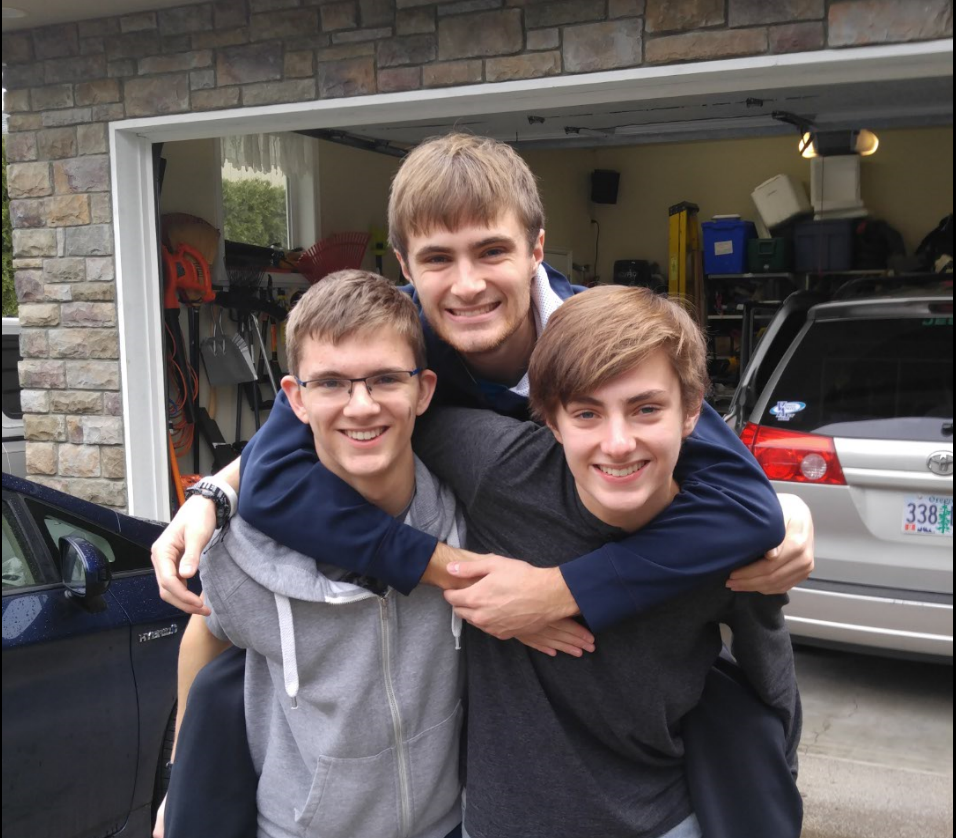
Me with my brothers, Luke (left) and Paul (right) before returning to Gonzaga in January
– – – – –
In my last blog I decided I wanted to share my 10 favorite TED talks of all time. After watching about four hours of TED talks on a dozen issues last Saturday, I realized that one post wouldn’t be enough. So, my plan is to share one or two talks as I write on various themes over the coming months.
Thanks for visiting aarondanowski.com! Leave you comments below, and be sure to stay up to date on my travels by clicking on the “Following” button on the right hand side of your page!
If you would like to contact me directly, please do so via email: adanowski@zagmail.gonzaga.edu


 Aaron Danowski
Great post, Aaron… very thoughtful and well articulated.
LikeLike