November 8th was a wake up call for a lot of people, myself included.  I sat in my apartment in a state of shock as the results came in. Florida. North Carolina. Ohio. Wisconsin. Michigan. Pennsylvania. How could a misogynistic racist, a narcissistic reality television host, a “blue-collar billionaire,” win the US Presidential Election, I asked myself? I didn’t know then, but I think I understand how now.

Quite simply, it boiled down to the fact that Trump represented change. He was a rejection of the corrupt political and corporate elites (like the Clintons) that had stood by and watched as they worked longer hours for lower wages (as my good friend Bernie would say). They grew frustrated at the fact that their children couldn’t do what they had done, e.g. earn a high school degree or get some college education before coming home and getting a blue collar job and raising a family on it. They were tired of feeling inferior to liberal and intellectual elites who saw them as backwards and politically incorrect.

We among that liberal, intellectual class must acknowledge that these feelings and sentiments are valid, but we cannot allow them to be addressed at the expense of the other problems that are facing us today, namely climate change, racial justice, healthcare, and education reform. Rather than just blocking Trump and his administration from doing what they want, we must come up with different ways of addressing both the issues that his electorate voted on and the issues that we hold dear.

I’ve become convinced over the last few months that the best way to do that is by looking to indigenous communities for a different way of thinking about governance and economic activity. Stepping away from the Republican “liberty” message or the Democratic “justice” narrative, a third-way political movement might center itself around the concept of indigenous “interconnectedness.” If we start by acknowledging that my wellbeing is integrally linked not only to your wellbeing, but to the wellbeing of every person I see or interact with in our community, then the central role of governance becomes one of ensuring each person has what they need to be happy. Not only that, but by starting from a position of interconnectedness, it quickly becomes apparent that my wellbeing is also tied to the health of the ecosystem that we all live in, and to planet that we all share. Interconnectedness lays the foundation for a different way of thinking about politics, one which rejects the notion that it is “every man for himself” and instead says “we’re all here for each other.”

capture8

capture9

We need a new societal narrative that reinforces the idea that we are all interconnected, to each other and to all of the various lifeforms that populate our environments. This narrative exists among indigenous communities such as the Haudenosaunee, made up of the Mohawks, Oneidas, Onondagas, Cayugas, and Senecas of  Upstate New York (also known as the Iroquois Confederacy).

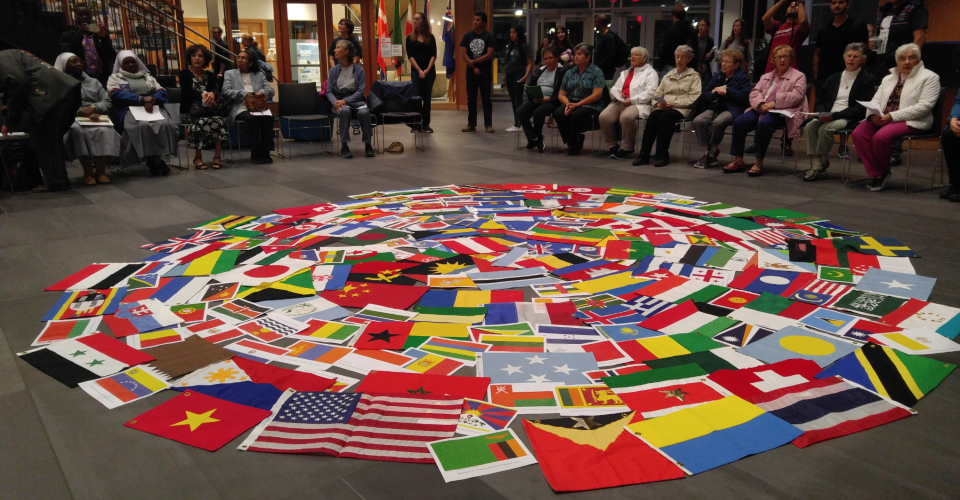
In Haudenosaunee society there is something called “The Thanksgiving Address” which is recited at the outset of all social, political, and religious meetings. It is an acknowledgement of all of the gifts that people, animals, and elements of nature provide to one another as members of the community. “The Thanksgiving Address” has been translated into over 40 languages, and when the native writer Robin Wall Kimmerer asked Onandaga Faithkeeper Oren Lyons for permission to write about the Thanksgiving Address, he responded by saying “Of course you should write about it. It’s supposed to be shared, otherwise how can it work? We’ve been waiting five hundred years for people to liste. If they’d understood the Thanksgiving then, we wouldn’t be in this mess.” I’ll take that message to heart and share the full Address below. The  English translation I am using was translated and published by John Stokes and Kanawahienton, a member of the Mohawk nation, in 1993. it is quite long, but I feel it is important to include it in its entirety:

Haudenosaunee Thanksgiving Address:

The People

Today we have gathered and we see that the cycles of life continue. We have been given he duty to live in balance and harmony with each other and all living things. So now, we bring our minds together as one as we give greetings and thanks to each other as people.
Now our minds are one.

The Earth Mother

We are all thankful to our Mother, the Earth, for she gives us all that we need for life. She supports our feet as we walk about upon her. It gives us joy that she continues to care for us as she has from the beginning of time. To our mother, we send greetings and thanks.
Now our minds are one.

The Waters

We give thanks to all the waters of the world for quenching our thirst and providing us with strength. Water is life. We know its power in many forms‐waterfalls and rain, mists and streams, rivers and oceans. With one mind, we send greetings and thanks to the spirit of Water.
Now our minds are one.

The Fish

We turn our minds to the all the Fish life in the water. They were instructed to cleanse and purify the water. They also give themselves to us as food. We are grateful that we can still find pure water. So, we turn now to the Fish and send our greetings and thanks.
Now our minds are one.

The Plants

Now we turn toward the vast fields of Plant life. As far as the eye can see, the Plants grow, working many wonders. They sustain many life forms. With our minds gathered together, we give thanks and look forward to seeing Plant life for many generations to come.
Now our minds are one.

The Food Plants

With one mind, we turn to honor and thank all the Food Plants we harvest from the garden. Since the beginning of time, the grains, vegetables, beans and berries have helped the people survive. Many other living things draw strength from them too. We gather all the Plant Foods together as one and send them a greeting of thanks.
Now our minds are one.

The Medicine Herbs

Now we turn to all the Medicine herbs of the world. From the beginning they were instructed to take away sickness. They are always waiting and ready to heal us. We are happy there are still among us those special few who remember how to use these plants for healing. With one mind, we send greetings and thanks to the Medicines and to the keepers of the Medicines.
Now our minds are one.

The Animals

We gather our minds together to send greetings and thanks to all the Animal life in the world. They have many things to teach us as people. We are honored by them when they give up their lives so we may use their bodies as food for our people. We see them near our homes and in the deep forests. We are glad they are still here and we hope that it will always be so.
Now our minds are one

The Trees

We now turn our thoughts to the Trees. The Earth has many families of Trees who have their own instructions and uses. Some provide us with shelter and shade, others with fruit, beauty and other useful things. Many people of the world use a Tree as a symbol of peace and strength. With one mind, we greet and thank the Tree life.
Now our minds are one.

The Birds

We put our minds together as one and thank all the Birds who move and fly about over our heads. The Creator gave them beautiful songs. Each day they remind us to enjoy and appreciate life. The Eagle was chosen to be their leader. To all the Birds‐from the smallest to the largest‐we send our joyful greetings and thanks.
Now our minds are one.

The Four Winds

We are all thankful to the powers we know as the Four Winds. We hear their voices in the moving air as they refresh us and purify the air we breathe. They help us to bring the change of seasons. From the four directions they come, bringing us messages and giving us strength. With one mind, we send our greetings and thanks to the Four Winds.
Now our minds are one.

The Thunderers

Now we turn to the west where our grandfathers, the Thunder Beings, live. With lightning and thundering voices, they bring with them the water that renews life. We are thankful that they keep those evil things made by Okwiseres underground. We bring our minds together as one to send greetings and thanks to our Grandfathers, the Thunderers.
Now our minds are one.

The Sun

We now send greetings and thanks to our eldest Brother, the Sun. Each day without fail he travels the sky from east to west, bringing the light of a new day. He is the source of all the fires of life. With one mind, we send greetings and thanks to our Brother, the Sun.
Now our minds are one.

Grandmother Moon

We put our minds together to give thanks to our oldest Grandmother, the Moon, who lights the night‐time sky. She is the leader of woman all over the world, and she governs the movement of the ocean tides. By her changing face we measure time, and it is the Moon who watches over the arrival of children here on Earth. With one mind, we send greetings and thanks to our Grandmother, the Moon.
Now our minds are one.

The Stars

We give thanks to the Stars who are spread across the sky like jewelry. We see them in the night, helping the Moon to light the darkness and bringing dew to the gardens and growing things. When we travel at night, they guide us home. With our minds gathered together as one, we send greetings and thanks to the Stars.
Now our minds are one.

The Enlightened Teachers

We gather our minds to greet and thank the enlightened Teachers who have come to help throughout the ages. When we forget how to live in harmony, they remind us of the way we were instructed to live as people. With one mind, we send greetings and thanks to these caring teachers.
Now our minds are one.

The Creator

Now we turn our thoughts to the creator, or Great Spirit, and send greetings and thanks for all the gifts of Creation. Everything we need to live a good life is here on this Mother Earth. For all the love that is still around us, we gather our minds together as one and send our choicest words of greetings and thanks to the Creator.
Now our minds are one.

Closing Words

We have now arrived at the place where we end our words. Of all the things we have named, it was not our intention to leave anything out. If something was forgotten, we leave it to each individual to send such greetings and thanks in their own way.
Now our minds are one.

Among the Haudenosaunee, it is not uncommon for people to recite the Address at daybreak, and it sets the tone for all of their interactions during the rest of the day. At the Onondaga Nation School, the Address is recited by children before  class each day. By acknowledging the interconnectedness of all beings from such a young age, the members of the Haudenosaunee see the world differently than those children that only grow up saying the Pledge of Allegiance. As Robin Wall Kimmerer writes in her book Braiding Sweetgrass: Indigenous Wisdom, Scientific Knowledge, and the Teachings of Plants:

“Freida Jacques works at the Onondaga Nation School. She is a clan mother, the school-community liaison, and a generous teacher. She explains to me that the Thanksgiving Address embodies the Onondaga relationship with the world. Each part of Creation is thanked in turn for fulfilling its Creator-given duty to the others. ‘It reminds you every day that you have enough,’ she says. ‘More than enough. Everything needed to sustain life is already here. When we do this, every day, it leads us to an outlook of contentment and respect for all of Creation…. The oratory is more than an economic model; it’s a civics lesson too. Freida emphasizes that hearing the Thanksgiving Address every day lifts up models of leadership for young people: the strawberry as leader of the berries, the eagle as leader of the birds. ‘It reminds them that much is expected of them eventually. It says this is what it means to be a good leader, to have vision, and to be generous, to sacrifice on behalf of the people. Like the maple, leaders are the first to offer their gifts.’ It reminds the whole community that leadership is rooted not in power and authority, but in service and wisdom. (111-112)

Capture5


In addition, she writes that “The Haudenosaunee have been recognized for centuries as masters of negotiation… Not surprisingly, Haudenosaunee decision-making proceeds from consensus, not by a vote of the majority. A decision is made only ‘when our minds are one.’ These words are a brilliant political preamble to negotiations, strong medicine for soothing partisan fervor. Imagine if our government meetings began with the Thanksgiving Address. What if our leaders first found common ground before fighting over differences?” (113)

Can you imagine how differently we would look at the world if we lived by the Thanksgiving Address? I believe such indigenous wisdom is exactly the kind of thing we need to pave a “third-way” political movement in the United States that will restore our connection and duty to one another, clarify our responsibility to the Earth, and guide our political and economic systems in the 21st century. The Haudenosaunee have been successfully governing themselves using the principles of the Thanksgiving Address invoked by the Iroquois Constitution since the 16th century, and that unwritten democratic document was one of the main influences on the framers of the US Constitution. Perhaps, in some small way, integrating the Thanksgiving Address into our way of governing would complete the job the Founders began.

So the next time you get angry at the way things are going in the Age of Trump, remember the Thanksgiving Address, maybe even print off a copy for yourself, and return to work illuminating a new way forward based on interconnectedness, not divisiveness, hate, or intolerance.

– – – – –

Thanks for visiting aarondanowski.com! Leave you comments below, and be sure to stay up to date on my travels by clicking on the “Following” button on the right hand side of your page!

If you would like to contact me directly, please do so via email: adanowski@zagmail.gonzaga.edu

On my journey to discover my calling and to change the world, I’ve realized that oftentimes I can’t explain why I feel so compelled to work for change. If someone inquires, I usually tell them I have a deep sense of empathy for the downcast and the oppressed, probably instilled in me by my lifelong Christian faith and my Jesuit education infused with social justice. As I’ve grown more familiar with the environmental movement in recent months, I think I’ve found a way to articulate my motivation more clearly by describing how I achieve fulfillment and wellbeing versus how society tells me I can achieve wellbeing. In the deepest fibers of my being, I believe that my wellbeing is tied to the wellbeing of not only my friends and family, but of everyone on the planet, as well as the planet itself. I feel connected to everyone, intimately related to every animal, and inextricably linked to nature itself. When a forest is clear-cut, when a species goes extinct, or when my actions (including my purchases) result in the harm or exploitation of a fellow human being, I feel like I am in a way inflicting self-harm and committing spiritual suicide.

Unfortunately, the modern world that surrounds me tells me that I am crazy for feeling this way. It labels people like me “eco-freaks,” “hippies,” and “social justice warriors,” all things which are seen as moderately derogatory. Instead of telling me everything is interconnected, modern society tells me that I am separate from every other human being, and completely separate from nature. It tells me the Earth is full of resources that I ought to harness and bend to my will, not gifts and miracles that I ought to revere as sacred. It tells me that I must compete with other people in order to earn money, gain power, or achieve status. And it tells me that only by acting out of self-interest can I protect myself from being deceived, conned, and taken advantage of. Everything society tells me hinges on my willingness to accept that I am an individual, and that self-interest and competition are the name of the game. Anyone who believes or acts differently is merely kidding themselves.

– – – – –

It hasn’t always been like this. In fact, for most of human history humanity recognized its deep connection to ourselves and the natural world around us. In many traditional cultures, concepts of a deep spiritual connection between humans and a deep bond with the wider world are commonplace. As Thomas Berry describes in his book “The Dream of the Earth,” “Our relationships with the earth [must] involve something more than pragmatic use, academic understanding, or aesthetic appreciation. A truly human intimacy with the earth and with the entire natural world is needed…. Such intimacy with the universe we find with the Omaha Indians. When a child is born, the Omaha declare its newborn presence to the entire universe. First they address the sun, the moon, the stars, and every being that moves in the heavens, declaring: ‘In your midst has come a new life. Consent ye, we implore! Make its path smooth, that it may reach the brow if the first hill.’ Then to the atmospheric world, to the winds, clouds, rain, mist, and all that moves in the air. Then to the hills, valleys, rivers, lakes, trees, and grasses. Finally, ‘Ye birds, great and small, that fly through the air. Ye animals, great and small, that dwell in the forest. Ye insects that creep among the grasses and burrow in the ground, I beg ye all to hear me. Consent ye, we implore! Make its path smooth. Then shall it travel beyond the four hills.’” (p 13-14)

Another beautiful passage from Berry’s book explains that “There is need for a great courtesy toward the earth. Such courtesy we might learn from the Iroquois. Their thanksgiving ritual is one of the most superb ceremonies that humans have ever known. Too long to present in its entirety, it does have a refrain that is relevant here: ‘We return thanks’ – first to our mother, the earth, which sustains us, then on to the rivers and streams, to the herbs, to the corn and beans and squashes, to bushes and trees, to the wind, to the moon and stars, to the sun, and finally to the Great Spirit who directs all things. To experience the universe with such sensitivity and such gratitude! These are primary experiences of an awakening human consciousness. “ (p 14)

All across Sub-Saharan Africa, the concept that human beings are all family and that we share a deep spiritual bond with one another type is referred to as Ubuntu.  As one of my favorite professors at Gonzaga, Fr. Patrick Baraza, puts it, the concept of Ubuntu can be explained by the phrase “I am because we are,” or “A person is a person through other people.” Ubuntu is the very essence of collaboration and cooperation, and the very opposite of competition. It is the fundamental recognition of the duty and responsibility each person has to assure that the people around them are taken care of and respected. As Archbishop Desmond Tutu writes in his book “No Future Without Forgiveness,” “Ubuntu… speaks of the very essence of being human…. A person with Ubuntu is open and available to others, affirming of others, does not feel threatened that others are able and good, for he or she has a proper self-assurance that comes from knowing that he or she belongs in a greater whole and is diminished when others are humiliated or diminished, when others are tortured or oppressed, or treated as if they were less than who they are.”

The belief that the wellbeing of all living things are connected is shared by the cultural philosophies of the Omaha, the Iroquois, and traditional African communities across the continent. These philosophies resonate with our most authentic self, beneath the layers of cultural conditioning that we have been subjected to. Those of us who feel estranged from nature and each other in this modern world yearn for this cultural philosophy to permeate our everyday lives.

– – – – –

How did we stray away from these ancient concepts of interconnectedness and oneness with nature? Is there any hope of overcoming the self-interest omnipresent in modern society and return to a more communal notion of human existence and oneness with the earth?

To answer these questions, I find it necessary to understand the origins of self-interest and estrangement from nature, specifically in the historical roots of American capitalism and consumerism. When Adam Smith published his book The Wealth of Nations in 1776, he explained that individuals  pursuing their own self-interest in a capitalist society unconsciously serve the benefit of society as a whole. Self-interested producers, he argued, will make the things that people will pay a premium to obtain, thus guaranteeing them a hefty profit for every item sold. As a result, society benefits because the unmet needs of consumers are met by the self-interested producers. When this theory is played out in real life, however, there is one  major problem: although the needs of individuals are generally met, producers become greedy and seek out ways to obtain more  money from consumers. This can include colluding with competitors or creating monopolies to drive up the prices of goods artificially and earn more profit for themselves. By the late 1800s, American society found itself being run by industrialists amassing huge fortunes through monopolistic or flat-out unethical business practices, such as John D. Rockefeller (Standard Oil), Andrew Carnegie (Carnegie Steel), J.P. Morgan (banking), Leland Stanford (railroads), and Henry Ford (cars). Historians would later call this period the “Robber Barron Age.”

At the turn of the 19oos, powerful industrialists and  big business owners started looking for ways to increase consumers demand for products themselves. Business owners had created the infrastructure to produce massive amounts of products, but there was no way of guaranteeing there would be enough customers to buy them… unless they took drastic measures to create demand where there otherwise wouldn’t be. In a 1927 article in the Harvard Business Review, the banker Paul Mazur of Lehman Brothers described the situation by saying that “We must shift America from a needs, to a desires culture. People must be trained to desire, to want new things even before the old had been entirely consumed. We must shape a new mentality in America. Man’s desires must overshadow his needs.”

America was turned from a needs to a desires culture by Edward Bernays, the nephew of Sigmund Freud, who developed the field of public relations in the 1920s to create public desire for specific products. Bernays had previously served on the Committee on Public Information during World War I, which had been in charge of creating propaganda support the war effort. When Bernays attended the Paris Peace Conference with President Woodrow Wilson in 1919, he was shocked to see how effective their message had been: the crowds that greeted him and the President showered them with adulation and hailed them as heroes. Upon his return to the US, he set out to make his fortune by implementing this same technique for manipulating public perception in the corporate world, mainly by using his uncle’s study of psychoanalysis to pair products with people’s deep, unmet desire for power, acceptance, beauty, and so on. By 1927, public relations had become deeply engrained in the business world, so much so that one journalist wrote “A change has come over our democracy, it is called consumptionism. The American citizens first importance to his country is now no longer that of citizen, but that of consumer.”

– – – – –

The role of the individual and the ideology of big business was repressed for much of the period between the 1930s-1960s, due in part to business’ role in precipitating the Great Depression.  However, big business and self-interest began to re-emerge in the 1970s. Why then? Several right wing policy think tanks, including the Heritage Foundation, the Cato Foundation, and the American Enterprise Institute, actively shifting the public discourse away from the necessity of government and towards the possibilities deregulated businesses could provide for personal wealth generation and short term economic growth. Ronald Reagan and Margaret Thatcher rose to power in the 1980s, relying heavily on reports issued by these right-wing think tanks as well as the free-market ideologies developed by economists Friedrich von Hayek and Milton Friedman. They ushered in an era of small government, deregulation, and privatization that allowed big businesses and multinational corporations (MNCs) to thrive, a philosophical movement referred to as “neoliberalism.” Communities driven by powerful communal philosophies such as the Omaha, the Iroquois, and traditional African communities are seen as threats to the neoliberal paradigm, and as such they are pressured to comply with the dominant ideology rather than express their own. 

– – – – –

So, is there any hope of restructuring society around a fundamental principle of human interconnectedness and oneness with the earth? Yes! It starts by choosing to actively oppose society by changing our personal behavior, beginning with adjusting what we buy, how much we buy, and what we talk about with those close to us. It involves taking part in social action and joining interest groups opposing the destruction of nature, the extinction of species, and the harm or exploitation of fellow human beings. It means making space for indigenous communities to speak truth and wisdom into our broken society. And it means being unafraid to confront the fact that we need to open ourselves up to each other, to collaborate and love each other and grieve over the self-inflicted harm being done to us by our society.

Conventional wisdom tells us that we are foolish if we believe that cooperation is fruitful, that we only make ourselves vulnerable to pain and loss. However, our guttural instinct tells us something different. It tells us that the world is interconnected, and that our perceived individuality is an illusion make popular by our culture. It tells us that the only way to truly harm ourselves and our planet is to refuse to cooperate, and instead simply go about pursuing our own self-interest. And if we really listen closely, it tells us that we cannot be truly human unless we work to heal our broken relationships with each other, wildlife, and our planet. We all have to choose whether or not to heed this voice. What will you choose?

– – – – –

Thanks for visiting aarondanowski.com! Leave you comments below, and be sure to stay up to date on my travels by clicking on the “Following” button on the right hand side of your page!

If you would like to contact me directly, please do so via email: adanowski@zagmail.gonzaga.edu

For more on the history of PR and consumerism in the US and the UK, watch the BBC documentary series “The Century of the Self”, by Adam Curtis

Over the last two weeks, the world witnessed the largest coordinated act of civil disobedience against the fossil fuel industry in history. Over 30,000 people across six different continents took part in the “Break Free” movement, which is calling for “the rapid, just transition from the fossil fuel economy of the past to the 100% renewable and clean energy future that climate justice demands.” This movement manifested itself through acts of civil disobedience and mass protests at twenty epicenters around the world. For example, over 2000 protesters in Newcastle, Australia shut down the  world’s largest coal port on May 8th:

In Germany, 3000 people from all over Europe shut down the Vattenfall coal mine in Lusatia over three days of action May 13th-15th:

On May 4th, 10,000 people marched in Batangas City in the Philippines demanding the cancellation of plans to build a 600 megawatt coal plant in the area. Thousands protested against fracking in the state of Parana, Brazil on May 9th, and other “Break Free” actions took place across Nigeria, South Africa, Indonesia, Turkey, and the US.

Via:breakfree2016.org

Via: breakfree2016.org


Via: breakfree2016.org

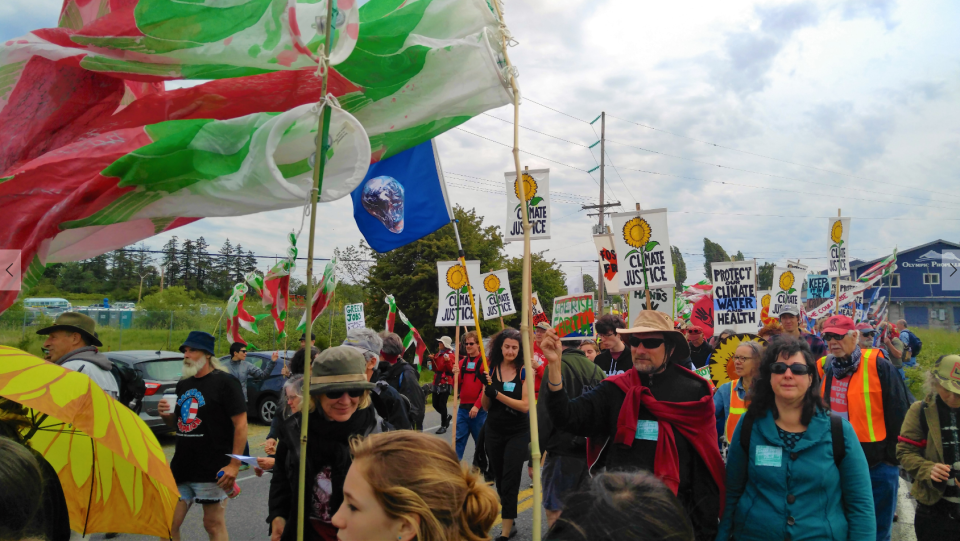
I was lucky enough to participate in this historic movement right by travelling up to Anacortes, Washington from May 13th-15th to join hundreds of activists from across the region to protest outside the Shell and Tesoro oil refineries in Anacortes. These two refineries represent the largest source of carbon emissions in the region, and combined they supply 47% of the fuel used in the Pacific Northwest. Hundreds of us participated in an Indigenous Day of Action, marching three miles calling for a just transition from fossil fuels to renewable energy, as well as an increased ability for Native Americans to preserve their heritage and practice their traditional way of life. The land the refineries are built on belongs to the Samamish people, and powerful community symbols such as the clams and crabs that live in the area have become too toxic to eat, thanks to the pollution emitted by the refineries 24 hours  day, 7 days a week, 365 days a year. The march was intended to be a show of solidarity for the indigenous communities  that are struggling to have their rights respected by profit-hungry companies like Shell and Tesoro.

This slideshow requires JavaScript.

Several dozen protesters were arrested at a separate event on Sunday, when they blockaded the railroad tracks that oil trains use to reach the refinery, but I decided not to participate in that. Nonetheless, I felt privileged for having had the chance to participate in this event, and for being surrounded by hundreds of passionate, dedicated climate activists, young and old. 

As news of other Break Free events worldwide trickled into the group, and as the activities wrapped up on Sunday after the police crackdown on the railroad blockade, I was reminded that we are all engaged in a common struggle. The issues the climate justice movement in the US are fighting against are the same ones that groups are facing worldwide. Corporate power and capitalist profit-seeking is hurting indigenous, marginalized communities in Cameroon, India, Washington State, and beyond. Extractive industries such as coal, oil, and gas are creating harmful amounts of pollution in North Dakota and Pennsylvania, just the same as they are in Nigeria, Australia, and Indonesia. And ultimate, the biggest takeaway from the weekend was just how much we have to learn from indigenous communities who have successfully lived  in harmony with nature for millenia. I wrote the following in my journal Saturday night:

“The indigenous flute player at dinner tonight told a story about his grandmother, when his mom was little, going down to the river before her kids took a bath, placing her hands in the current, and praying the following prayer: ‘O sacred water, we have not come to desecrate you. We ask you to give us your strength and to keep us well and strong. We honor you.’… Imagine how different our world would be if we approached the mundane activities in our lives with such reverence, intentionality, and recognition of the inherent value of nature. This is the complete antithesis of using seven million gallons of water to frack an oil well in North Dakota, transporting it to Oklahoma, pumping it into underground storage tanks, and coping with the multitude of earthquakes that is the result… Lord help us, we know not what we do.”

Ultimately, the only way to address the issue of climate justice is to humble ourselves and learn from the wisdom of those we have exploited for so long: indigenous people and women. If we are able to do that, we can create a transnational global people’s movement that can save our planet from the extractivist, dominator complex our society has embraced since the Age of Exploration 400 years ago.

– – – – –

There’s just one big problem impeding us from reaching this global consensus: While the issue of global warming and climate justice is seen as a very serious issue in some places, especially by indigenous communities and citizens in the Global South, it is still seen as a fringe issue here in the US and in the Global North. The North-South divide on this issue is painted quite clearly in the Pew Research Center’s 2015 Global Attitudes survey, which asked 45,435 people across 40 countries to rate their level of  concern about the personal toll climate change would have on them. The average level concern was found to be much greater in developing countries than in industrial, developed countries:

Concern about Personal Toll of Climate Change Greatest in Latin America

Why such a big difference? Part of the difference may boil down to the fact that people only consider the direct impact of climate change on them, rather than the indirect impact it may have. This means places where a greater percentage of their population works in agriculture, such as Brazil (15.7%), Peru (25.8%), Kenya (75%), and Uganda (82%) are more likely to consider themselves at greater risk of being directly affected by changing weather patterns. Conversely, people living in more service-based economies where less people work in agriculture are less likely to be directly affected by weather pattern changes. This includes places like the US (0.7%), the United Kingdom (1.3%), and Australia (3.6%) (Percentages from the CIA World Factbook).

Ultimately, however, citizens in service-based economies ought to be just as concerned as people in agriculture-based economies, since the indirect impacts of climate change on their lives promise to be incredibly severe. For one, people in service based economies buy food that is grown internationally and imported. In addition, much of the agriculture in service-based economies is highly industrialized, which means it relies more heavily on fossil fuels and chemical fertilizers than less industrialized, subsistence farming in the Global South. This means that, as the world warms up and as countries begin to take action to decrease their carbon emissions, developed countries will be required to rethink the way they approach agriculture, which will drastically affect all citizens living in these countries.

Ultimately, I think most people in developed countries are in denial. If the climate is indeed warming, and if human beings are deemed to be the main culprit, then a person in the US has more to lose than a subsistence farmer in rural Uganda or Peru. Energy- and carbon-intensive lifestyles will quickly become impossible to maintain if serious efforts are taken to mitigate climate change and transition away from fossil fuels. People will be forced to live in smaller houses that use less energy, or in more concentrated urban apartments that require less travel to get places. Public transit will need to replace automobile culture, energy usage could be rationed, especially during peak consumption times in the evenings and during the summer (air conditioning) months. Local, seasonal foods would be available at local supermarkets/ farmers markets, not the panacea of exotic fruits and vegetables available in Safeway and Walmart year round. In addition, meat consumption would need to drop considerably in order to maximize the productivity of farmland for human consumption. All of these changes in lifestyle provide plenty of reasons for the average US citizen to want to believe climate change isn’t real, that it isn’t a serious problem, or at least that it won’t affect them personally.

I believe it’s only a matter of time before everyone starts waking up to the reality that climate change will affect them personally. But it’s up to the climate justice movement and those who are already being affected, like the Indigenous communities in Anacortes and around the world, to make their voices heard and sound the alarm.

– – – – –

A few days before I went up to Anacortes, I stumbled across a very insightful documentary called “Do The Math“, sponsored by the environmental group 350.org. In it, 350’s founder and one of the leading environmentalists in the world, Bill McKibben, says the following:

“Like most people, I’m not an activist by nature. There’s really not that many people whose greatest desire is to go out and fight the system … I’ve been forced to go against my sense of who I [am] … It seems like it’s what’s required now and I think it’s required in an awful lot of us; do things that are a little hard for us, make a little noise, be a little uncomfortable. Push other people to be a little uncomfortable. This is really the fight of our time.”

That passage really spoke to me. I’ve gradually come to the realization that, like it or not, my travels and experiences abroad have opened my eyes to economic, social, and environmental injustices that are committed every day in the name of preserving the status quo. And more and more, my conscience is compelling me to go against what I am comfortable doing and stand up to actively counter these injustices. I’ve seen the real effects of neocolonialism in Cameroon and the imperial tendencies of the US, the false promises of aid and development in places like Haiti and Sub-Saharan Africa, and the ugly truths of caste discrimination and racism in places like India and the US. All of these issues call for activists and passionate leaders to right these wrongs, but ultimately I believe all of these issues intersect in the climate justice movement. If we don’t come together to fight for our planet, if we don’t come to terms with the fact that climate change is the result of four hundred years of domination-mentality, manifested through capitalism, colonialism, and oppression, we might not have a future on this planet very much longer.

Luckily, there are millions of people coming to that same conclusion, and the time is now for all of us to stand up and begin the process of healing the earth, mending our cultures, and acknowledging our societal mistakes. As Bill McKibben says, now’s the time to “make a little noise” and “be a little uncomfortable”, because we truly are in “the fight of our time.”

– – – – –

Thanks for visiting aarondanowski.com! Leave you comments below, and be sure to stay up to date on my travels by clicking on the “Following” button on the right hand side of your page!

If you would like to contact me directly, please do so via email: adanowski@zagmail.gonzaga.edu


“Not again,” I think to myself, desperately trying to shake the thought out of my head before it takes hold. Too late. For the tenth time this week, I am thrown back in time and land with a thud, picking myself up in the dusty streets of Haiti or Cameroon. What happens next is a little different each time. Sometimes its pulling water up from the well behind the house in order to take a shower. Other times it’s just walking down the street and greeting people in French, admiring the vibrant colors in people’s clothing. Still other times it’s hopping into the flatbed of Rebuild Globally’s silver pickup truck and absorbing the sights, sounds and smells of Port-au-Prince as we pull out of the workshop and merge into mid-afternoon traffic.

“Not again…”

– – – – –

It’s been over two months since I finished up my world travel marathon to Haiti and Cameroon, and yet, if you stepped inside my head, you might think I just got home yesterday. For two months, I’ve sought to stay busy, throwing myself into re-establishing friendships, taking 24 credits of classes, applying for scholarships and researching internships… anything to keep my mind off the fact that I am back in the US, and no matter where I go, this will always be my world.

The thing is, nothing can prepare you for this. Returning home and reconciling yourself to the world you once inhabited is no cakewalk. You are different, and although you may be surrounded by encouraging family and friends, you have to undertake this journey by yourself. What’s more, its not something that will wear off without putting in significant effort. You can ignore it, for a time, but it always catches up to you, oftentimes in the most inopportune times and places. Sure, it helps to stay busy, but that merely delays the inevitable.

This past week I finally broke down. For the first time since coming back, I ran out of things to distract me, and I had to face the hard fact that I am living in a reality I can barely call my own anymore.

– – – – –

The problem is, my experiences in Haiti and Cameroon feel completely disconnected from my life back here in the US. I feel disoriented, as if part of me never left while other parts of me feel like they never quite made it back. Trying to gather these disparate parts of myself is exhausting, and oftentimes it feels like an exercise in futility. My mind can’t wrap itself around the wholeness of my experiences in Haiti, Cameroon, and the US simultaneously… one always crowds out the others. And now that I am back in the US, my ability to preserve the intensity and omnipresence of those other parts is giving way. That scares me. I fear they will evaporate slowly, and one day they will vanish indefinitely into the darkness of forgotten memory, leaving me to act like nothing ever happened. Perhaps this is irrational, but I feel like I’m trying to hold sand in my hands, helplessly watching it slip through the cracks when I’m not paying attention.

I don’t want to re-assimilate back here in the US, because doing so threatens to minimize these experiences, and there are important lessons I learned in Haiti and Cameroon that have shaped the way I am. Not only that, but these lessons fly in the face of everything that I’ve learned here at home, and I hate being immersed in an environment that (by and large) doesn’t understand these parts of myself.

That is why when people ask me if its good to be back, I have a difficult time answering them. Spending time with family and friends, taking warm showers, and savoring the taste of clean tap water and the fresh chill of a cold winter day are all quite nice. But on the other hand, there are aspects of being back that I dread. I hate the unstated assumption that the “American Way” is the best way. I find it frustrating that we are told to be individualist and materialist by thousands of ads and marketing messages every day. I don’t like talking to people about surface level things like food, sports teams, and celebrities. And more often than not I tend to sit quietly and contemplate everything I no longer take for granted as people complain the internet is too slow or that traffic is bad.

But perhaps most of all, I get angry thinking about the human cost of maintaining our high-flying American culture. Business and government officials wheel-and-deal around the world in order to protect our interests abroad. We brazenly defend our military interventionist policies by spouting rhetoric about democracy and freedom. And we assume that whatever is good for America is, by extension, good for the world, because without America, the world would be in deep trouble. We need to stop kidding ourselves. We’re not “The greatest nation on earth”; we’re just “The biggest bully on the block”, and we mistake people’s desire to come to America as tacit approval of our modus-operandi, instead of what it really is: a self-interested desire to be on the winning side of a rigged geopolitical game.

Some people might say I’m being pretty harsh and ungrateful for the opportunities I’ve received. To them I say this: I am thankful for the opportunities I have been given, but I am ashamed of what it means to be an American, and I think we need to get to work fixing it. We claim that “might makes right”, and that it’s our right therefore to determine what is best for the world. We allow multinational companies to exploit, pillage, and plunder underdeveloped countries by politically strong-arming their leaders, and then we throw them pennies with development aid that indebts them and enriches American contractors. We ensuring our self-interest above all else, without realizing that this strategy isn’t in our best interest long term. In many discussions I had with people in Cameroon, America stood for individualism and excess, not freedom and democracy. I don’t think I’m wrong for thinking we need to change that.

– – – – –

As I was thinking about this last night and stressing myself out, I picked up Confessions of An Economic Hitman by John Perkins and I flipped to one of my favorite passages in the book to ease my mind. It’s 1971, and John is speaking with a group of Indonesian college students in a coffeehouse in Bandung about how they perceive America, and what can be done to change it:

“The English major looked me directly in the eyes. ‘Stop being so greedy,’ she said, ‘and so selfish. Realize that there is more to the world than your big houses and fancy stores. People are starving and you worry about oil for your cars. Babies are dying of thirst and you search the fashion magazines for the latest styles. Nations like ours are drowning in poverty, but your people don’t even hear our cries for help. You shut your ears to the voices of those who try to tell you these things. You label them radicals or Communists. You must open your hearts to the poor and downtrodden, instead of driving them further into poverty and servitude. There’s not much time left. If you don’t change, you’re doomed.’” (52-53)

– – – – –

The only thing that keeps me going is the thought that I can use my experiences to change the way people act, and that by extension we can change the world. We need to reorient ourselves away from material wealth and turn towards spiritual wealth. In essence, this means leading a life that demonstrates you hold certain virtues as priceless, such as love, justice, equality, freedom, sufficiency, etc.

At the end of the day, I don’t want to assimilate back into American culture. I want to take the lessons I learned abroad and integrate them into the culture around me, transforming it into a more holistic, life-promoting social construct. If America truly wants to be the greatest country on earth, we must strive to encourage all people to pursue spiritual wealth, moving beyond  economic idolatry towards the notion that every person is priceless and worthy of love, justice, equality, and freedom, regardless of race, religion, nationality or creed.

Call me a radical, an outlier, a dreamer… that’s fine. But by living my life in this way, I plan to leave the world just a bit more caring, just, and equitable, and if you agree with me, I hope you’ll join me too.

– – – – –

Thanks for visiting aarondanowski.com! Leave you comments below, and be sure to stay up to date on my travels by clicking on the “Following” button on the right hand side of your page!

If you would like to contact me directly, please do so via email: adanowski@zagmail.gonzaga.edu

What is the goal of a college education?

This question has been struck in my mind ever since returning to Gonzaga this semester after studying abroad in the fall.

Over the course of the 2015-16 academic year, 1.8 million students will receive their bachelor’s degree from American colleges and universities. What will they be taking away from the experience, besides a diploma and $29,000 in student debt? On the flip side, millions of high school seniors will commit to attend university in the fall. What do they expect to achieve over the next 4 years of their lives?

Capture1

Senior year of high school, posing with two years of college mail (Spring 2013)

Going to college shouldn’t be about joining fraternities, going to sports events, or partying with your friends on the weekends. It shouldn’t even be about preparing yourself to get a job. It should be about discovering how to live life to your fullest potential. To do that, you need to ask big questions, take chances, explore various areas of human knowledge, and commit to figure out who you want to be, not necessarily what you want to do. The average college grad today will have 12-15 different jobs over the course of their career, according to the Bureau for Labor Statistics. So rather than trying to identify your “dream job” or “dream career”, what if you were encouraged to used college as a time to clarify your values, learn about the world, and decide how you want to leave your mark on it? In essence, what if college were about finding one’s vocation and place in society rather than one’s job? Frederick Buechner defines this as “the place where your deep gladness and the world’s deep hunger meet.” By committing to find that place, you can make college incredibly meaningful, no matter where you go to school, what you study, or what your grades are.


“you need to ask big questions, take chances, explore various areas of human knowledge, and commit to figure out who you want to be, not necessarily what you want to do.”

Unfortunately, college is not set up to encourage students to do this, and society does a terrible job of promoting vocation-seeking and self-reflection through higher education. Right now, most colleges market themselves as a surefire way to get a job with an established, reputable company. Some schools, like Gonzaga, stress their commitment to a “liberal arts education”, graduating informed, socially conscious students. However, this rhetoric is often not reflected in the classroom. Core classes freshman year emphasize writing, communication, and critical thinking, but they do not provide appropriate space to apply these skills to personal reflection. Unless a student develops a strong personal motivation to engage in self-reflection and look for their vocation, they are not likely to invest the time and effort required. No wonder so many people decide to screw it and just ignore the big questions until they’re faced with their impending graduation senior year!

Overall, higher education is suffering from an existential crisis: as the importance and cost of a college education increases, the social pressure to pursue a lucrative major and get a high paying job after graduation becomes ever more acute. In the face of a “hopeless” situation, where pursuing one’s passion is out of the question, students resort to greater and greater means of escapism in order to cope. What we need is a fundamental shift in higher education that gives students the imperative and the space to pursue their vocations through self-understanding. This is the real way to make college worth the investment.

E.F. Schumacher argues that education without self-reflection is useless: 

“Whether the subjects taught are subjects of science or the humanities, if the teaching does not lead to a clarification of metaphysics, that is to say, our fundamental convictions, it cannot educate a man and, consequently, cannot be of real value to society.” (98, Small is Beautiful)

Furthermore, he argues that

“The truly educated man is not a man who knows a bit of everything, not even the man who knows all the details of all subjects (if such a thing were possible)… but he will be truly in touch with [his] centre. He will not be in doubt about his basic convictions, about his view on the meaning and purpose of his life. He may not be able to explain these matters in words, but the conduct of his life will show a certain sureness of touch which stems from his inner clarity.” (100, Small is Beautiful)

– – – – –

I gave a talk to 300 graduating seniors at Jesuit High School last May on “The True Value of College”, and in it I shared this notion tmy belief that the best way to make the most of college was to pursue one’s vocation. The 25 minute talk is now up on YouTube, and whether you’re a current student, educator, parent, mentor, or just someone wondering if pursuing your passion is even possible in this day and age, this talk is for you. I shared five key lessons that have helped me on my journey to make a living and change the world, and they go as follows:

  1. Seek to understand yourself. Write down what you know.
  2. Take the leap of faith: Commit to finding your passion
  3. Talk to university employees and network with the community.
  4. Use college as an opportunity to find your vocation, not just your job.
  5. Recognize college is a privilege, not a right or an entitlement.


I will leave you with one final quote from E.F. Schumacher: 

“The problems of education are merely reflections of the deepest problems of our age. They cannot be solved by organization, administration, or the expenditure of money, even though the importance of all these is not denied. We are suffering from a metaphysical disease, and the cure must therefore be metaphysical. Education which fails to clarify our central convictions is mere training or indulgence.” (107, Small is Beautiful )

Capture3

Me with my brothers, Luke (left) and Paul (right) before returning to Gonzaga in January


– – – – –

In my last blog I decided I wanted to share my 10 favorite TED talks of all time. After watching about four hours of TED talks on a dozen issues last Saturday, I realized that one post wouldn’t be enough. So, my plan is to share one or two talks as I write on various themes over the coming months.

Thanks for visiting aarondanowski.com! Leave you comments below, and be sure to stay up to date on my travels by clicking on the “Following” button on the right hand side of your page!

If you would like to contact me directly, please do so via email: adanowski@zagmail.gonzaga.edu
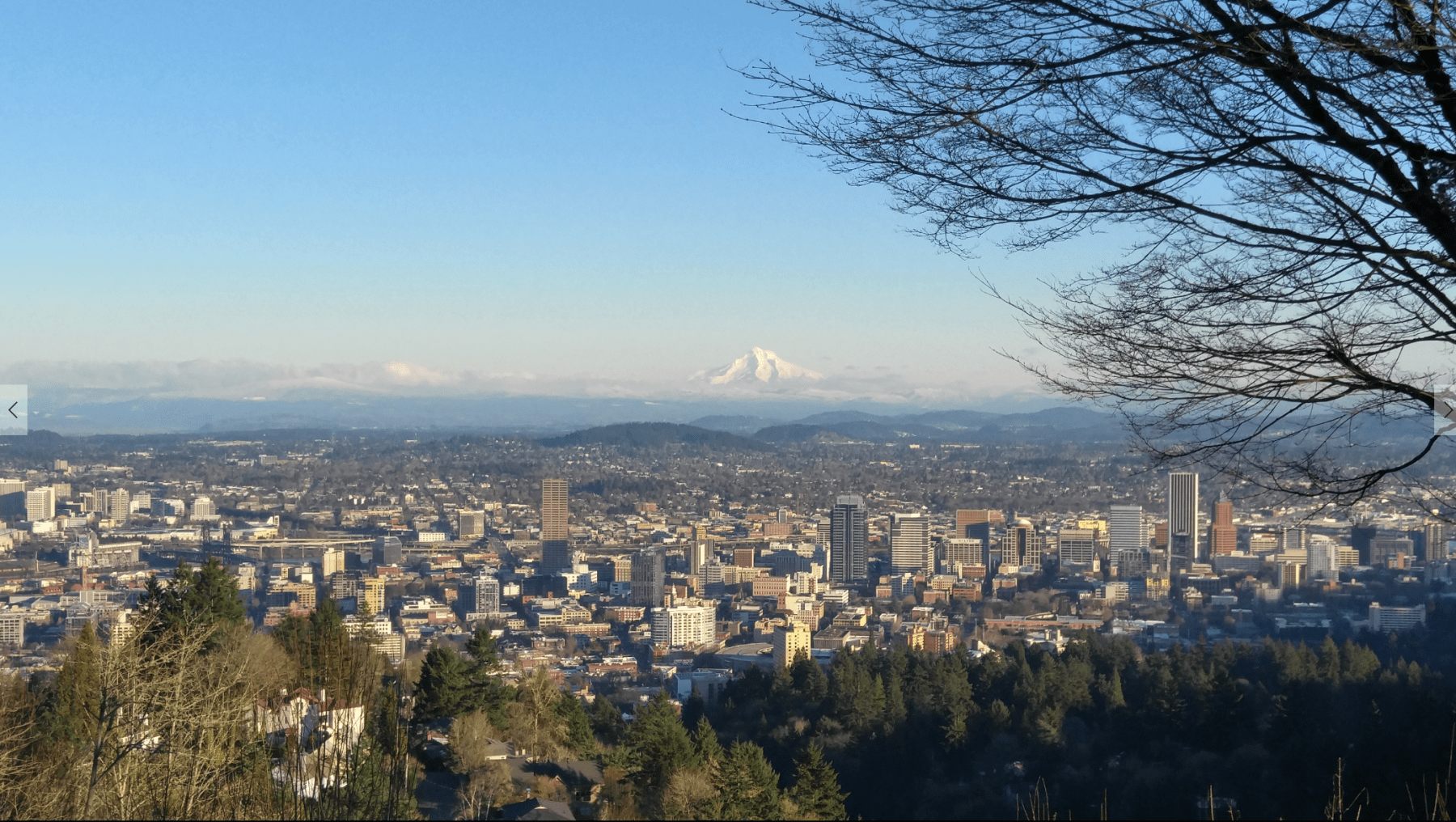
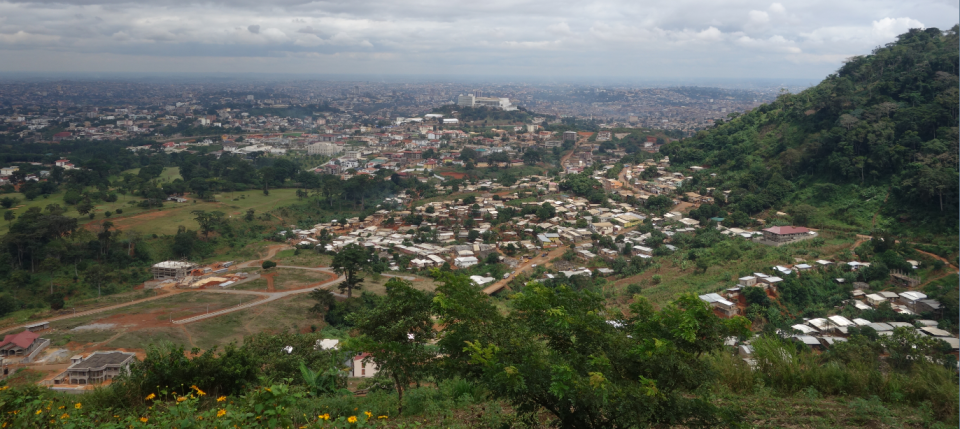
Ever since I arrived back in Portland on December 14th, I’ve been busy reflecting on the only question that has keep me sane in the aftermath of my trip to Cameroon: What now?

Many people have told me to take it easy, or to wait until I get back to school to start contemplating the question of what’s next, or simply to enjoy the present and let that be enough. For better or for worse, I find that to be impossible. The jarring, and indeed disorienting, disparity between the reality in Cameroon and the reality I am now confronted with back home is too great to ignore; The only way to put my mind at ease is to identify how I plan on bringing these two realities together in my life. I need to begin the long, arduous process of understanding what going to Cameroon meant for me.

Capture1

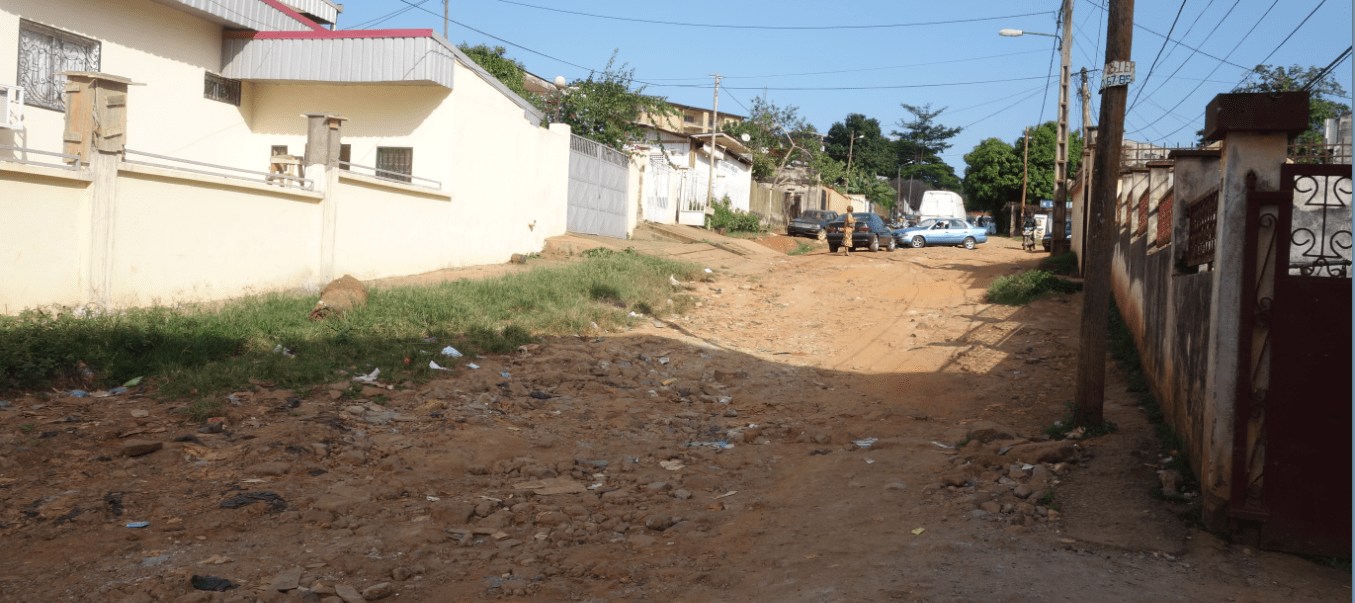
Yaounde, Cameroon

Capture0

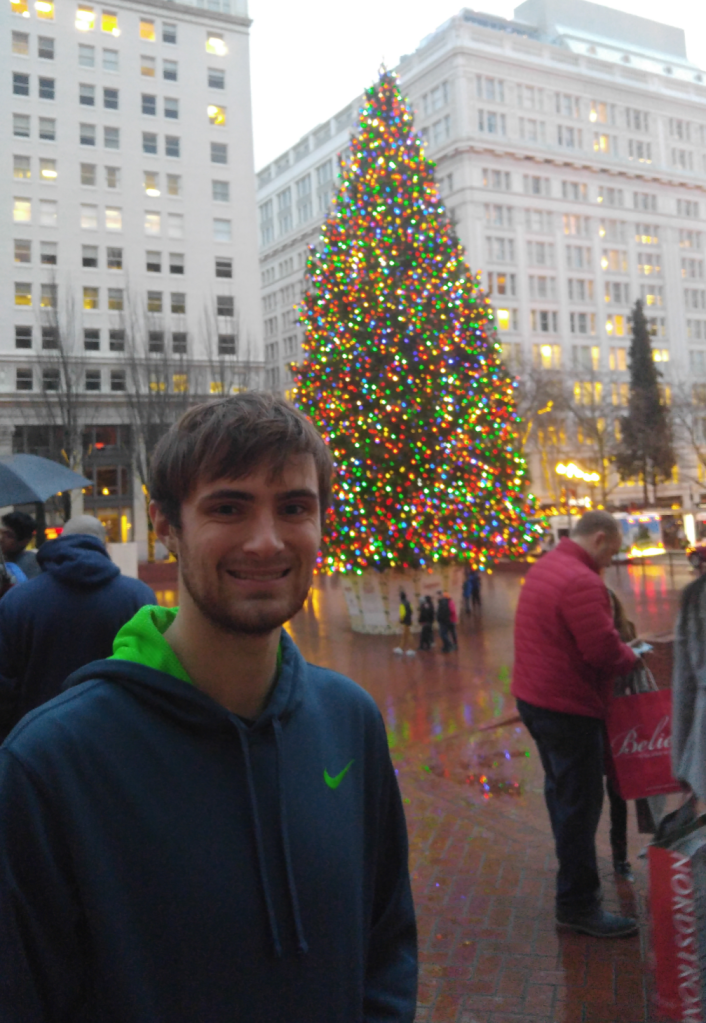
Portland, Oregon

When I decided to go to Cameroon, I wasn’t quite sure what to expect. I only knew that it was something I had to do. “Had” with a capital H. There was no doubt in my mind that this was an experience that would fundamentally alter the way I perceive the world. It was a hard thing to explain to my parents at first, but as my Mom told me later on “I could either let you go or tell you no and have you hate me for it.” There was something compelling me to go, and only an act of God would keep me from following through with it.

I didn’t have a plan for how it would fit in my life long term. I just knew I had questions that couldn’t be answered by sitting in a classroom in Spokane: How does the world really work? What environments do I thrive in? What issues should I dedicate myself to champion? And what kind of lifestyle will I need to adopt in order to do so?

In many ways, taking the semester to study international development and culture it was a similar leap of faith as abandoning my plan to study engineering the summer before starting college. But both times, I felt that there was more out there waiting for me to learn, to experience, to discover, and if I didn’t seize the moment, I would regret it. I didn’t know where going to Cameroon was leading me, but I was emboldened by the words of Steve Jobs in his 2006 Stanford Commencement Speech (which I’ve written about before):

“…you can’t connect the dots looking forward. You can only connect them looking backwards. You have to trust that the dots will somehow connect in your future… you have to trust in something, your gut, destiny, life, karma, whatever, because believing that the dots will connect down the road will give you the confidence to follow your heart, even when it leads you off the well worn path… and that will make all the difference.”

Capture3

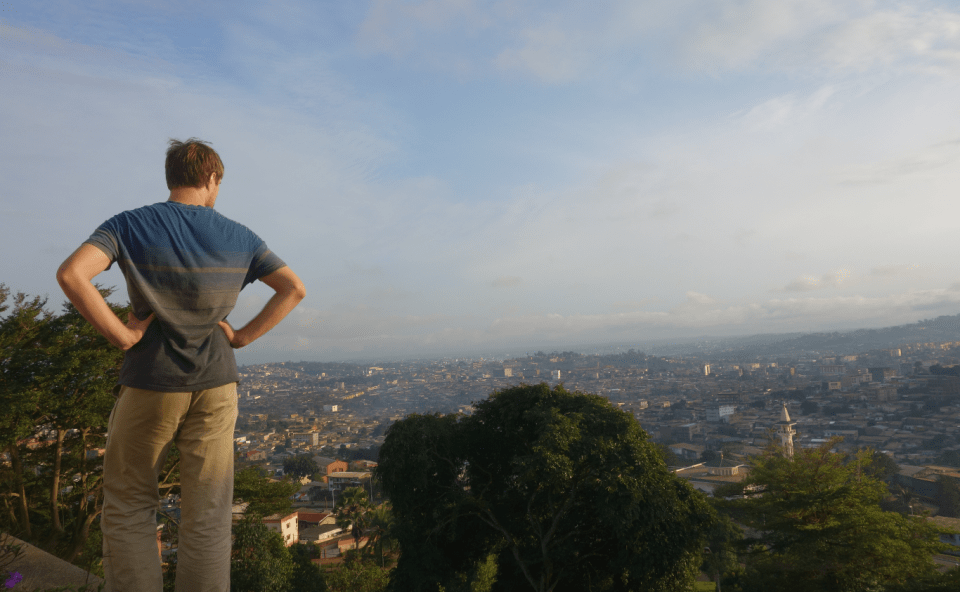
Looking out over Yaounde from the Palais de Congress (September 2015)

– – – – –

I experienced just about every emotion on the spectrum in Cameroon: joy, exhilaration, fear, sadness, doubt, epiphany, love, and heartbreak for the state of the world. Looking back, amidst all the things I experienced, three important lessons stand out that are crucial for answering the “What now?” question:

1. Life is made rich by the people you live with and the values you live for.


2. The political and economic power structures that dominate the world today must be reformed in order to prioritize environmental sustainability and social justice, values that will benefit the majority of humanity.


3. Ideas have the power to challenge and overthrow entrenched systems, but only when they compel people with a vision of a better future and a sense of urgency to start moving towards it.

Diving into the intricacies of these three lessons would take more space than I have here, but suffice it to say that spending four months in Cameroon with such incredible, passionate peers and examining the shortcomings of international development over the past 80 years, as well as conducting independent research on the state of social entrepreneurship in the country resulted in one of the most fulfilling experiences of my life. Now comes the tricky part: applying these lessons moving forward.

Capture3

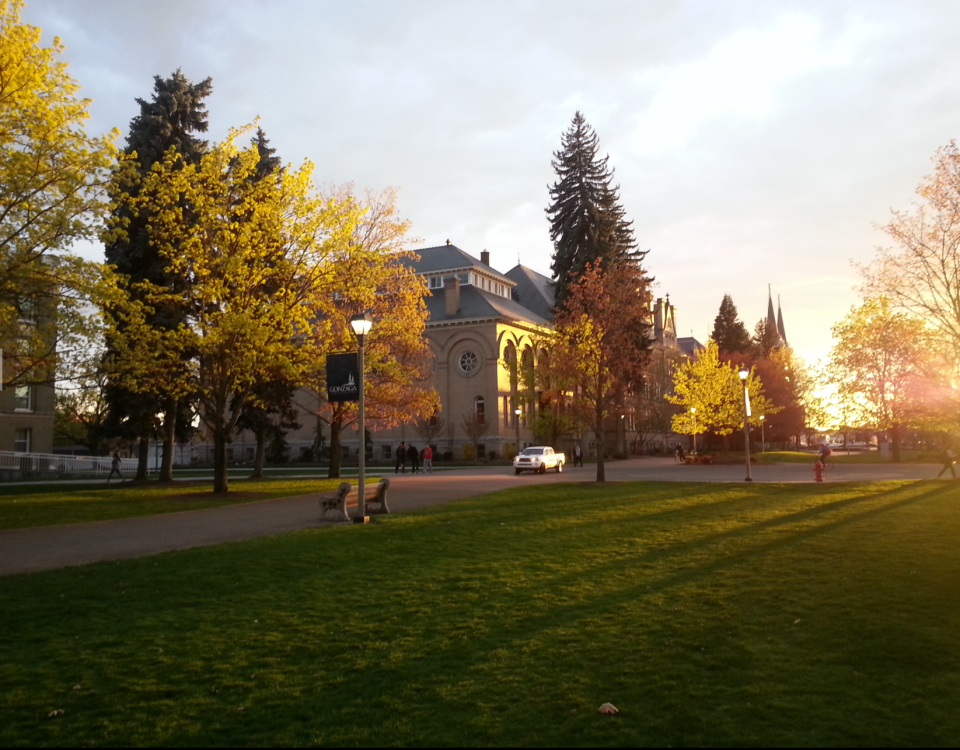
Gonzaga at sunset (March 2015)

My current plan is to use this semester back at Gonzaga as a time of reflection and preparation for the next chapter in my quest to make a living and change the world. Specifically, I plan on investing time in exploring summer internships with think tanks and research programs focused on advancing economic, environmental, and social justice agendas. I’ll also begin to shift my focus towards preparing for graduate programs in international studies that examine the economic and political power structures that shape the world today. Lastly, I want to explore how I can share my experiences with audiences across the United States interested in learning about how they can serve as agents of change to usher in a new age of social justice based on solidarity, social innovation, and empathy.

Thankfully, I am not alone in this quest. There are thousands of people who have dedicated their lives to similar goals, learning from individuals and grassroots organizations all over the world and sharing their stories with the public. In fact, in an upcoming post I’ll be sharing my 10 favorite TED talks by people doing just that! By listening to the stories of these men and women, we can build empathy and find inspiration to solve the greatest challenges of our day and age: climate change, inequality, discrimination (of all types), hunger, and the demise of popular democracy in the face of corporate power and greed.

Together, we can, we must, and we will change the world. All it takes is an ounce of faith and the will to persevere.

– – – – –

Since I officially launched this website on December 28, 2014, over the past year it has received 3,733 views from hundreds of visitors in 63 countries… To each and every person who took the time to accompany me on my travels, thank you so much for your company. I never imagined I would be able to reach so many people with my stories and perspective. I hope you have found some food for thought in my words and photos, and if so, I would love to read your comments about your favorite posts, things you took away over the past year, or things you would like me to talk about in the near future! Here’s to another great year!

– – – – –

Capture1

– – – – –

Thanks for visiting aarondanowski.com! Leave you comments below, and be sure to stay up to date on my travels by clicking on the “Following” button on the right hand side of your page!

If you would like to contact me directly, please do so via email: adanowski@zagmail.gonzaga.edu

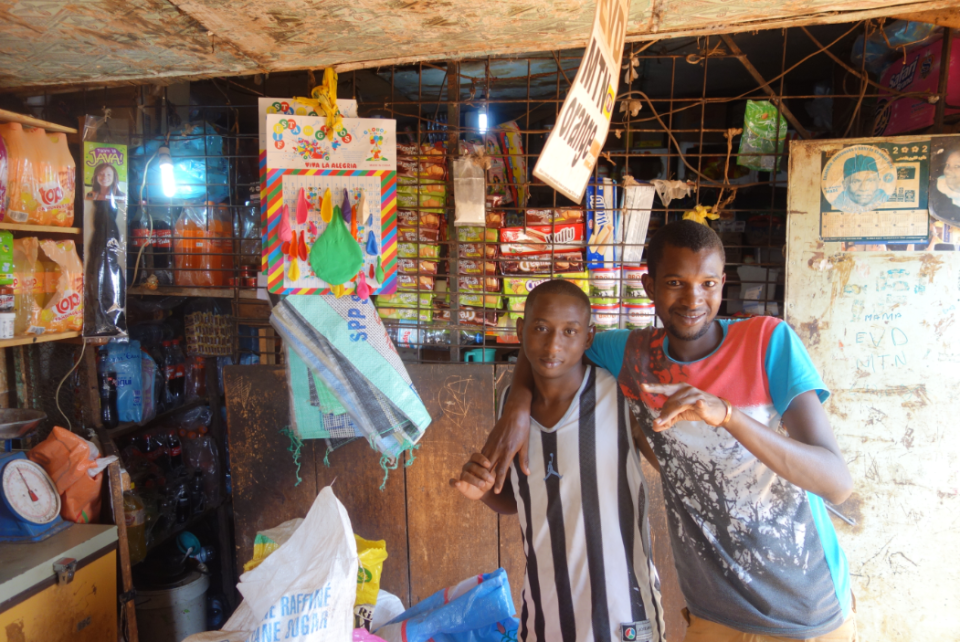
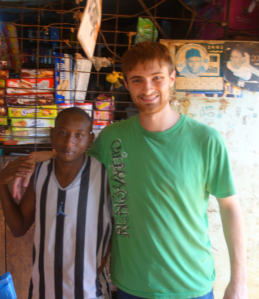
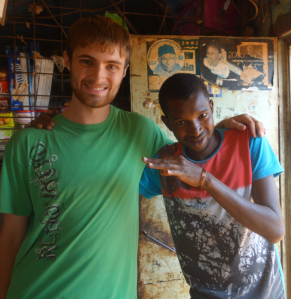
What would you do to provide for your family? Travel thousands of miles? Risk your life navigating terrorist-occupied forests or the bone dry Sahara Desert? Spend three months in prison? Go years without seeing them? Abdoulai (below,left) and Kaladou (below, right) not only would… they have.

In one of the most heartbreaking and vulnerable exchanges of my life, I spent two hours listening to the stories of these two 28 year old Senegalese men who have risked their health and safety again and again for the sake of their loved ones back home… with no end in sight. When I dropped by the cornerstore down the street Saturday afternoon to say goodbye to Abdoulai, they gave me a free bottle of Coca Cola and allowed me to step into their shoes and see life from their perspective, and their stories rocked me to my core…

Capture63

He finally decided to take the risk , so he picked up his things and left. After two weeks spent trekking through the Sahara desert and watching those around him die of thirst and exhaustion, Abdoulai peered over the bow of the boat full of migrants traversing the Mediterranean and saw the blurry lights of Italy on the horizon. They were distant, but for a second, they shone with bright potential of a new life, a life that promised economic stability. But it only lasted for a second, because soon after that, the Abdoulai’s boat was caught by the Italian Coastguard and was sent back to Libya. Upon being offloaded in Tripoli, Abdoulai and his fellow migrants spent three months in a Libyan prison, being beaten by the security guards, and being given minimal food and water before ultimately being let loose in the desert and told to go home. After returning to Cameroon for a short time and saving up his money, Abdoulai made a second attempt to make it to Italy, traveling to Lake Chad in the Extreme North of Cameroon and payingCapture64 smugglers to help him reach Libya. That time, his boat successfully made it to shore in Italy, only to have the migrants apprehended by local authorities and sent back to Libya. Since then, Abdoulai has searched unsuccessfully for full-time work in Senegal, Benin, Nigeria, and Cameroon that can support his parents and elder brothers back in Senegal, but all he has managed to find is his work at the cornerstore that barely pays enough to send anything back at all. Ultimately, he finds it better to save up his money to try and make it to Italy a third time. He understands the risks, but the reward is too much to turn down: “You see two boats leave, one capsizes and everyone in it dies, but you keep going, that’s how it is… When you go live in Europe and have your papers in order, you can come back and visit your friends, but when you only spend your life in Africa its not good, you won’t have anything, just difficulties.”

For Kaladou, his journey started in 2001 at the age of 15, when he left to find work in Morocco for 5 years to provide for his widowed mother. When he returned with approximately $1300 , his uncle took it all and sent him to the Congo where he found work as a dishwasher for 6 months and did odd jobs for another 2 ½ years before returning to Senegal. Once back, he married and had three children (“their names are Tijang, Saidou, and Fatima”, he tells me), and he worked for 4 years to provide for his growing family with limited success. Since 2013 he has been steadily making his way down the African coast seeking opportunities that earn enough money to send back to his family. Recently, a smuggler that promised to take him from Senegal to Yaounde left him stranded in Nigeria, and when he called his uncle asking him to pay back some of the money he had earned, he refused. After three months working odd jobs in Capture65Nigeria, he managed to scrape together enough money to join a group trekking across the Nigerian border. On their journey through the forest, he told me they came across corpses, victims of Boko Haram, laying strewn on the ground. They lived in fear for several days, afraid that they would be next. Luckily, he made it safely to Yaounde, and how he is working as a shoe repairman and sending back what he can each month (he showed me the remittance transfer for November: 20,000 CFA, about $32). His ultimate goal is to save up and reach Equatorial Guinea. “They treat people very poorly over there” he tells me, “but we’re obligated to go. If that’s where I can earn a living. When your kids call you and say “we need money for food”, and when your wife and your mother say the same thing… it’s a big problem… I leave for work at 6 am and get back at 6 pm, but you know when your kids are back there, your wife is back there, you can’t just shrug your shoulders, what are they going to eat? You have to fight, and if you find a little bit, you send it back.”

– – – – –

I was shell-shocked walking away from our discussion… these two friendly guys who I’d been saying hi to at the corner store for the past month were two of the most courageous, hardworking people I’d ever met, and both of their lives could very well serve as the basis for Hollywood movies. But the thing that struck me most about Abdoulai and Kaladou’s stories was that they highlight the imperative that exists for developed countries to acknowledge that the Mediterranean migrant crisis is not going away, and if anything, is only going to get worse. Both of these men have literally risked life and limb in pursuit of economic opportunity for themselves and their families, because they realize they no scenario exists where they and their children have a bright future when they are forced to migrate to merely scrape by. With the best population estimates expecting Africa’s population to make up 1/4th of the world population by 2050, its imperative to ensure Abdoulai and Kaladou’s children’s generation feels like they have a future in Africa… or else the entire world will suffer the consequences.

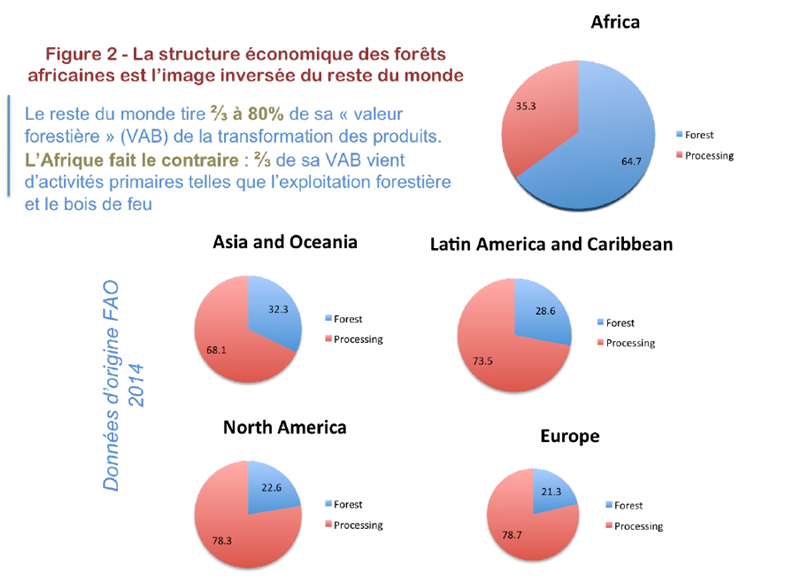
So what would that require? Well, given the fact that record numbers of refugees and economic migrants from Africa like Abdoulai are landing on the beaches of Europe seeking a better life, we need to examine what is forcing them to risk their lives in the first place. On the surface, the answer is easy: there is a lack of jobs in Africa, so people go elsewhere looking for work. Digging a layer deeper however, we find the root problem: Africa’s economy is based on the export of raw materials, such as timber, oil, rare earth materials (which power the technology industry), aluminum, and plantation grown fruits and vegetables,as opposed to the model the industrial world is built on, which is the transformation of raw materials (creating rubber, steel and concrete and producing computer chips and building airplanes). This phenomenon is clearly visible in the Food and Agriculture Organization of the UN’s 2014 “State of the World’s Forests” report, which shows that Africa is the only continent where primary materials make up the bulk of the economic value added by forests. Every other continent derives most of their forests’ economic value from processing industries… and the contrast is stark:

Capture66.PNG

Source: Les Communautes de Pratique Forets Modelles: Pour un Basculement du Paradigme Participatif dans L’economie Sociale et la Transformation Structurelle,  by Diaw MC, Nguiebouri J., Gagoe Tchoko J., NgoBaneg MF., Vambi B., Nlend E. and Keugni MC.

In more concrete terms, this means that, while a tree that is cut down in Cameroon creates a job for man or woman selling charcoal, or the person exporting the tree out of the country, a tree that is cut down in the US creates a job for the logger, the truck driver that transports the tree to the processing plant, the workers at the lumber plant that transforms the tree into two by fours, another truck driver who delivers the lumber to Home Depot, the guy at Home Depot in charge of the lumber department, and the construction worker who buys the wood and uses it to build a house… not to mention a job at the EPA to ensure the logging company replants trees after logging!

This layered transformation of raw materials is called a value chain, and the lack of value chains in Africa extends to most raw material industries here in Cameroon and in other sub-Saharan African countries, which makes stories like Abdoulai’s and Kaladou’s all too common. In a way, its kind of our fault… Under the current global economic system, its implicitly understood that stories like Abdoulai and Kaladou’s are “collateral damage” in the process of ensuring that the US and European countries can exert their control over African raw materials and transform them themselves, rather than allowing local African industries to develop and buying finished products from Cameroon, Namibia, or Tanzania.

If we are serious about ending the migrant crisis and reducing the number of human tragedies like the ones witnessed off the coast of Italy over the last several years, we need to realize that true African development can only happen when local value chains and industries develop that transform raw materials and create employment and wealth in sustainable ways that stay in Africa. Even if a multinational company like Firestone comes to a country like Liberia and employs some local people to work on a rubber plantation, or an international logging company employs some Cameroonians, the economic value of those resources is still being drained out of the African context… which contributes to the cycle of poverty and underdevelopment. As Dr. Mariteuw Chimere Diaw, a Senegalese PhD holder running a social enterprise called Africa Model Forest Network here in Yaounde explained to me several weeks ago:

“The mining industry, the forest industry, they are totally oriented toward exporting raw material. When you look at it, people [are] investing a lot [of energy] into issues of rights and deliberative democracy, formal democracy, all kinds of democratic things, but the economy is too weak, so people jump into the sea to cross the ocean, so what is your democracy bringing to them?”

– – – – –

So what concretely can be done to resolve this problem, to restore Africa’s future? One thing is for sure: the solution is not more development aid from the US and other developed countries. Aid money does not address the root cause of the economic problems Africa faces. Development aid is the token solution that conveniently produces some feel good stories and impacts a few people, but it distracts from the root of the problem, which is the global economic system that is skewed by political maneuvering to favor the most powerful countries in the world. Its why populist leaders like Mossadegh in Iran, Arbenz in Guatemala, Allende in Chile, Roldos in Ecuador, Torrijos in Panama, and Lumumba in the Congo, who refused to cede to Western interests, met with untimely fates. Whenever a new government takes power in a country rich with raw materials, they know they must tread a fine line between appeasing the powers that be by granting them access to raw materials and looking out for the best interests of their people… and development aid projects often serve as a nice compromise.

But there is some good news: See, since the issue is economic at its core, that means it is a system driven by the everyday purchases we make as consumers. As such, we can consciously choose to fight against the systemic violence and exploitation that currently ravage the African continent and produce stories like Abdoulai’s and Kaladou’s. We have the power to contribute our voice to the chorus calling for an economic system that provides opportunities for people like Abdoulai and Kaladou. One of the best ways to do so is by buying products made by local cooperatives and social enterprises in developing countries, rather than the big companies that don’t invest in jobs and production facilities in these communities. Here are a few examples (perfect for you last minute Christmas shoppers!):

Want some bath or beauty products that support local economies in Africa? Check out Rain Africa, a South African organization with a commitment to “provide jobs, skills and hope to people living in desperate poverty, particularly women and the disabled. Our production cycle is deliberately low-tech and labour intensive. Our products and packaging are hand-made by trained crafters. We support small local suppliers and producers. Our wild ingredients are hand-harvested by women living in remote areas of Southern Africa where economic opportunities are almost non-existent. We are the only Southern African beauty and body product company which is accredited by both Fair Trade in Africa and the international Fair Trade body in Europe.”

– – – – –

Another organization, “Proudly Made in Africa“, identifies and exports high quality finished African products to European markets, but many of the products they promote (from coffee, footwear, and jams to garments and beauty products) can be searched and bought online via this page on their website. You can also check out a short animation below produced by a Kenyan production company detailing their business model!


– – – – – –

And finally, for an even greater selection of products from cooperatives and local communities around the world, check out Serrv, a nonprofit fair trade organization that proudly believes that “disadvantaged artisans and farmers around the world should have the opportunity to break the cycle of poverty and support their families through fair payments and respectful relationships. Every basket, every tablecloth, every necklace we offer has a story behind it–of an empowered artisan or farmer who works in a safe environment, can send his or her children to school, and can save for the future with the reliable income he or she earns through fair trade.”


– – – – –

While those actions support the initiatives that have already started, lots of work needs to be done on the legislative side to incentivize large companies to invest in local production facilities rather than simply exporting raw materials to be transformed in China or the US. Maybe one day you’ll order a smartphone by the Kenyan version of Apple, or the “Dell” of Cameroon… but that may be too optimistic given the number of international institutional reforms that would need to take place to provide space for such organizations. Whatever the case, it’s only a matter of time before the current (dare I say neocolonial?) economic system is forced to undergo some massive readjustments, as Dr. Chimere expressed to me in our meeting:

“There is a struggle between the old ways of producing wealth and [the] need to do it differently. And that is going to be discussed a little bit in Paris, at COP 21, and we’ll see what comes out of it, but fundamentally, to me, the discussion and the stakes that are behind it are the stakes about the new economy… it’s not conceivable that Africans will just remain poor, they’re too wealthy, you know, with their environment, all the natural resources, all the untapped wealth that exists for this to continue forever. But whether it’s going to be slow, whether we’re going to control it or whether some other entity is going to control most of it, that has yet to be decided… I do believe that there is room for a collaborative economy that isn’t going to be one dimensional,[but] it’s going to have very different ways of existing, of emerging. It has already started, but a lot will be decided by the way Africa is going to catch up.”

Hopefully that economy will develop in time for Kaladou’s children, Tijang, Saidou, and Fatima, to know they have a future in Africa.

Capture.PNG

– – – – –

Thanks for visiting aarondanowski.com! Leave you comments below, and be sure to stay up to date on my travels by clicking on the “Following” button on the right hand side of your page!

If you would like to contact me directly, please do so via email: adanowski@zagmail.gonzaga.edu

Hi everyone!

Sorry for the delayed blog update, this past month has been very busy for my peers and I here in Cameroon: completing four research papers, preparing for my upcoming independent study project, and traveling in areas with little to no internet connectivity forced me to delay writing this post! I wanted to take a chance to reflect on one of the most important things I’ve learned over here in Cameroon: Africa is more than just poverty, war, and disease.

That seems pretty obvious, but it’s an important thing to stress. Nine out of every ten images we get in the US of Africa are poor children asking for donations, news reports talking about political violence and showing images of refugees, or stories about HIV/AIDS, Malaria, or Ebola. There are over 600 million people on the African subcontinent, and the vast majority of them have their lives characterized by much more than the news reports we see in the US. So, without further ado, let me give you a few glimpses into the lives of Africans that you won’t see on the news:

Capture36

Rigobert, a middle aged taxi driver for SIT, looks out over the capital city of Yaounde. This was my first glimpse of the city in the daylight after arriving the night before.

Capture37

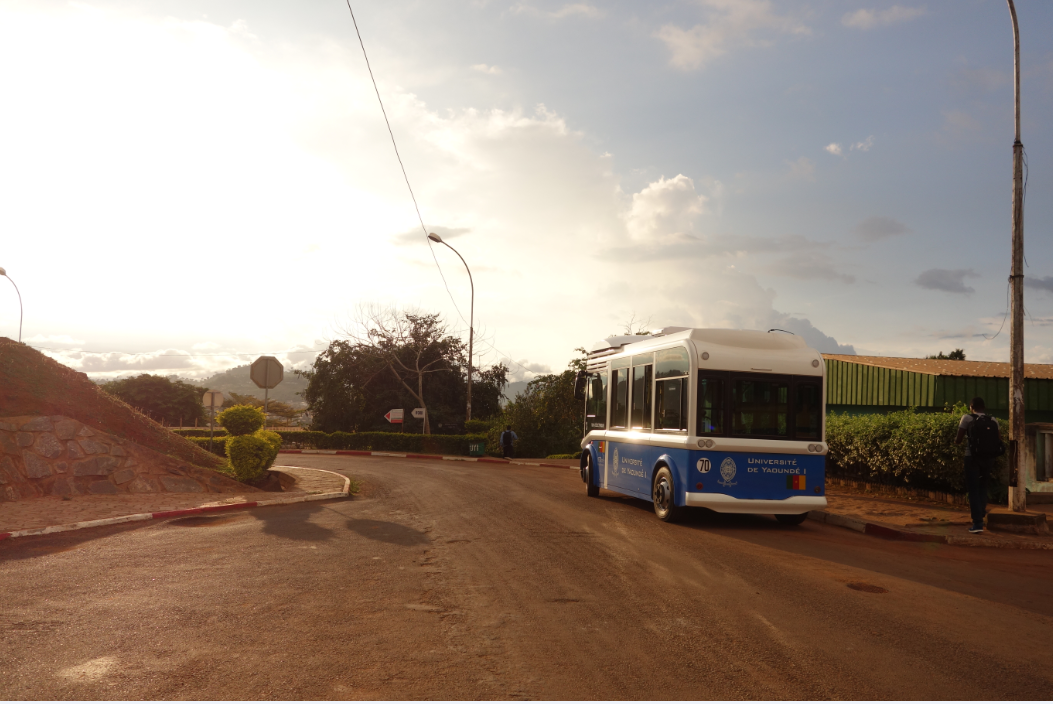
An all-electric bus making the rounds at the University of Yaounde I, one of two state universities in the capital city.Yaounde I has over 45,000 students enrolled, and the bus serves to ferry students up and down the hill on which the university is built.

Capture38

Hundreds of exercisers warm up together on a foggy Saturday morning in Yaounde. Each weekend, they come together early in the morning to catch up with friends and work out together by running up and down the hilly landscape of Yaounde.

Capture42

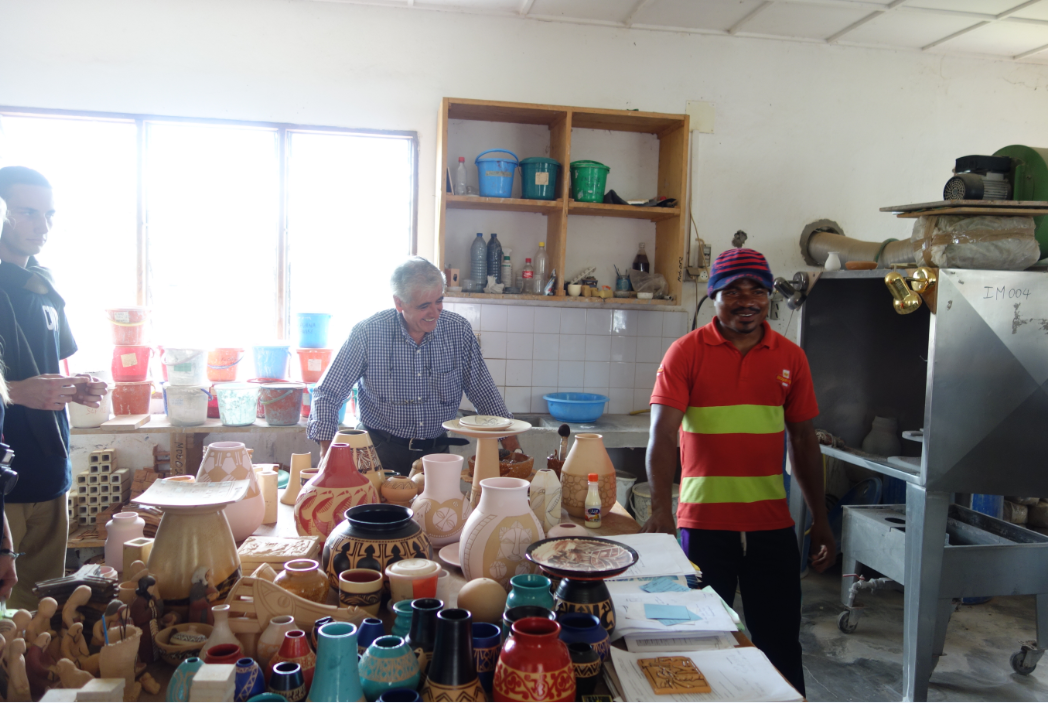
A pottery workshop at the only professional art school in Cameroon, located in the city of Mbalmayo. The white man on the left has never made pottery in his life, and couldn’t to save his life, as he told our group when we went to visit. Rather, he helps to run the finances of the art school and leaves the training and sculpting up to the professional on the right and his students.

Capture44

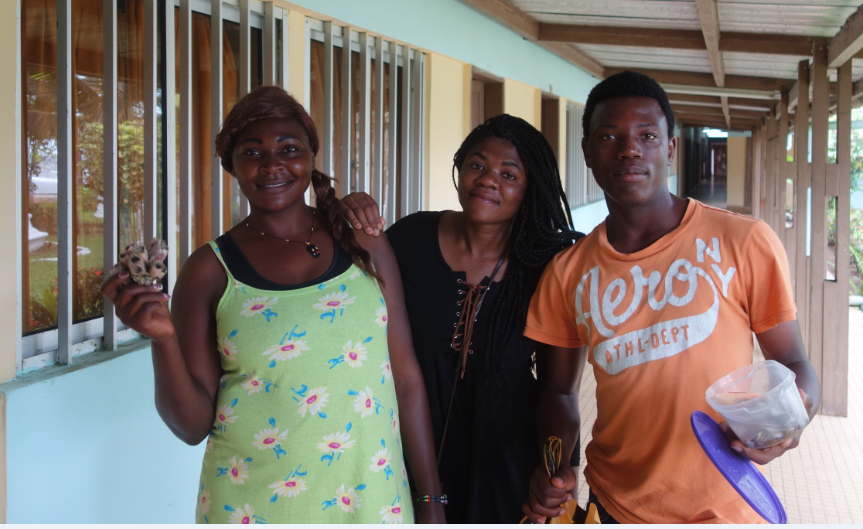
The three Cameroonian students on the program with us this semester: Ydrine (left, 26), Sarah (middle, 28), and Lamerant (right, 19). Ydrine is studying to be a lawyer at University of Yaounde II, Sarah just finished her masters in History at Yaounde I, and Lamerant is a Biochemistry major who was a Yale Global Scholar this past summer, travelling to New Haven, Connecticut to take courses on international relations, political science, and leadership.

Capture53

Allison (left) and Serge (right) sitting next to Andre Manga, Cameroon’s most famous musician. Andre plays bass for Josh Groban on his world tours, and when he isn’t with “Josh” (as he called him), he splits his time between Los Angeles and Yaounde, working as a talent scout mentoring young Cameroonian musician.

Capture46

My host family in the southern coastal town of Kribi.Jehovani (left, 10), Henri (middle, 22), and Charlenne (right, 14). Henri works for a construction company in town, and his dream is to one day earn his driver’s license and own a car.

Capture49

A train of students returning home after school one afternoon in Kribi. Education is highly stressed in all the communities we’ve visited here, and you can tell which school each student goes to based on the color of the uniforms they wear.

Capture55

Christiane (left), the academic director of SIT Cameroon, and her siblings admiring the clouds and the scenery at Saddle Hill Ranch in the North West region of Cameroon. The sky here is incredible… sometimes I wonder if the clouds are just trying to one up each other day after day!

Capture51

A concert at the Goethe Institute (the German Cultural Center) in Yaounde. Singer and guitarist Elsa M’Bala (center) is one of the few women musicians who play an instrument in Cameroon. In an interview several of my peers and I did with her and her band before the show, they couldn’t think of more than 7 in the entire country.

Capture58

My host brother, Frankie (16), on our way back from a soccer game at the chefferie in the rural village of Batoufam. Frankie’s dream is to become a commercial airline pilot, and when I asked him if he thought life here was difficult, he looked at me funny and said not at all. They have everything they need to live a good life, he told me: plenty of water (there’s a river nearby), highly productive land to grow food, and livestock such as pigs, chickens, and rabbits to breed and eat.

Capture61

An after-school basketball game at the Lycee of Batoufam (High School of Batoufam). The students were preparing for the all-school tournament, which my host brother Mao (19, shooting the ball above) has helped his team win two years in a row. His dream is to play basketball professionally in Europe one day.

Capture48

Picturesque sunset in Kribi… doesn’t get much better than this, listening to the crashing waves and contemplating the beauty of nature.

Capture57

The throne room of the chief of Batoufam. Against all odds, traditional chieftaincies in the West region of Cameroon have remained vibrant and critical aspects of life in many rural villages in the area. The chieftaincy is hereditary, and when an heir is chosen after his father’s death, he becomes the servant of his population, mediating conflicts among the 6,000 residents and an additional 6,000 native Batoufam spread throughout the country. The chief of Batoufam has ruled since 1989, but by no means does he have absolute power. He governs along with several councils of notables and important individuals in the community, and once a week he is subjected to a judicial review of all his words and actions, ensuring he is effectively using his time to serve the community. He is well respected and revered by the community for his integrity and complete dedication to the wellbeing of his community.

Capture59

The Chief of Batoufam, Nayang Toukam Innocent, poses for a photo with us after our Q&A session with him in the throne room. He is the 14th chief of the village, and his ancestors have been chiefs dating back to the village’s founder over 200 years ago. His parting words to us (translated into English) were “Stand by your culture and traditions, work hard, and always consider others in your decision making. That is advice for the world, and it can lead to a brighter future.” – Sa Majeste Nayang Toukam Innocent.

– – – – –

As you can see, this corner of Africa is a beautiful, vibrant region full of intelligent, passionate people. The next time you see a news report or read an article about the wars, poverty, and disease ravaging the African continent, I hope you remember these photos and know that there’s another side of Africa that most people never hear about.

– – – – –

Thanks for visiting aarondanowski.com! Be sure to stay up to date on my travels by clicking on the “Following” button on the right hand side of your page!

Leave you comments below, and if you would like to contact me directly, please do so via email: adanowski@zagmail.gonzaga.edu

When I was in seventh grade, I remember being selected by several of my teachers to attend a conference at Portland State University on Africa: Past, Present, and Future. I remember running out of the principal’s office towards the outdoor common area, pumping my fists and thinking to myself “This is awesome!! I get to miss class on Friday for this!”

Several days later, sitting at a wooden desk in a dimly lit classroom at PSU, listening to men and women my parents’ age network and exchange business cards, I kept to myself, preferring to make sure my pencil was still sharp and flip through my notebook. I momentarily glanced up at the backlit woman standing at the podium in front of the classroom, and observed her as she greeted attendees. She was short, no more than five foot two, in her mid-forties, with straight blond hair. She looked up, smiled, and waving at a colleague across the room before turning back to her computer and furrowing her brow as she and made last minute adjustments to her notes. The small talk suddenly died down, the doors at the back of the classroom swung shut, and the woman launched into her presentation:

“Good morning everyone, thank you for being here today! I want to kick off our hour together by asking you a quick question:

What is Lesotho?

Is Lesotho a type of food prepared by the Massai tribe in Kenya, consisting of braised beef, rice, and steamed vegetables? Is Lesotho it a small, densely populated country which is completely surrounded by South Africa? Or is Lesotho a communal dance practiced in rural Namibia during an annual male initiation ceremony?”

After pondering the question for a couple seconds, I decided to go with the food option, which got my young adolescent mind wondering what would be served for lunch that afternoon. Probably some traditional African food from Ethiopia or someplace, catered by a local restaurant… Suddenly, I was snapped back to attention by a shout from the front of the room:

“Lesotho is in fact a country! How many of you guessed correctly?”

I don’t recall how many people raised their hands, or honestly anything else from the rest of that day. The only thing I remember is the thought that hit me at that moment, an idea that burned into my conscience at thirteen years of age in that classroom:

“Lesotho is an African country… and I never knew about it until today. What else is out there just waiting for me to learn about it?”

Capture14

Meeting with the Bagyeli tribe to discuss the effects of modernization on their traditional way of life

– – – – –

I haven’t thought about that moment or that conference in years, but it occurred to me the other day as I was journaling at my homestay on the coast of Cameroon that, in many ways, the idea that took root in that moment was one of the major reasons I felt the need to come to Cameroon. I’ve become addicted to learning, to uncovering the unknown, and to expanding my image of reality Capture18by experiencing the world from different perspectives. One of the things that attracted me to SIT for study abroad was the fact that all their programs are centered around the experiential learning cycle (see the diagram on the right), so at every step of the program we’re constantly encouraged to reflect and analyze our experiences, identify key insights, and then apply them to future experiences. As a result, many of our classes turn into field trips: One day our French class will consist of going to the beach and striking up a conversation with local fishermen on their daily routines. The next day, our Social Pluralism and Minorities class will spend the day visiting groups of autochthonous Cameroonians struggling to adapt their traditional forest-dwelling way of life to a new age of modernity. After that, we’ll meet with a local NGO leader to debrief the experience and discuss key takeaways from the visit, before going to visit a local development organization striving to address women’s issues in a comprehensive manner, targeting education for at-risk children, HIV and AIDS prevention sessions for prostitutes, and professional training for women to dye cotton garments and earn an income.

Capture19

Our french teacher, Thomas, talking to Haley as we head down to the beach to talk with local fishermen for class

In addition to the experiential learning we use in the classroom, we use the same process to experience, analyze, and learn from everyday life in Cameroon. Thus far, I’ve spent two weeks living with an upper class host family in the capital city of Yaounde and two weeks with a lower-middle class host family in the coastal town of Kribi, and they have been incredible teachers in their own right! I speak only in French with my host families, I’ve learned to wash my clothes by hand, and in Kribi I learned to live without running water by using a well behind the house, taking bucket showers and using a squat toilet. Even for upper class Cameroonians, washing machines are extravagant luxuries as opposed to basic necessities. I’ve learned what it means to live life around personal relationships as opposed to time, stopping to have in-depth conversations with strangers about their hopes and dreams for Cameroon and Africa in general on my way to run errands at the supermarket. I’ve learned firsthand how Cameroonians strike a delicate balance between ethnic diversity and national unity in a country with over 240 ethnic groups and 280 different languages. I’ve dug into Cameroonian history with local experts and learned how to understand popular sentiments towards France, China, the US, and neighboring countries such as Nigeria and Equatorial Guinea. And I’ve had long discussions with my American peers about how we can take this experience back home and educate people on the realities of development aid and westernization here in Cameroon. All of these experiences have expanded my concept of reality, challenged what I believe about the world, and advanced my understanding of what my personal role in the world is, and what role everyone in the US and around the world has to play in creating a more fair, just world through political and economic reform.

Capture31

My host family in Kribi (Mama Julie and her brother Salomon)

Starting with my personal role, I’ve realized that, although I will not be able to “fix” neo-colonialism on my own or single-handedly replace the current paradigm of big business with social entrepreneurship and social innovation, I CAN use my career to work with other passionate, dedicated individuals on behalf of the millions of people excluded from our modern political and economic systems. Jesuit education often cites the importance of pairing charity with justice to achieve social change, and in my mind, justice can only be served by working towards more inclusive, flexible social structures that grant everyone the chance to live a healthy, fulfilling life. Not pursuing justice for the millions of African youth currently unemployed, underemployed, or idle as a result of neo-colonialism, the hundreds of thousands of innocent refugees escaping violent conflict in Africa, the Middle East, and Latin America, or the chronically homeless men, women, and children back in Portland, Oregon would be fatal to my sense of integrity, because they are not solely responsible for their state of affairs. The social structures that surround them never gave them a fair shot to succeed. I can’t change it all on my own… but I need to do my part, and that’s why I need to find a career that works to create social change, rather than one that feeds into the status quo. And I know I’m not the only one that feels this way. I’ve talked to hundreds of students and young professionals from all over the US who want to use their careers to solve social problems and create more inclusive social structures, and ultimately they are the reason I feel confident enough to maintain this blog. Nine such students are here with me on this trip, dozens are back with me at Gonzaga University, and hundreds from all over the world stood in unity with me at the AshokaU Exchange in Washington DC and the Net Impact Conference in Minneapolis, Minnesota this past year. I firmly believe that it only takes a few passionate people working together to prime the gears of change, and I want to use my voice to encourage like-minded people to join me in making a living and changing the world. For resources on how to make this possible, check out the Resources page of my website or email me directly for individualized advice on how to turn your passion for social change into a career!

Capture21

Asking questions with my peers at the Bagyeli site visit

For anyone reading this who is already established in a career or is retired, we need your help too! I know that working for a big company is often most people’s only option to put food on the table and provide for their families, and even if someone believes the system they are a part of is taking advantage of them or other people, chances are they won’t feel like they are in a position to change it, especially if it means potentially putting their job at risk. If this is you, I have a different challenge for you: Are you willing to acknowledge that you still have a critical part to play in the process of systemic reform? If not, this might not be the right blog for you… but if so, congratulations! You are part of a community of millions of hard working Americans willing to throw their support behind substantial efforts to fight the unfair, unjust status quo (e.g. income inequality, the lobbying power of big business, and the role of big money in politics), and I want to encourage you in your efforts too. Change is possible, but only if we all work together and BELIEVE it’s possible. If a few passionate people dedicating their careers to creating more fair and just social systems (like my colleagues I described above) can prime the gears of change, support from people like you is the fuel we need to get these gears turning!

Your role is straight-forward, but by no means easy: To eradicate the biggest threat to justice and equality of our day and age… the deceptively subtle feeling of apathy. Apathy is the insidious feeling that convinces people that it takes too much effort to try and go against the status quo, and that the best thing to do is just kick back and enjoy the ebb and flow of popular opinion. How do we fight apathy? By using three readily accessible weapons:

  1. Information: The first weapon is to stay informed on current events by accessing the information at your fingertips! Watch the PBS NewsHour on TV or online, read BBC News (their smartphone app is excellent), read non-fiction books on current issues, and cross-reference different sources of media to understand the root causes of these events.
  2. Community: Get together with other people in your social circle (a group of friends, neighbors, family members, religious community members, co-workers) and schedule regular times to meet as a “Social Awareness Group” to discuss the current political, economic and social events you’ve been reading about. Commit at the outset to create a safe space where all ideas and perspectives are respected, and where the goal is to create a dialogue about what is happening and what is being done to address it, not just a time to lament how terrible the world is becoming.
  3. New Experiences: Go together with members of your “Social Awareness Group” and seek to interact with change agents in your community and see the world from different perspectives. Volunteer with a local nonprofit and speak to beneficiaries, attend guest lectures at local colleges and universities, watch performances and documentaries with political messages, and debrief each experience in your “Social Awareness Group”, making sure to discuss potential action items in addition to lessons learned.

With these three weapons, you can eradicate apathy in your own life and inspire others to do the same. By engaging with critical social topics in this way, you will come across passionate people pursuing systemic change fulltime, and you can play your part by supporting them with your time, expertise, money, or simply by spreading the word about their work! Whether you’re 8 or 81, rich or poor, a single mom or an empty nester, you can employ these three weapons in your own life and become a positive change agent in your community. All it takes is acknowledging the need for systemic change, exposing yourself to social issues and passionate change agents, and believing in the value of your support.

Capture15

– – – – –

Thanks for visiting aarondanowski.com! Be sure to stay up to date on my travels by clicking on the “Following” button on the right hand side of your page!

Leave you comments below, and if you would like to contact me directly, please do so via email: adanowski@zagmail.gonzaga.edu

This past weekend I bought a ceramic art piece made my some students in Cameroon’s only professional arts school, located in a city outside of Yaounde called Mbalmayo. Take a look at it below (It’s about 10 inches wide and 6 inches tall). The artist uses toned dust and locally sourced Cameroonian clay to depict three Cameroonian children admiring a sunset, as a flock of birds fly towards the mountains in the distance

Take a second to look at it… What do you see?

Capture7

When I first came across it in the studio, I saw three Cameroonian youth envying the birds. Unlike the children, the birds were able to easily escape their environment and find greener pastures beyond the horizon.

I circled back to this piece three times to admire it, each time spending a few minutes analyzing the composition and the meaning of the piece. The third time around, SIT Cameroon’s program director, Christiane, came over beside me and remarked how much she liked the piece. I asked her what she saw. As soon as I heard her reply, I immediately took it off the wall and rushed over to the counter to buy it.

– – – – –

One of the major themes we’ve been discussing in class is the idea that there is not a “one size fits all” path to development. The path to wealth in the US and Europe isn’t necessarily the path to wealth for Africa and Latin America. Successful development is more than economic growth at all costs; it’s culturally appropriate economic growth. Successful development doesn’t mean creating copies of “America” around the world and helping countries “westernize” by adopting American values. It involves helping countries create jobs and transform natural resources while respecting cultural differences and preserving local values, beliefs, and traditions that provide people a sense of identity and community.

Successful Development = Culturally Appropriate Economic Growth

Let me give you an example: In the US, one of our core societal values is the idea that “I am my own person”, that our identity is individualized and self-made. In contrast, Fr. Patrick Baraza (a Kenyan professor at Gonzaga) teaches his students that one of the bedrock values of African traditional communities is community identity, the belief that “I am because we are”. This is the clash between American individualism and African traditional communalism. The key thing to recognize is that, objectively, neither of these values is inherently “better” than the other. They both have their merits: individualism encourages personal achievement and innovation, while communalism stresses strong relationships and cooperation. However, people are hardwired to believe that their culture is better or more correct than other cultures, and as such they seek to replace alternative ideologies with their own, a phenomenon referred to as ethnocentrism.

International development experts from developed countries often inadvertently make the mistake of not recognizing their ethnocentrism when they work in different cultural contexts. In doing so, they place too much emphasis on the economic growth portion of “successful development”, at the expense of the “culturally appropriate” portion. It’s the reason why the period of “structural adjustment loans” undertaken by the World Bank and the IMF in the 1980’s proved so disastrous. According to the program, countries that applied for development aid from these organizations had to meet certain benchmarks of economic reform, specifically privatizing state-held assets, cutting government spending, decreasing taxes, and increasing access to foreign capital, all things that were “working” in the developed North and which were thought to be the key to developing the global South. Ultimately, the program failed because it was not culturally appropriate in the countries it was working in. Politically centralized leaders sold state assets to cronies and political allies, the cuts in public spending led to an explosion of NGO activity to fill in the gaps, and local industries that relied on government assistance such as national banks went out of business, allowing multinational companies to enter the market and further create dependency on the developed American and European countries.

The key takeaway from the failure of the structural adjustment plan is that successful development is very difficult for outsiders to direct, since it requires more than just economic knowledge. If development is ever going to succeed, there needs to be a marriage between economic policy and cultural knowledge. Development leaders must have a deep, personal understanding of their society’s hopes for the future, valued traditions, worries about development, and deeply held beliefs. Yes, international economists and development experts have a role to play in development, but they must realize that oftentimes that role is to recognize their ethnocentrism and allow local ownership of development to take hold. If they truly care about development, once they’ve acknowledged their cultural bias, well intentioned foreign experts will adopt a servant leader approach and choose to limit their involvement, allowing young, passionate local leaders to craft culturally-appropriate development goals for their countries.

Capture9

– – – – –

Flash back to the scene where I’m standing in the art exhibition showroom, admiring the ceramic painting of the three children watching birds fly towards the mountains into the sunset. What did Christiane say that pushed me to to buy the piece? Rather than seeing the children as helpless prisoners of circumstance as I had, she saw them as empowered future leaders of Africa, coming together as a community to enjoy the beauty of their homeland. Christiane’s response showed me my ethnocentrism, and reminded me of how important it is to acknowledge my cultural bias before pursuing culturally appropriate international development:

“I see three intelligent children who, at the end of a long day, have come together to admire the natural beauty of their country. I think it’s the best piece in the shop, good choice.”

Capture7

– – – – –

Thanks for visiting aarondanowski.com! Be sure to stay up to date on my travels by clicking on the “Following” button on the right hand side of your page!

Leave you comments below, and if you would like to contact me directly, please do so via email: adanowski@zagmail.gonzaga.edu

Greetings from Yaounde, Cameroon! I haven’t had a good internet connection in about a week, but I’ve been kept busy by the SIT Cameroon program orientation and starting classes on Monday, so this is my first real opportunity to check in and offer my initial insights from over here in Africa.

One of the biggest themes I notice looking back on my first couple weeks here is that I’ve had a really difficult time separating my experience in Haiti from this one here in Cameroon. Its tempting to compare the two countries and lump them under the term “developing” or “third world”, but upon closer inspection they really are quite different. When our group went downtown to explore the city of Yaounde during orientation last week, I immediately felt at ease, connecting with the routine I had established over the summer in Haiti. My friends and I were the only white people around, the chaotic traffic and the street venders felt familiar, and the red soil beneath my feet looked similar to that I had encountered in the hills above Port-au-Prince. All the differences between the two countries seemed to favor Cameroon in my opinion: there wasn’t as much trash littering the streets, the electricity stayed on all the time, and the weather was a pleasant 75 degrees with occasional rain showers, rather than the persistent 100 degree heat and humidity I grew accustomed to in Port-au-Prince. In addition, it’s nice being around other college students who understand why you decided to study abroad in Africa. Ever since I choose to spend this semester in Cameroon, people have constantly asked me why. Why go to Sub-Saharan Africa? Why go to a country with terrorist attacks happening in the north? Why not go someplace “fun” like Paris or London? The six other students on the program all share a common understanding that studying in Cameroon was something we had to do.

Capture2

The past several days I have begun to understand that living and learning here in Sub-Saharan Africa is inherently complex. The physical considerations of living here don’t bother me as much as they did in Chennai or Port-au-Prince (I’ve become quite good at brushing my teeth using bottled water and identifying when it’s ok to eat raw fruits and vegetables), but the mental realities are far more challenging. Yes, its only been a week and a half, and yes, I still have lots of time left here, but I’m already scared about what it will be like going back home. I’m scared at the prospect of returning to an environment where not everyone agrees about the importance of international development. I’m terrified of becoming good friends with the other students on the program and then being flung back across the country and feeling alone when we return to “normalcy”. And I’m worried about being able to describe the imbalance of power that exists between the global North and South to anyone who hasn’t walking past tin shacks and begging children every morning. In short, I’m afraid of facing the reality of “life as usual” in the US, and knowing in my heart that the wealth and prosperity I am used to in the US is a result of extractive foreign policy decisions that have impoverished millions of men, women and children around the world, from the DRC to Cambodia, Ecuador to Afghanistan.

It’s funny, I now understand why its so appealing for Americans to create a bubble and focus solely on domestic issues. It distracts us from dealing with the negative impact we have on much of the rest of the world. Looking outward requires you to be willing to acknowledge that our nation’s success is not as glorious as we like to imagine. Ever since the end of World War II, we have made it a point to control our interests overseas by calling anyone who disagrees with privatization and westernization a “communist”, and as a result we have enriched American companies, and secured access to foreign oil, and tricked ourselves into believing that we are doing these countries a favor by helping them “develop” to become just like us.

I wouldn’t have agreed with that last statement if you had told me that 4 months ago, but now I have met and spoken with men and women in the global South who have lived their lives with the consequences of western “development”, and it has changed my perspective. Meet several of them below:

It’s the young farmer I met in the hills outside Port-au-Prince who can’t afford to feed his mother and younger siblings because subsidized American imports undercut the price of the vegetables he grows.

Capture6

It’s the elderly Dalit “untouchables” I spoke with who have spent decades cleaning human waste from the sewers and streets of Chennai with their bare hands, and who live under tarps and in decrepit apartments on the outskirts of the city.

Capture5

And it’s the twenty four year old here in Cameroon earning a masters degree in physics who, when asked what his dream is, answered “to get a job… any job”, because his country suffers from high youth unemployment and hasn’t been allowed to develop domestic industries to transform its natural resources into goods to sell in the rest of the world.

Capture4

This is the legacy of neo-colonialism, and the reason why the US has lost much of its respect in the developing world. It’s because we have tricked ourselves into believing that it’s possible to advance our national interests and at the same time “develop” other countries to become richer and self-sufficient. It’s a conflict of interests: The US has benefited immensely from taking advantage of countries like Cameroon, and as long as US businesses and politicians benefit from this current system, they won’t want to “develop” the countries or help them become “self sufficient”. If left unchecked, US companies will continue to enrich themselves at the expense of the poor by earning favorable contracts with foreign governments (See Frontline’s episode on Firestone in Liberia), the US government will remain unwilling to allow democratically elected officials represent the voices of their citizens if those views contradict US interests (read Confessions of an Economic Hitman by John Perkins), and the global North will continue to pressure Southern countries to export raw materials at discounted prices in exchange for increased loans from the World Bank and the IMF that cripple their economic future. All of these things carry forward the legacy of European colonialism, and together these things are referred to as neocolonialism: forcing independent developing countries to be economically dependent on developed countries.

Now that I understand this phenomenon better, I’m not sure what I’m going to do about it, but one thing is for certain: I know I need to do something. Some may say “This is all well and good Aaron, but there’s no better alternative! It’s unfortunate that capitalism doesn’t help everyone, but that’s just the way the world works.” I say to these people, we can’t afford to think that way. If this system of neocolonialism is allowed to continue, we will see an increase in violence, war, famine, and unrest the world over. Lack of opportunity and high rates of poverty lead to terrorism and extremism (Iraq, Afghanistan), political instability (Syria, Libya, Egypt), and increased incentive to migrate to developed countries, either legally or illegally (Latin America, European migrant crisis). The more I travel, the more I realize how important it is for leaders in the developed world to recognize they have a responsibility to represent not just their nation’s interests, but rather the interests of the global poor. In our increasingly globalized and connected world, we must recognize that the wellbeing of those in the developed countries can only be ensured by ensuring the wellbeing of those in the developing world. Only by working to achieve mutually beneficial, equal national and international relationships will we create a more stable, secure, and prosperous world. We often worry about dictators and oppressive rulers taking advantage of those they govern, but history has shown us that those who seek after their own interests will not survive. Dictators, kings, emperors, and Fuhrers have been swept away by the sands of time, overthrown by popular uprising and the power of the popular majority. In the end, the surest way to create prosperity and stability for oneself is to look out for the interests of others.

Capture3

Today, the biggest obstacle keeping us from pursuing true international development through international cooperation and is a decentralized, almost invisible enemy: neo-colonialism. The idea that we must protect our interests at all costs, and the notion that we can’t afford to trust anyone but ourselves results in a global economic system that works to enrich and empower those who already control the wealth and the power. OXFAM recently reported that by 2016, the richest 1% of the world population will be wealthier than the bottom 99%. Another report says that last year there were more refugees fleeing violence and war than ever before. Still other statistics indicate that youth unemployment in many areas of the world is over 40%. All of these things point to one simple fact: The system is broken… and the rich and powerful countries are beginning to experience the negative consequences of creating such an unequal global system.

If we in the developed world truly believe in the values we claim to uphold: freedom, democracy, and opportunity for all, then we must examine the structures of which we are a part and be unafraid of asking ourselves that most powerful of questions: “What if?” What if there’s a better way forward? What if we recognized its in the best interest of rich countries to allow poor countries to develop on their own, not according to our goals and objectives? The world needs men and women who recognize that apathy and resignation are the most dangerous phenomena of our day and age. The time has come for the developed world to acknowledge that our system is broken, and that only by uniting, cooperating and trusting one another can we ensure that we live in a world with freedom and opportunity for all.

– – – – –

Thanks for visiting aarondanowski.com! Leave you comments below, and be sure to stay up to date on my travels by clicking on the “Following” button on the right hand side of your page!

If you would like to contact me directly, please do so via email: adanowski@zagmail.gonzaga.edu
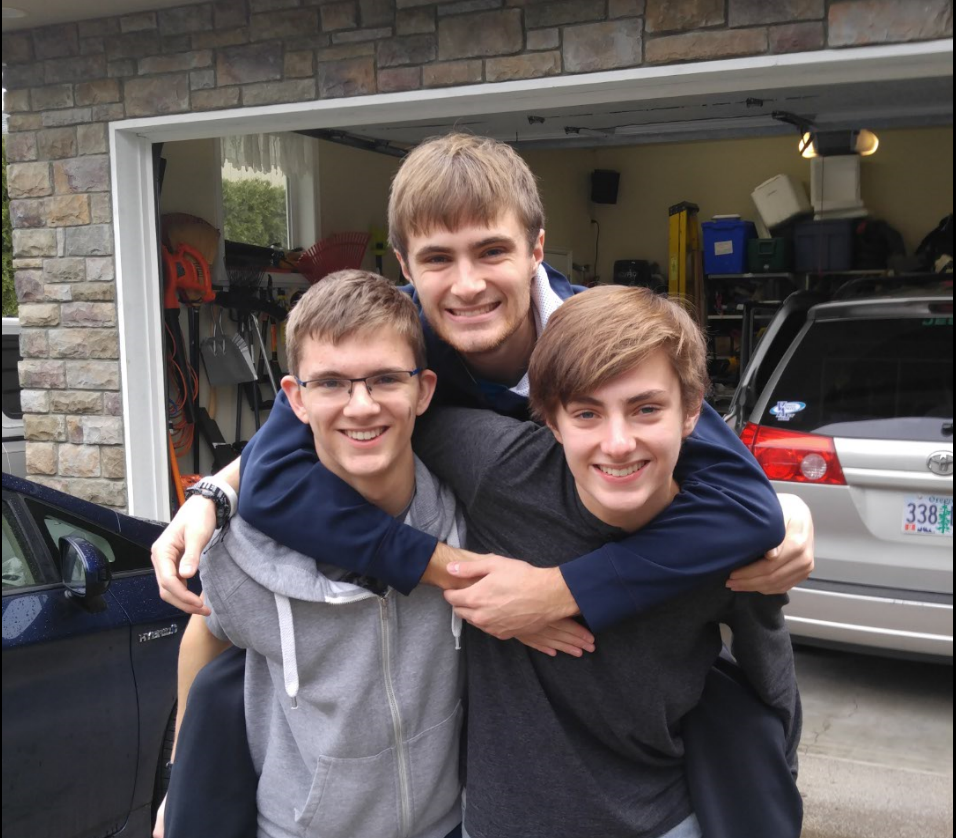
On a sunny California day in May, 2005, over twenty thousand people packed into Stanford University’s football stadium to listen to one of the brightest stars in Silicon Valley deliver his first (and only) commencement speech. Unbeknownst to them, by the time Steve Jobs and his family piled into their SUV in Palo Alto, they were running late. With his wife Laurene at the wheel and their three kids, Erin, Eve, and Reed in the back seat, Steve quickly went through his speech one more time, making final adjustments to his script as he went. He was tense, worried they weren’t going to make it in time.

When his family finally reached the stadium parking lot, a policewoman at the entrance was redirecting cars and telling them they needed to park in the overflow lot several blocks away. “You don’t understand,” Laurene explained, reading the doubt on the officer’s face. “I have the commencement speaker here. He’s right here in the car. Really!” Steve (dressed in an old black T-shirt, a pair of worn out jeans and a pair of Birkenstocks) didn’t quite strike the image of a commencement speaker, but the officer laughed when she realized who it was and allowed the family to proceed. They arrived just in time for Steve to put on his robe, gather himself, and take the stage.

Steve Jobs preparing for his 2005 Stanford commencement speech

Many observers consider the commencement speech Steve Jobs gave that afternoon to be one of the best speeches of the 21st century, and to date over 30 million people have watched it online. I first heard his talk in 2012, as I was wrapping up my senior year of high school and facing the daunting task of figuring out what I wanted to do with my life. Jobs’ stage presence, story telling ability and insightful commentary on the nature of life, death and meaning struck me, and I’ve routinely returned to his talk whenever I face uncertainty about my path in life. As I wrap up my 10 week stint here in Haiti and prepare for my next adventure in Cameroon, I decided to listen to Jobs’ speech once again, hoping his words would help orient me as I continue  to pursue my calling.

Capture84

As I listened to it this time, though, I took note of the three key lessons Steve Jobs drives home that have served as guideposts on my journey. I think they are vital lessons for anyone in pursuit of their calling in life, and they are as follows:

Steve Jobs’ 3 Lessons for Pursuing Your Calling

1. When you feel lost, trust that the dots will connect looking backwards
2. When searching for what you love, be persistent… don’t settle!
3. When making the big decisions in life, remember that one day you are going to die

Capture87

Lesson #1: When You Feel Lost, Trust That The Dots Will Connect Looking Backwards

As Jobs walks up to the podium and launches into his speech, his opening statements revolve around the idea that life only makes sense in retrospect. He gives an example from his own life, citing a calligraphy class he decided to drop in on after deciding to officially drop out of Reed College:

“If I had never dropped out, I would never have dropped in on that calligraphy class, and personal computers might not have the wonderful typography that they do. Of course, it was impossible to connect the dots looking forward when I was in college, but it was very clear looking backwards ten years later. Again, you can’t connect the dots looking forward. You can only connect them looking backwards. You have to trust that the dots will somehow connect in your future… you have to trust in something, your gut, destiny, life, karma, whatever, because believing that the dots will connect down the road will give you the confidence to follow your heart, even when it leads you off the well worn path… and that will make all the difference.”

Jobs’ first lesson for pursuing your calling is trusting that the experiences in your life will connect. Once you do that, you are free to confidently live out the calling you feel on your heart, wherever it may lead you. I can attest to that: following your calling will take you places you never dreamed of. In the span of a year and a half, following my calling has taken me to India, Haiti and soon to Cameroon. I trust that I’m on the right path because I believe God is the one issuing my calling, and I know that as long as I heed that calling, it will lead me to the right opportunities and experiences that will shape the course of my life. That being said, I still struggle with questions and doubts about where I’m going.

Capture86

On May 30th, two days before boarding my flight to Port-au-Prince, I penned myself a note in my travel journal that read “I don’t want to live a divided life, one where I constantly feel the pull of both my purpose and my home… I want them integrated. To do that I need to understand where to put down my roots: at home [in the developed world] or abroad [in the developing world].” Ever since returning from my trip to Chennai, India with the Opus Prize, as I’ve looked ahead towards my future after graduating, I’ve been split between two courses of action. In scenario one, I can see myself as an expat, working and living “in the field”, building relationships and raising a family. In scenario two I’m a consultant, a strategist working “behind the scenes” based in the US, Europe, or some other developed nation as my team and I support social entrepreneurial work around the world.

“Believing that the dots will connect down the road will give you the confidence to follow your heart” – Steve Jobs

Working in Haiti is summer has been my opportunity to explore scenario one and find out what expat life looks like, but it hasn’t helped me definitively chose one path over the other. Sometimes I wish I knew, wish that I could connect the dots looking forward, but then I realize that its the choice which makes life worth living. I long for confidence that I’m on the right path, when in reality the path is being created day by day, choice by choice. The only thing you can be sure of is that you’re making the best path you can make, striving to include your goals, dreams, values and talents as you surmount the challenges that arise as you go along.

I look forward to the day when I will look back and see how the twists and turns of the path I’ve made helped me achieve my calling, but for the time being I’ll enjoy the ride. With 10 weeks of living as an expat under my belt, I feel better equipped to make an informed decision when it comes time to choose my path.

Capture88

Filling out paperwork for study abroad in Cameroon

Lesson #2: When Searching For What You Love, Be Persistent… Don’t Settle!

After taking a quick swig of water to clear his throat and fight back the heat, Jobs launches into the second part of his speech, describing the importance of finding and doing work that you love:

“I was lucky. I found what I loved to do early in life… You’ve got to find what you love, and that is as true for your work as it is for your lovers. Your work is going to fill a large part of your life, and the only way to be truly satisfied is to do what you believe is great work. And the only way to do great work is to love what you do. If you haven’t found it yet, keep looking, and don’t settle. As with all matters of the heart, you’ll know when you find it. And like any great relationship, it just gets better and better as the years roll on. So keep looking… Don’t settle.”

I believe everyone has a calling, a purpose that they have been equipped to fulfill through their lives, and its important to align your career with that calling. Whether you pursue a career in the sciences, business, engineering, social work, teaching, writing, acting, music, or another field, your career helps you fulfill your calling when you use your talents and abilities to serve and empower others. As an example, I know that I want to use my business knowledge to advance the fields of social entrepreneurship and social business, creating a world where organizations profit as a result of helping people maximize their potential, rather than as a result of taking advantage of people. I want to be a part of the movement that helps businesses become agents for social change.

21st Century Spectrum of Business

Many people find that to be an unconventional goal as a business major, but its because I see a future in which people don’t start businesses to make huge amounts of money, but rather to make the world a better place. I agree with Pope Francis’ assessment in the Evangelii gaudium, where he writes that “Business is a vocation, a noble vocation, provided that those engaged in it see themselves challenged by a greater meaning in life; this will enable them truly to serve the common good by striving to increase the goods of this world and make them more accessible to all.” (203.) Francis, an outspoken critic of “unfettered capitalism”, understands the need for change. The way businesses currently operate, with all the focus on quarterly earnings and stock prices, doesn’t take into account the tremendous harm being done to the environment and the workforce in the name of maximizing shareholder satisfaction. And Francis also sees that the way to change the system is to push the participants to unlock the deeper meaning of their work. Business can be a tremendous force for good, providing people with dignified jobs, livable wages, protecting the environment, and satiating people’s higher needs for self-actualization and fulfillment… but only if we choose to make it so. That is a mission I want to spend my life advancing.

Business can be a tremendous force for goodbut only if we choose to make it so

The key to doing great work is to ensure your job allows you to pursue your calling. Many people separate the two, assuming that you need to work to pay rent and to allow you to volunteer and pursue making a difference in your spare time. You cannot settle for this scenario. To do great work, you must believe you are making the world a better place because of your work. Remember, “Your work is going to fill a large part of your life, and the only way to be truly satisfied is to do what you believe is great work. And the only way to do great work is to love what you do. If you haven’t found it yet, keep looking, and don’t settle.”

Lesson #3:  When Making the Big Decisions in Life, Remember That One Day You Are Going to Die

As Steve Jobs pauses for a second and surveys the crowd, he launches into the third and most compelling part of his speech: the value of death and dying. Every morning for the past 33 years, he says, he looks himself in the mirror and asks “If today were my last, would I want to do what I am about to do today?”. If his answer is no too many times, he knows something has to change. He goes on to say that “Remembering that I’ll be dead soon is the most important tool I’ve ever encountered to make the big choices in life. Because almost everything, all external expectations, all pride, all fear of embarrassment and failure… these things just fall away in the face of death, leaving only what is truly important. Remembering that you are going to die is the best way I know to avoid the trap of thinking you have something to lose. You are already naked, there is no reason not to follow your heart.”

Capture89

Half-finished coffins in Port-au-Prince

Take a moment and think of a time you decided not to do something because you were afraid of failing. Really think about it. Got something in mind? Now read that quote again:

“Remembering that I’ll be dead soon is the most important tool I’ve ever encountered to make the big choices in life. Because almost everything, all external expectations, all pride, all fear of embarrassment and failure… these things just fall away in the face of death, leaving only what is truly important. Remembering that you are going to die is the best way I know to avoid the trap of thinking you have something to lose. You are already naked, there is no reason not to follow your heart.”

This is perhaps the biggest lesson for pursuing your calling from Jobs’ speech. Lots of people choose to mortgage their calling en lieu of stability, comfort, and security. Other people are so afraid of rejection or failure that they never bother even trying to pursue their calling. Still other people feel like it would require too much unconformity or too much effort to orient their lives and their careers around their calling. All three excuses (stability, fear of failure and too much effort) go out the window when you think about death. When you are on your deathbed, surrounded by your children and your grandchildren, will you be thankful for the stability, grateful for having avoided failure, or happy in the fact that you didn’t push yourself too hard? Or will you be at peace, knowing in your heart that you did everything humanly possible to make a difference and live up to the calling you felt on your life?

“Remembering that you are going to die is the best way I know to avoid the trap of thinking you have something to lose” – Steve Jobs

No matter where you are in life, it’s never too late to choose to pursue your calling. The world needs passionate men and women, grandparents and grandchildren, sons and daughters who are not afraid to trust that the dots will connect, who pursue doing great work, and who live each day as if it were their last. You never know, you may be surprised by the greatness within you.

– – – – –

Steve Jobs’ 3 Lessons for Pursuing Your Calling

1. Trust that the dots will connect when you look back on your life
2. Be persistent searching for what you love… don’t settle!
3. Remember you are going to die when making the big decisions in life
– – – – –

This is my last post from here in Port-au-Prince. The next time you read an update from me, I will most likely be settling in to my semester abroad in the West African nation of Cameroon. I want to leave you with one final thought, a quote from a former Opus Prize winner named Lyn Lusi about pursuing your calling:

Lyn Lusi, Co-Founder of HEAL Africa

“Ask yourself, where in the world is it that God wants me to be working? In every one of us called to be His follower, God will put into our hearts a passion for justice — to fight for justice for a segment of His people through the high calling that we receive. It will not be the same call for everyone, and it might be completely different for you and for me. But God has a vision for our lives — that’s His job — and he sees a lion inside of us that He wants to set free. I urge you to set your lion free, and follow God’s high calling for your life.”

Lyn Lusi, 2011 Opus Prize Grand Winner

Trust that the dots will connect, don’t be afraid to forge your own path, and don’t settle for anything less than living out your calling.

– Aaron D

Capture85

– – – – –

Thanks for visiting aarondanowski.com! Leave you comments below, and be sure to stay up to date on my travels by clicking on the “Following” button on the right hand side of your page!

If you would like to contact me directly, please do so via email: adanowski@zagmail.gonzaga.edu