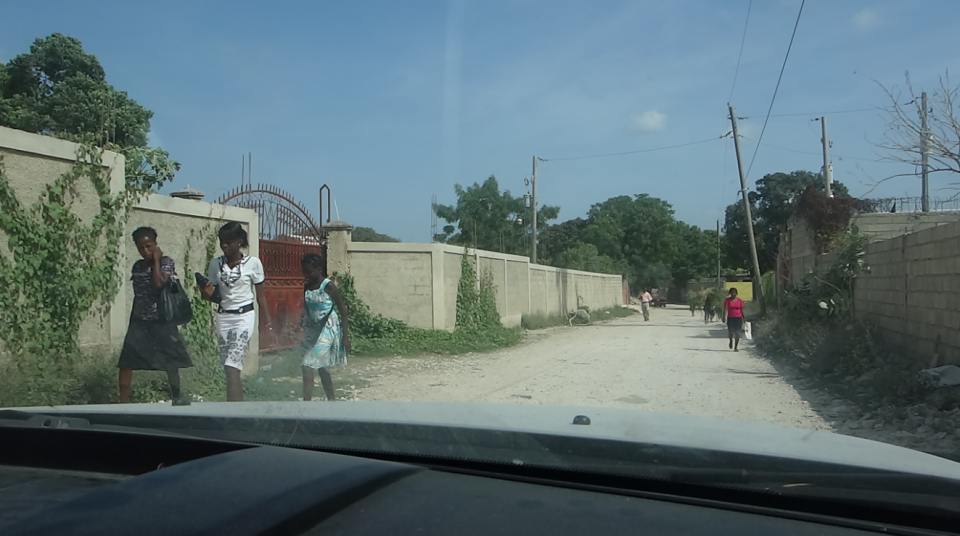
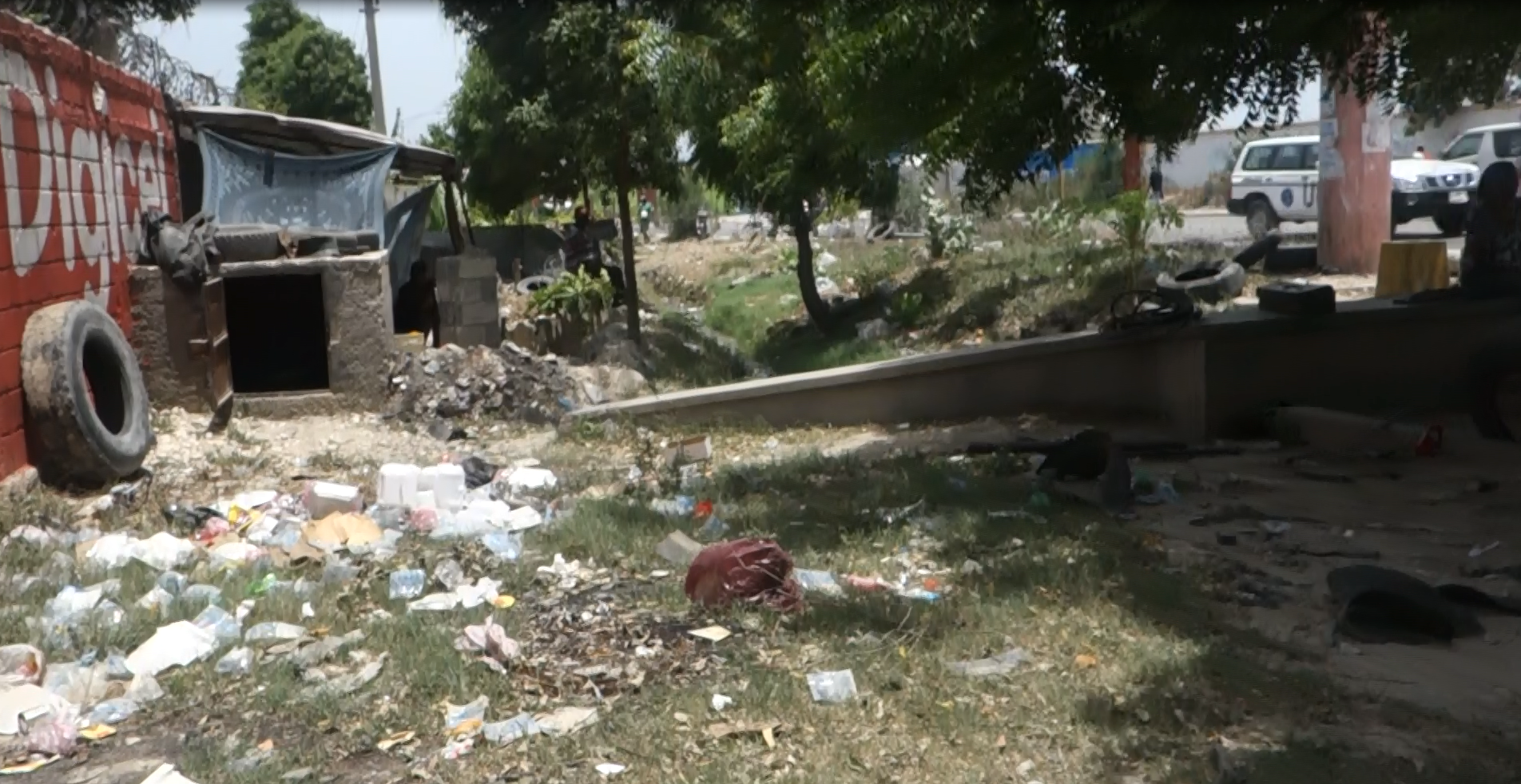
It’s been a particularly busy couple of weeks down here at Rebuild Globally: Our new director of sales visited the workshop for the first time, we hosted an operations expert for a week who helped us analyze the workshop for ways to improve efficiency, and Rebuild’s board of directors flew in for several days to meet the artisans and explore Port-au-Prince. All of these things have kept me pretty busy and unable to think about my next post until earlier this week, but now that things are slowing down I’ve had a chance to rest and reflect on what I want to write about.

– – – – –

When I found out I’d be spending the summer in Haiti, I knew that this was my chance to answer a question that had been burning deep inside me for over a year: What was life like as a foreigner working and living in a developing country? I felt very blessed to have the opportunity to personally explore that question after only my second year of college, and I intended to capitalize on it. My desire to work abroad after graduation was fanned into flame by my trip to India last summer for the Opus Prize, however I had no concept of what kinds of challenges and difficulties were associated with that kind of life. I felt like I was missing a vital piece of information for determining my future, and going to Haiti would provide me with a chance to better understand what I wanted to do post-graduation. Now, after almost two months of working, eating, sleeping, and soaking up life here, I’m starting to fill in the blanks.

To understand what it’s like to live as a foreigner in a developing context, you have to examine what it’s like to be an expatriate (“someone who lives outside of their native country”). From my experience working and speaking with many  expats in Port-au-Prince, there are four things that characterize their lives away from their homeland.

The 4 Characteristics of Life as an Expat:

1. Life as an expat is isolating

“Want to meet up at Starbucks at 3?”, said no one ever in Haiti. There isn’t a Starbucks in the entire country, nor is there a sports bar around the corner to kick back with buddies on a Friday night. You can’t go to a movie theater to decompress after a long week, or even go to the beach or hang out in the mountains without blocking out an entire day to travel there and back. This is one of the most consistent complaints I’ve heard from my fellow expats, and its one of the most prevalent aspects of life working in a country like Haiti.

Capture71

A typical afternoon after work: listening to music and decompressing at home.

As a result of the lack of communal spaces for expats to hang out, many times people will simply commute between home and work, home and work before spending a Saturday with friends at a local bar or driving up into the mountains. Having access to internet helps fill your spare time each afternoon, but spending too much time on your computer can dig you deeper into a hole of isolation. As you make it through the week and Thursday and Friday role around, a combination of exhaustion and mild frustration mounts from the daily challenges of working in Haiti, and something as simple as a radiator overheating on your way home from work or not having running water at your apartment one day can become a major stressor when you don’t have much to help relieve the workweek tension.

Capture63

Radiator spewing coolant on the way back home from work

2. The friendships you make with other expats galvanize quickly

Several weeks after I got here, I was at Pizza Amour with Annie and Sarah (the two expats currently working at Rebuild Globally) when I met a group of expats who worked a few blocks away from Rebuild at a woodworking company called Maxima. Among them was a guy named Kobus, a well built Dutchman who spoke with an accent and had a great sense of humor. Kobus had worked for Maxima for over a year and a half, and I quickly found out that he was known as one of the nicest, most hard working  guys around. Sitting next to Kobus was another expat named Kadisha, a recent arrival originally from the Congo but who had studied Architecture and Urban Design in Australia. When we first met, he told me that Portland, Oregon was the city he and his classmates had studied at length in their introductory urban design class, and he said he had spent hours pouring over maps of the place! After dinner was over, we said our goodbyes and I didn’t expect to meet either Kobus or Kadisha again.

Capture68

My good friends Kadisha (center) and Kobus (right)

Luckily the expat community is tight knit here in Port-au-Prince, so several weeks later we met up at Rebuild’s Boutique Grand Opening (where the photo above was taken) and soon afterwards I found myself hiking through the mountains far above Port-au-Prince with Kadisha (an experience I detailed in my last blog post). Another one of my good expat friends, Nick, a singer/songwriter from Colorado, invited me to a cookout a few families were having across town last weekend. Nick is spending three months in Haiti working for Heartline Ministries as a driver, and our time in Haiti has overlapped for about a month now. We drove over to Heartline’s main campus with several other expats, gathered firewood, and roasted hotdogs and marshmallows before talking late into the night.

Capture65

Roasting hotdogs at Heartline

Capture67

From left to right: Rob, Nick, Glenda, Sarah, and Becky enjoying dinner at Heartline

All the expats here know the challenges of working and living in Haiti, so they go out of their way to support one another and be inclusive when they have get togethers and events going on. I’ve been invited over for dinners and offered rides to church by the founders of Heartline, a husband and wife duo named John and Beth Mchoul who have lived in Haiti for 26 years ( they’re quick to tell you they’re originally from “Bahston”!). Through their generosity I’ve been given the chance to meet dozens of people and to be included in the tight knit expat community here in Port-au-Prince.

Capture83

Beth Mchoul receiving help from several young girls carrying food

3. Expats aren’t tourists, but they aren’t locals either

Visiting monuments, traveling around the country, and hanging out in the mountains or at the beach are all things expats do, just not all the time. That said, even though they live and work in country, that doesn’t mean they are fully integrated as locals. They live in a sort of limbo, suspended between their home country and their country of residence. The depth of the experience I’ve had here in Port-au-Prince as an expat (making friends, helping Rebuild to change and grow, and learning the local language) is contrasted with the breadth of experience many tourists get when they visit a foreign country for a short time. Tourists see a snapshot of the country, whereas expats get a higher resolution picture of a smaller area

Capture73

One of my favorite parts of being an expat in Port-au-Prince is being able to get my bearings. The past several weeks I’ve walked to some of my meetings by foot, navigating through the busy streets of Port-au-Prince. That’s something I’m only comfortable doing because I am confident I know where I’m going and I can speak enough Kreole to ask for directions if I get lost. I’m usually the only white person walking, which can be uncomfortable at times but people are almost always friendly and smile when you ask them how they are doing in their mother tongue. There’s something to be said for experiencing life as its being lived by the people around you, and meeting people briefly on my walks has been a great way of doing that.

4. Every expat has several outlets

Sometimes all you need is a bit of time away from the stress and chaos of life in Haiti, and having outlets to help you cope is critical. For some people its kicking back a few beers every night, for others its doing yoga, for still others its listening to music, reading fiction novels or making art. Since I arrived seven weeks ago, my outlets have been  photography and watching comedy clips on YouTube.

Watching shows like “Last Week Tonight with John Oliver” gives me a taste of what’s going on in the world, but it does so in such a way that I can laugh or shake my head at the absurdity of the world and forget momentarily about the stressors here in Haiti. Photography, on the other hand, has given me a chance to embrace the nature of reality here in Port-au-Prince and to try and capture its essence. I carry my camera with me just about everywhere I go, and so far I’ve taken over 3,000 photos. I try to challenge myself by experimenting with new methods of composition and trying to capture the contrast I see day in and day out in this city. Here are a few examples of the photos I’ve taken:
Capture75

Capture76

Capture74

Capture78

Capture79

Capture81

Capture82

Capture77

Capture80

– – – – –

The 4 Characteristics of Life as an Expat:

1. Life as an expat is isolating
2. The friendships you make with other expats galvanize quickly
3. Expats aren’t tourists, but they aren’t locals either
4. Every expat has several outlets

– – – – –

These four characteristics of life as an expat are things I never would have been able to learn back in Spokane or in Portland. Sometimes I think back to my first week here and try to remember how overwhelmed I felt by everything here. I was hit with so many changes all at once that I was numb, in a partial state of shock. I remember climbing underneath my mosquito net into bed the first night and thinking to myself “What the heck have I done?!? I don’t know why I thought this was a good idea!” With time, however, my reason for being hear grew more and more apparent. It has only really been during the past several weeks that I’ve had enough security and stability to begin trying to address the questions I came to Haiti seeking to answer: What is it like as a foreigner working and living in a developing context? Do I want to work abroad long term after graduation? What circumstances am I able to put up with in order to live the kind of life I want? I still don’t have all the answers, but I’m excited to continue chipping away at the questions, stripping away the layers of uncertainty to uncover the life I want to lead.

– Aaron D.

– – – – –

Thanks for visiting aarondanowski.com! Be sure to stay up to date on my travels by “Following” my blog by clicking on the button on the right hand side of your page!

If you would like to contact me directly, please do so via email: adanowski@zagmail.gonzaga.edu

Its been 36 days, 9 hours, and 21 minutes since I touched down in Port-au-Prince, Haiti and started my summer adventure here. This week I want to address a question the explorer Ben Saunders raises in a TED Talk he gave in 2012 that I posted to Facebook back in November: “If it is being done somewhere by someone, and we can participate virtually, then why bother leaving the house?”. I’d encourage you to take a few minutes and listen to Ben’s talk below:

As I listened to Ben’s TED talk again, I found remarkable parallels between my time here in Haiti and the time Ben spent in the polar circle. We both chose to take 10 weeks and travel to a physically taxing and (potentially) dangerous place for the sake of chasing a dream. Some people questioned our decisions, and both of our mothers were slightly concerned. Given these parallels, it may come as no surprise that I find Ben’s answer to the question “Why leave the house?” to be spot on:

“I can try to tell you what it was like, but you’ll never know what it was like. The more I try to explain that I felt lonely (I was the only human being in 5.4 million square miles), that it was cold (nearly -75 Celsius with wind chill on a bad day), the more words fall short and I’m unable to do it justice. And it seems to me that the doing, to try, to experience, to engage, to endeavor, rather than to watch and to wonder, that’s where the real meat of life is, the juice we can suck out of our hours and days.”

Ben Saunders

I try my best through this blog to describe what I’m experiencing and thinking down here, but the unfortunate reality is that its impossible to convey the full experience. I can’t sit you down next to me in the back of the pickup truck I was in yesterday and make you smell and taste and hear the experience.

“The unfortunate reality is that its impossible to convey the full experience.”

I can explain to you the smells of the exhaust and burning trash and the sound of Tap-taps honking and merchants bartering on the sidewalks as you drive through the winding roads, and I can show you photos of life unraveling on a Sunday afternoon as families walk back home after church and street vendors are out in full force fighting to capture your attention. What I can’t adequately describe is how amazing it feels to escape the heat of the city after a long hot week, and the joy of feeling the rush of cool air hitting your face as you climb ever higher and higher into the mountains to the south of Port-au-Prince.

Capture53

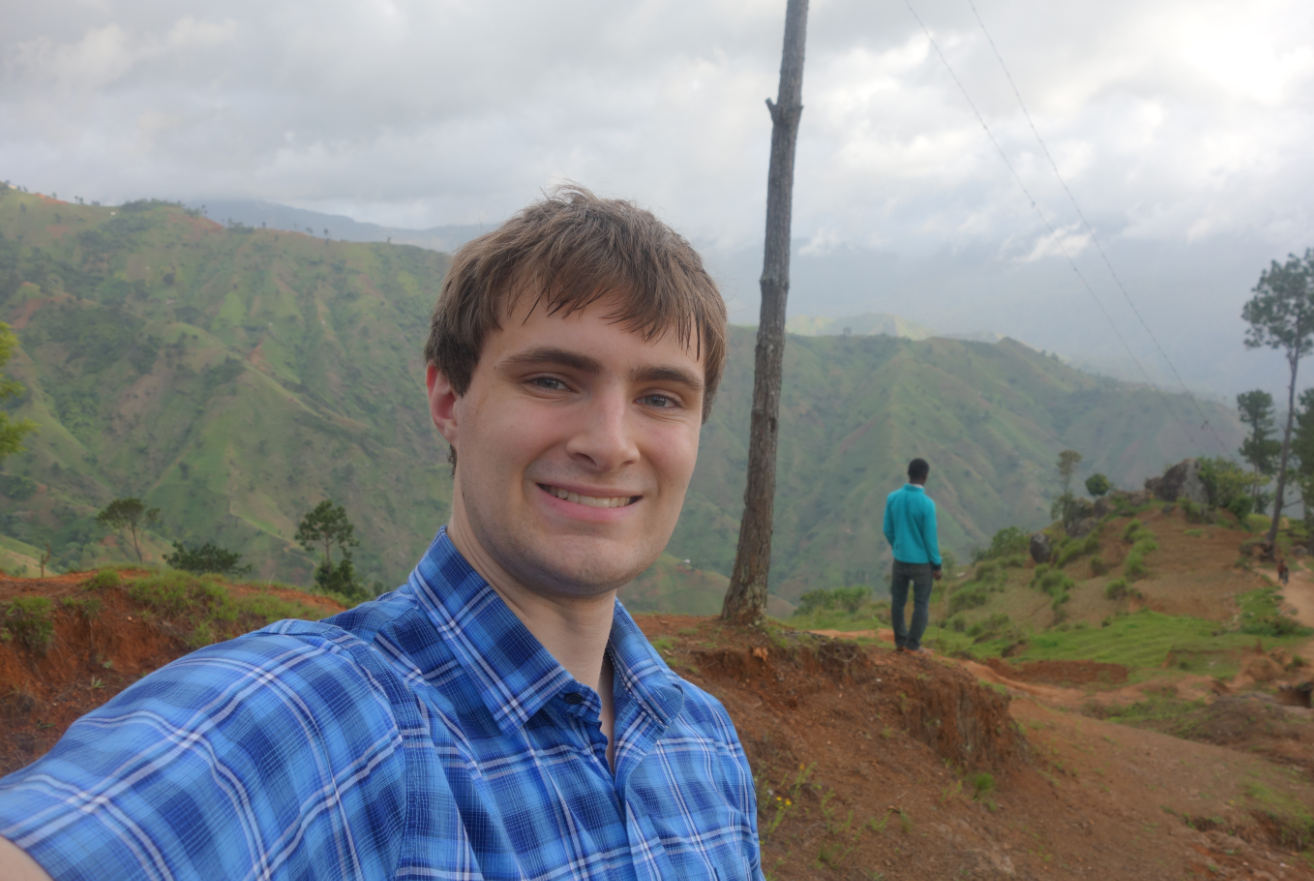
I can’t stand you next to me on the mountaintop we climbed yesterday and have you experience the breathtaking beauty of the mountains and valleys. Pixels on a screen are tantalizing, and words help form a picture in your mind’s eye, but its still not the same as being there. You feel on top of the world as you look across the undulating green hills, spotting the occasional  house of a rural farmer dotting the hillside and seeing the terraced planting beds they’ve set up to grow corn, carrots, and other vegetables. The air is filled with the sounds of  goats, chickens, and pigs as we descend deeper and deeper into the yawning mouth of the valley.

Capture55

Capture59

I can show you a picture of the friendly Haitians we met  listening to music after a catholic mass deeper in the valley. But I can’t bring that music to life through words, nor communicate the hospitality or kindness of these souls, nor their indomitable human spirit in the face of the adversity and hardship they face in the rural countryside of Haiti.

Capture56

And I can’t describe the feeling of being sick as you walk back up those mountains, after 5 hours under the beating sun. The guttural feeling of being exhausted, wildly dehydrated and nauseated goes beyond words, as does the almost primal instinct to find shade to sit down in and cool off. The experience of climbing hundreds of vertical feet with the taste of bile still fresh in your mouth is tough to articulate, and the sound of your body screaming for even just an ounce of cold, crisp water is something that can only be understood through experience…

Capture60

But that is exactly why you leave the house. I wouldn’t trade any part of my day — not even the hellish return journey from down in the valley– for anything, because I know that I found the real meat of life. My hours were lived fully and lived well, and that is a joy that cannot be matched, even if the moment was filled with physical pain and suffering (I’m feeling better now after a lot of water and some rest!).

– – – – –

The subtle truth embedded in Ben Saunders’ talk is that you don’t leave the house so you can be happy or comfortable. Quite the opposite, by all accounts you leave the house to face more difficulties and hardships. The point is that these hardships are what make life worth living. Taking a look back at Ben Saunders’ story, he voluntarily placed himself in a position to be by himself for 10 weeks, live out of a one-man tent, and be perpetually exhausted from hauling 400 lbs of equipment across hundreds of miles of frozen ocean… and then he choose to do it all over again as quickly as possible! That type of behavior goes against all conventional wisdom, and yet the desire to “try, to experience, to engage, to endeavor, rather than to watch and to wonder” urges all of us to pack our bags, lace up our shoes, and embrace the hardships in search of fullness and meaning.

Capture61

One of the most poignant parts of Ben’s talk when I watched it for a second time yesterday was when he said “there’s something very addictive about tasting life at the very edge of what’s humanly possible… and in my case polar explorations are perhaps not that far removed from having a crack habit. I can’t explain quite how good it is until you’ve tried it, and it has the capacity to burn up all the money I can get my hands on, to ruin every relationship I’ve ever had… so be careful what you wish for.”

Therein lies the difficulty of all of this. Deep down I know that when I go home, after some time to rest and recover, I’m going to be as anxious as ever to start traveling again and embrace the kind of life I’m living here where I come to terms with my limits every day. I’m lucky to have another adventure waiting for me in Cameroon come September 1st, but its a difficult thing to know that tension exists. I hope and pray that I can find balance in my life so that I’ll be grounded in a reality that offers me that challenge rather than perpetually chasing after the next adventure that lies just beyond my reach… One step at a time though. I know I am where I need to be right now, and I plan on being as present as possible for the adventure I’m living.

– Aaron D

Capture62

– – – – –

Thanks for visiting aarondanowski.com! Be sure to stay up to date on my travels by “Following” my blog by clicking on the button on the right hand side of your page!

If you would like to contact me directly, please do so via my email: adanowski@zagmail.gonzaga.edu

Capture50

The Open House for the new boutique on Friday

This was a tough week for me, both physically and mentally. On Wednesday I started coming down with a cold that sapped my energy and make my head feel ready to explode. At the same time, things at Rebuild got busier all week and everyone worked extra hours preparing for an open house event we hosted on Friday. The collision of these two things had me pondering some pretty big questions: 1. “What am I doing?” and 2. “Why am I even here?”

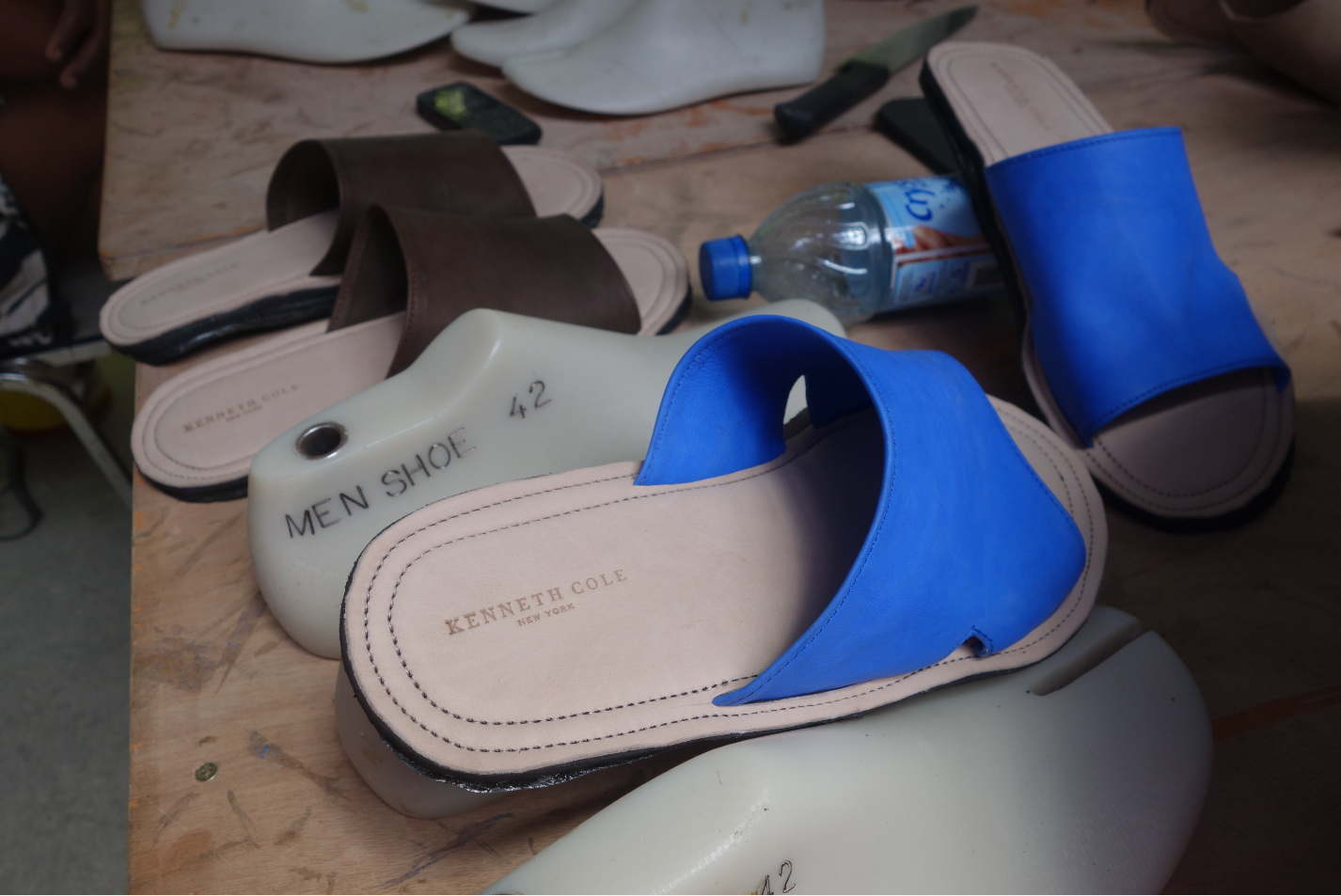
I knew the logical answers to these questions, I had practically memorized them: “I’m working with a social enterprise in Haiti that makes sandals out of tires and sells them to Kenneth Cole!”, and “I’m here because I wanted to experience what working with a social enterprise in a developing context feels like”. However, knowing these answers didn’t make the questions go away. In fact, every time they popped back up again it was more and more difficult to answer them. I knew WHY I was here, I was just less and less sure whether it was a good enough answer.

Capture48

Kenneth Cole Rebuild Sandals

If there’s one thing I’ve learned from being here in Haiti, its that no matter how inspirational or awesome your target is, you will inevitably have moments when you’re ready to quit or stop pursuing it (see my post last week about the Inspiration Curve for more on this). The challenges you face will seem too steep, and your energy reserves will run completely dry. These are the pivotal moments on the Inspiration Curve that define your life. They force you to reconcile your beliefs with your actions, your values with your lifestyle, and your goals with your level of commitment. When those moments come, you have a difficult choice to make: Should I quit and move on to a new pursuit, or should I persevere and continue to fight for my target?

There is a right time to quit and a right time to persevere. The trick is figuring out which one is right for your current situation. There is a stigma our society associates with “quitting”, as if giving up is always a failure on the part of the individual. However, knowing when to quit is incredibly valuable, because my definition it also helps you recognize when to persevere.

“Should I quit and move on to a new pursuit, or should I persevere and continue to fight for my target?”

There are three guiding principles I’ve come across that help answer the question of whether to persevere or quit. I’ve learned these principles from people who have found their “right” target, who live full, authentic lives by overcoming the daily obstacles in their way. Its important to note that these people are not perfect, nor do they all engage in similar pursuits or share common roots. But they do have one thing in common: they know what they are living for. Each of them has a purpose, a meaning that fuels their life and that gives them the strength to persevere through the almost daily challenges they face. Their clarity of purpose provides a compass for them to knto navigate when to quit and when to persevere. So, from atop the shoulders of these giants, here are the three guiding principles to know when to persevere and when to quit:

Principle #1. Find your Purpose and Follow your Heart by Answering the Question “What do I desire?”

Steve Jobs nails it on the head when he says “Have the courage to follow your heart and intuition, they somehow already know what you truly want to become. Everything else is secondary.” Following your heart, or as Alan Watts puts it, what you “desire”, requires a high level of commitment and self-confidence. In order to find your purpose, you need to be able to articulate not only what you desire your life to be about, but also why its important to you. Your answer depends heavily upon your values, your beliefs, your present needs and your future plans, all of which are growing and changing as you add new experiences and people to your life. Answering this question does not happen overnight; it can take years, even decades, and the answer can change drastically over the course of your life. But ultimately, it’s the most important question you can ask yourself in order to find your “right” target. “You’ve got to find what you love”, Jobs says, “Your work is going to fill a large part of your life, and the only way to be truly satisfied is to do what you believe is great work. And the only way to do great work is to love what you do. If you haven’t found it yet, keep looking, and don’t settle. As with all matters of the heart, you’ll know when you find it. And just like any great relationship, it just gets better and better as the years role on.”

The importance of following your heart and discovering  what you desire is illustrated in the story of Scott Harrison. When you listen to Scott speak, its easy to get swept up in his stories. His sterling silver gray hair belies his age (he’s thirty nine), but the passion in his eyes and his expressive, lively mannerisms make him seem more like an idealistic twenty five year old. The son of an electrical engineer and a journalist, Scott grew up as an only child and moved from Philadelphia to New Jersey when he was 4. At the age of 18, he moved to New York city as part of a rock band and started playing gigs in local clubs. He grew his hair out long and enjoyed the nightlife New York had to offer. Over the course of time, he began to realize that the club promoters booking his band were making a heck of a living, and after six months when his band broke up, Scott decided to jump into the night life business. He quickly began partnering with a local promoter to book shows for the likes of Stevie Wonder, Prince, and Whitney Houston. “If you wanted to rebel, here was a way to rebel in style”, Scott said in an interview several years ago with Kevin Rose. “You’d work a couple nights a week, get beautiful people to come to your club, you’d walk in and get 50 drink tickets, and all your friends would drink for free… oh and by the way you got paid!” After several years in the business, Scott was one of the most successful night club promoters in the New York, getting paid thousands of dollars a month to drink Budweiser and Bacardi, and jetting off to Paris on the weekends to attend fashion shows for the heck of it.

Scott Harrison (INC.com)

On December 31, 2003, ten years after entering the promoter business, Scott was sitting on a beach in Uruguay watching the sunset next to his supermodel girlfriend while servants waited on them and the rest of their group (they had all arrived in private planes that afternoon to celebrate New Years). It was on that trip that Scott realized something. In his own words, “I was the worst person I knew… I was the most selfish, sycophantic, arrogant, no good… I really saw what I had become. I was emotionally bankrupt, spiritually bankrupt, and morally bankrupt. Every single thing I had held as a value I’d walked away from in this sort of slow burn over the ten years”. After he returned from Uruguay, Scott began to think hard about what he desired in his life, and after reconnecting with his faith, he ended up spending the next two years paying to be a photographer on a Mercy Ship, a floating hospital that travels to underdeveloped countries around the world to provide top quality medical care to those in need. The experience was transformational, and one of the many realizations he had over the course of his time in Africa was that one of the biggest underlying issues Mercy Ships wasn’t addressing was the lack of access to clean water. After moving back to New York in 2006, Scott founded the nonprofit charity:water, an organization dedicated to bringing clean and safe drinking water to people in developing nations. Since its inception, it has raised tens of millions of dollars to build thousands of wells around the world, and it has emerged as one of the most innovative, transparent nonprofits in the world.

Scott Harrison’s transformation is an extreme example, but it illustrates the possibilities that open to us when we stop to consider what we desire in life, and how we can use our gifts to make the world a better place. If you’re interested in hearing more of Scott’s story in his own words, I would highly recommend watching his 51 minute interview with Kevin Rose, and you can also check out charity:water’s website for more details on the work they do.

Scott Harrison, founder of charity:water

Footnote: If You Don’t Know Where to Start, Answer the Question “What DON’T I Desire?”

Scott figured out what he desired by first recognizing what he DIDN’T desire. He knew he was not living the kind of life he wanted, and he decided to quit his former life in order to take action and start searching for his purpose. A good way of gauging whether or not you should quit is to think about how you DON’T want to live your life. When you find yourself slipping into those things, take active steps to change things up. You don’t need to know exactly where you’re going in order to change directions.

Principle #2. Live your Passion, and Make Every Moment Count. You Can Persevere Through Just About Anything With a Good Reason WHY You’re Alive

As you discover your purpose, you need to trust in your ability to live it out and make everyday count. In other words, once you know the WHY, don’t be afraid to figure out the HOW. Randy Pausch and Steve Jobs both make it clear that you have too little time on this earth not to follow your heart and make the world a better place. “It is going to get hard and you are going to want to quit sometimes, but it will be colored by who you are, and more who you want to be” Will Smith says. Whether that means overcoming adversity to ensure your kids have more opportunities than you did, investing your time teaching and shaping the world’s future leaders, advancing public policy to empower the marginalized in society, working to promote human rights, ending food insecurity, or increasing access to healthcare and education, you can’t be afraid to follow through on your passion. As Will Smith says at the end of the video, “The first step, before anybody else in the world believes in you, is you have to believe in you… Why would you be realistic? What’s the point of being realistic?”

There are many good examples of people living their passion, believing in themselves and taking Will Smith’s advice and being unrealistic. Take Gollapalli Israel for instance, a Dalit in Chennai working to promote upward mobility for thousands of outcasts in Indian society amidst the climate of a rigid social caste system.

Or Wendy Kopp, the founder of Teach for America, a movement that is seeking to reform the public school system in America, opening new worlds of possibility for kids all across the country and creating a dedicated network of education reformers in all levels of the education system.

Or Fr. Rick Frechette, the Passionist priest working to provide high quality pediatric care, employment, and security to thousands of at-risk Haitians here in Port-au-Prince, despite the lack of infrastructure and stable political climate.

None of these people managed to reach where they are today without facing major challenges and obstacles, and I guarantee you all of them thought about giving up, but their passion and clarity of purpose helped inspire them to continue to pursue what they desire in life and continue to dream.

Principle #3. Quit and Move On When Your HOW Isn’t Getting You Closer To Your Purpose

Chances are you probably won’t find the best way to live your purpose on the first try, but each time you realize you aren’t moving in the right direction to live the life you desire, you need to be able to quit in order to find the path that resonates with your ever evolving values, beliefs, needs, and goals. William Whewell, an English scientist, is quoted as saying that “Every failure is a step to success. Every detection of what is false directs us towards what is true: every trial exhausts some tempting form of error. ” This is the case with finding your “right” target.

Now, an important thing to note is that does not mean quitting whenever things get difficult. As we have already seen, things will inevitably get difficult, and if you quit each time you encounter a challenge, you won’t make any progress towards any target for your life. It means you ought to quit when you realize your target for your life is not in line with how you want to live your life. I don’t think the concept of “strategic quitting” is stressed enough in society today, especially in the formative years of high school and college when students are trying to figure out what they want to do with their lives. I have several friends who went to colleges in the Midwest and the East Coast thinking they wanted to be doctors, and when they arrive they realize that they were competing with their classmates to see who could make it through all the weed-out classes and “survive”. If someone drops out of the pre-med track, there is a tendency to characterize them  as being less intelligent or less able to handle the challenge of being a doctor. The same is true with students who switch out of engineering into business, or from a “hard” major to a “soft” major. The switch is (consciously or subconsciously) considered a failure.

However, most of the time “quitting” one major for another is simply an opportunity to more fully discover yourself, not a personal failure. It’s a successful step towards living the life you want to live, granting you more flexibility to find your passion and pursue your purpose. I switched from engineering to business before the start of my freshman year, and given all that has happened in the past two years, I think it worked out pretty well.

– – – – –

The Three Guiding Principles for When to Persevere and When to Quit:

Principle #1. Find your Purpose and Follow Your Heart by Answering the Question “What do I desire?”

Principle #2. Live your Passion, and Make Every Moment Count. You Can Persevere Through Just About Anything With a Good Reason WHY You’re Alive

Principle #3. Quit and Move On When Your HOW Isn’t Getting You Closer To Your Purpose

– – – – –

Now that the week is over, my batteries are recharging, and with these three principles in mind, I came back to the two questions I had been pondering: 1. “What am I doing?” and 2. “Why am I even here?”

I’m doing what I need to do in order to pursue my purpose and live my passion, and I’m here because I have faith I’m on the right path, making each moment count and allowing my desire for my life to evolve and grow with each step I take.

Those feel like good answers to me, and I hope you can say the same as you face the challenges that await you on your path.

– Aaron D.

Capture46

– – – – –

Thanks for visiting aarondanowski.com! Be sure to stay up to date on my travels by “Following” my blog by clicking on the button on the right hand side of your page!

If you would like to contact me directly, please do so via my email: adanowski@zagmail.gonzaga.edu

I couldn’t wait any longer, I had to leave… right away. I grabbed my jacket, did some quick warmup stretches, put my headphones on and started running. As I exited the neighborhood and started towards the overpass, I had a vague inkling that something big was happening, but I never expected an overcast December afternoon in 2014 would change the course of my life. All I knew was that I had to keep on running…

4 miles later I arrived at the bookstore out of breath, my heart pumping in my ears. I took off my jacket as I strode into “Powell’s Books”, walked up to the kiosk at the front desk and typed “How to Change the World, David Bornstein” into the search box. “2 Resuits: Section 131b: Polit/Activ/Peace”. I ran over to the shelf, bought the book, and stuffed it into the worn navy drawstring bag slung across my back. With a chuckle to myself I realized Mom was probaby back home wondering where I was… little did she know! I put my headphones back on and ran all the way back home before plunking down on my bed, pulling the book out of my bag and opened the front cover.

Powells Books at Cedar Hills Crossing

“This is a book about people who solve social problems on a large scale.”

– David Bornstein, “How to Change the World”, Page 1

I’m not exaggerating when I say that that afternoon changed my life. Although I had heard the term “social entrepreneur” tossed around before, the words took on new meaning as I tore into my new book. It was no longer just a concept… social entrepreneurship became human in these pages. I read about a Harvard Divinity School graduate working to bridge the college gap for inner city youth in America, an agronomist from Porto Alegre bringing electricity and prosperity to the rural poor in Brazil, and a dissatisfied general practitioner physician who quit her job at a hospital to focus on addressing the causes of chronic disease in Rio de Janeiro. These stories were a revelation, a testament to the power of human faith and will power over the “unsolvable” problems in this world. I was hooked.

Capture38

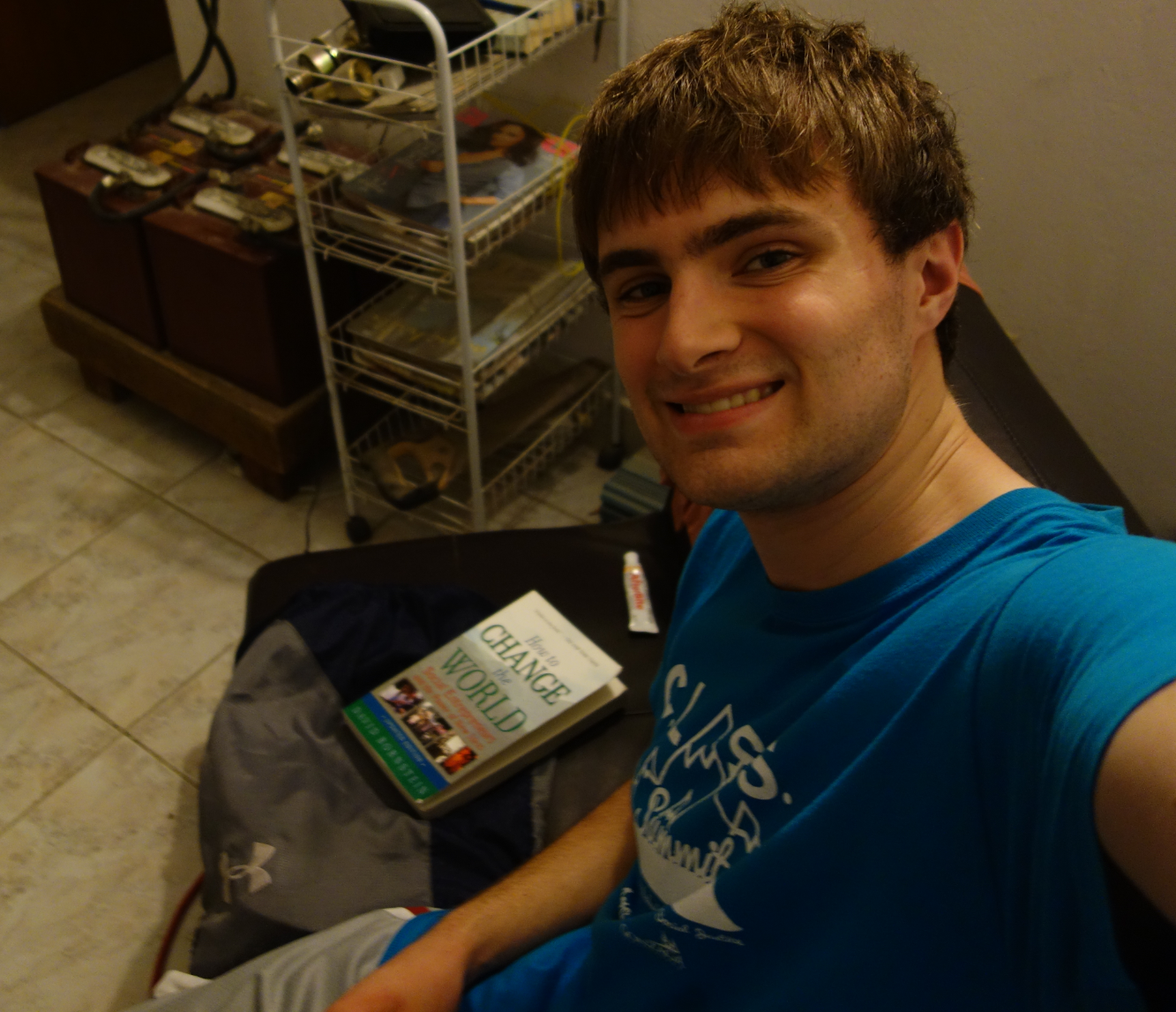
The book, the drawstring bag and me here in Port-au-Prince

The excitement I felt reading David Bornstein’s book was the flash in the pan, an exciting epiphany that powered me for a short time, but that experience has given way to a more temperate, long-burning desire to shape my life around social entrepreneurship and social impact. In the 18 months since first reading those stories, I’ve travelled over 36,000 miles to visit social entrepreneurs in India, Washington DC, and Haiti, and by the end of December, two years since setting out on that fateful run to the bookstore, that total will reach 60,000 miles (enough to circumnavigate the earth… twice) as I return from 4 months in Cameroon learning from development experts and social entrepreneurs in the West African nation.

Capture43

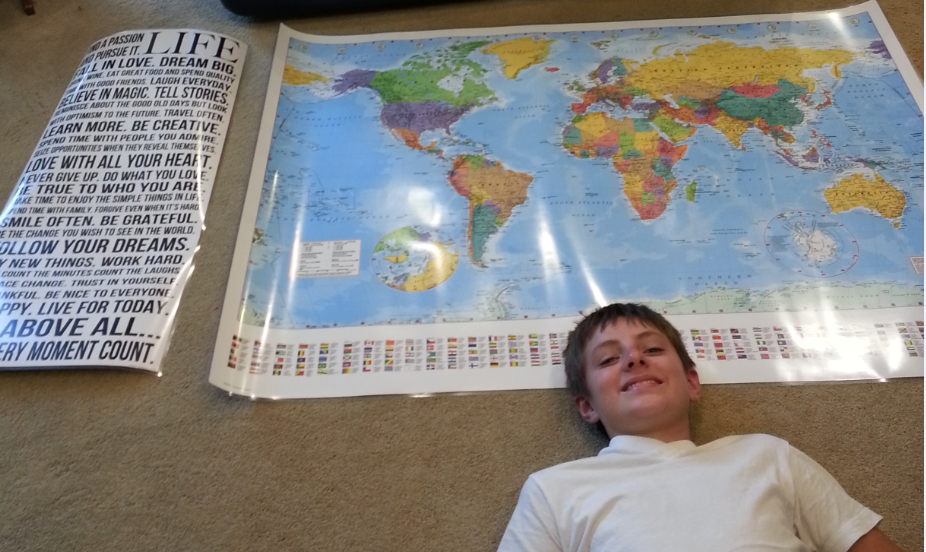
My youngest brother Paul posing with the World Map I bought 2 years ago for my dorm room. I look at it everyday at school.

This past week I thought a lot about that long-burning passion. I wanted a way to explain the emotions I had experienced ever since I decided to come to Haiti. I wanted to describe the excitement I felt when I first applied for this internship on a cold November night in Spokane, rapidly drafting a cover letter in French in my dorm room at Gonzaga. I wanted to encapsulate the shock of adjusting to life down here and coming to understand the imperfect reality of scaling a social business in Haiti. And I wanted to describe the ordinary, unglamorous drumbeat of activity that contribute towards the success of Rebuild’s mission over the long term.

I wanted a way to explain the emotions I had experienced ever since I decided to come to Haiti.

That process yielded a concept that I call “The Inspiration Curve”, and at its core, it describes what happens when people’s expectations meet reality. There are three parts to the Inspiration Curve, but before I explain it I want you to think of a goal or a dream you’ve pursued at some point in your life. Maybe it was a dream job (I wanted to be a professional basketball player for a long time), a mission for your life (“I want to have a successful marriage”), or a cause you cared deeply about (“I want to help the homeless”, “I want to teach the next generation”, “I want to discover a cure for cancer”, etc). Got something in mind? Lets look at the three stages of the Inspiration Curve:

The Inspiration Curve

  1. Love at a Distance: You identify something you desire (e.g. a new job, a spouse, a societal change), and you imagine how awesome it will be when you have that thing. The amount of inspiration you have to reach your target is very high.
  2. The Sudden Drop: As you take steps to reach your target, you encounter unexpected challenges and resistance that weaken your level of inspiration. You start to realize your expectations were out of touch with reality, and you are not receiving the happiness or wellbeing you expected. In fact, you are working harder than you were before and receiving less reward in return.
  3. Choices, Choices: Each time you face a new obstacle on the path to your target, you must (consciously or unconsciously) reassess the value of reaching your target based on your values, your beliefs, your current needs and your future plans. Once you’ve done that, you can choose one of three paths:
    1. The Uphill Climb (the blue line): You decide that the target is in line your values and beliefs, and you commit to exert as much effort as it takes to overcome the obstacle in your path. You can’t live the life you want without reaching your target, so you push forward. Each time you choose this path and overcome an obstacle, your level of inspiration increases and you press forward with greater dedication.
    2. The Hobby (the orange lines): You realize that the value of achieving your target is not worth how much effort it will take to reach it. You identify the limit of how much effort you are willing to put into pursuing your target and you scale back your expectations to match the benefit you receive from your effort. Your level of inspiration remains constant over the long run, enough to fuel your effort and to ensure a steady stream of benefit, but not enough to convince you to overcome the next volley of obstacles.
    3. The Change of Plan (the green lines): You realize that you are not inspired to continue pursuing that target. Maybe you have identified a new, more attractive target, or your values, beliefs, needs or plans may have changed. You stop chasing that target and adjust your course to seek another target.

My target right now is to become a social entrepreneur, and I was inspired to work at Rebuild this summer not only because I believe in their mission and their work, but also because I wanted to discover whether I could continue “The Uphill Climb” towards my target… or if the challenges would overwhelm me and force me to change my trajectory. The jury is still out, but  one thing is for certain: After three weeks in Port-au-Prince, I feel more confident in my ability to overcome the obstacles that stand in my way.

“I think the heart of it is that entrepreneurs for some reason deep in their personality know, from the time they are little, that they are on this world to change it in a fundamental way.”

Bill Drayton, “How to Change the World”, Page 127

I would be remiss if I didn’t say I am not up for the task on my own. I’m blessed to have a strong support system of friends and family, and with my feet firmly planted in my faith, “I can do all things through him who gives me strength” (Phil 4:13). Even so, whenever I’m feeling overwhelmed or frustrated or tired, I love to reflect on the prayer of Ken Untener:

Capture41

It helps, now and then, to step back and take a long view.
The kingdom is not only beyond our efforts, it is even beyond our vision.

We accomplish in our lifetime only a tiny fraction of the magnificent
enterprise that is God’s work. Nothing we do is complete, which is a way of
saying that the Kingdom always lies beyond us.

No statement says all that could be said.
No prayer fully expresses our faith.
No confession brings perfection.
No pastoral visit brings wholeness.
No program accomplishes the Church’s mission.
No set of goals and objectives includes everything.

This is what we are about.
We plant the seeds that one day will grow.
We water seeds already planted, knowing that they hold future promise.
We lay foundations that will need further development.
We provide yeast that produces far beyond our capabilities.

We cannot do everything, and there is a sense of liberation in realizing that.
This enables us to do something, and to do it very well.
It may be incomplete, but it is a beginning, a step along the way, an
opportunity for the Lord’s grace to enter and do the rest.

We may never see the end results, but that is the difference between the master
builder and the worker.
We are workers, not master builders; ministers, not messiahs.
We are prophets of a future not our own.

Bishop Ken Untener of Saginaw

Capture40

I hope it gives you the same peace it gives me when I read it. I’ll check back in next week, hopefully with more stories to tell and lessons learned!

– Aaron D.

– – – – –

Thanks for visiting aarondanowski.com! Be sure to stay up to date on my travels by “Following” my blog by clicking on the button on the right hand side of your page!

If you would like to contact me directly, please do so via my email: adanowski@zagmail.gonzaga.edu

A few blocks away from our house, there is a small restaurant called “Pizza Amour” (“Pizza Love” in Haitian Creole/ French). It’s located on a dusty side street filled with pot-holes and rocks, but for many of its patrons its one of their favorite places in Port-au-Prince. Its only open a few days a week, and even then only for dinner, so for many of its visitors going there is a special treat they look forward to all week. Its an oasis in the midst of the sprawling city, a place where they can catch up with friends and decompress from the non-stop stress and difficulties they face working in Haiti.

Capture20

The road to Pizza Amour

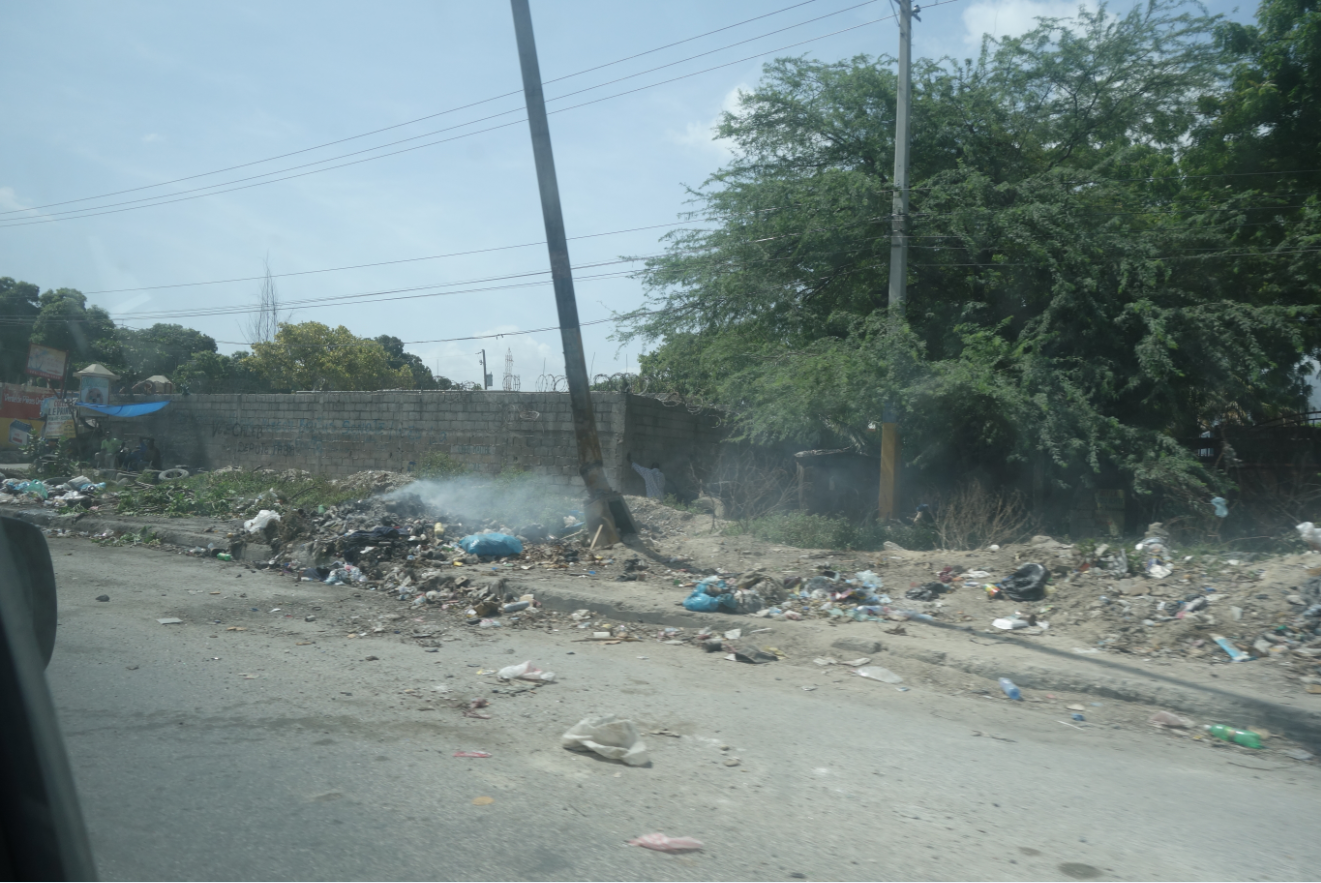
As the sun sets in Port-au-Prince, the streets grow dark and the hustle and bustle of city life starts to wind down. There are almost no streetlamps in the city, largely due to the lack of consistent electricity, so by 9 pm the streets are practically deserted. The drive to Pizza Amour in the evenings feels slightly surreal as you pass small burning piles of trash on the sidewalks, illuminating the faces of stragglers walking home from selling their wares at the local intersection.

Capture22

The smoldering remains of a trash fire

In the dim light of the flame, you can just make out the remaining piles of trash which will likely take their turn lighting up the night in the next several days. As oncoming trucks and motorcycles jockey for position on the unpainted roads, their bright lights blind you as they honk their horns and veer into oncoming traffic to fly past their slower compatriots.

“The drive to Pizza Amour feels slightly surreal as you pass small burning piles of trash on the sidewalks”

As you turn onto Pizza Amour’s street, the only thing penetrating the darkness is the steady glow of your headlights, alerting you to the impending bumps and dips in the road you are unable to avoid. You park outside the 10 foot high security wall and all goes dark as you switch the headlights off and walk towards the solid steel gate entrance. Crossing the threshold into the restaurant, you pass an armed security guard and, after being given a once-over, you enter into a completely different world. Underneath the lush trees of the courtyard, a well-lit open air restaurant is alive and buzzing with activity. Kids are running around and jumping on the trampoline on the side of the house, dogs run up to you with their tails wagging, and as you sit down with your friends and your order arrives, its easy to forget about the stressors that are an ever-present part of working and living in Haiti.

Capture21

Pizza Amour

In many ways, the journey to Pizza Amour is a microcosm of Haiti’s journey to Peace and Prosperity. There are many challenges facing the country and its people on this journey, and it would be easy to lose your way in the darkness. When taken all at once, these problems (lack of infrastructure, rampant unemployment, slums/ poor living conditions, disease, a growing wealth gap) can seem overwhelming and debilitating. Many people become depressed or pessimistic, unsure about how to change a system that seems so fundamentally broken.

Crossing the threshold into the restaurant, you pass an armed security guard and are admitted into a completely different world.”

However, there are a lot of good people (like Rebuild Globally’s founder Julie Columbino, and Opus Prize Winner Fr. Rick Frechette) working to light the way by improving people’s lives long term. Its these people, these specks of light in the  darkness, that make you believe that maybe, just maybe, there is a bright future in store for all Haitians.

– – – – –

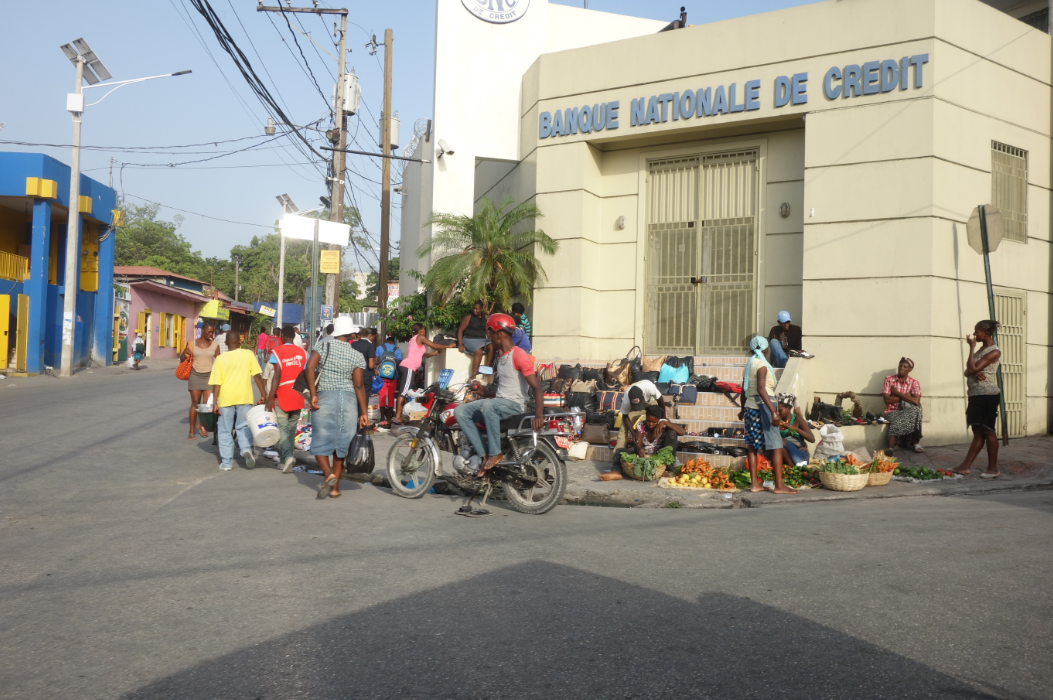
Haiti is a country of stark contrasts, and in order to get a better sense of the country’s challenges you need to recognize that contrast in two main areas. The first key area is food. At noon everyday, I walk outside to the main road to buy lunch. I pay 75 Gourdes (about $1.50) for a plate of rice, beans and chicken from a lady who cooks the food on the side of the road underneath a beat up USAID tarp (click on the link below to see a video of that walk). The first time I did this, I couldn’t believe I was actually buying food from a street vendor, something that went against all of my ingrained beliefs about food preparation. But then I realized something. Was my aversion to the food itself, or to the environment in which I was buying it?

https://onedrive.live.com/redir?resid=dbd0addcd1c825e3!17835&authkey=!AJw0gK0qeUYoDGk&ithint=video%2cMTS

Capture37

The lean-to where I buy my lunch everyday.

Just because I had never eaten food prepared in a lean-to, didn’t automatically make it bad to eat. I trusted my supervisors at Rebuild who said it was ok to eat and I haven’t looked back. Now when its time for lunch, I’m almost excited to walk up to the lean-to and give the woman support for her enterprising spirit, especially considering that her food is delicious! There are dozens of people just like her all over the city serving food under umbrellas and lean-tos at intersections and on many of the main roads, and I think getting over the initial stigma I associated with the term “Street food” has been a very valuable lesson. Definitely still need to exercise caution, but don’t automatically write someone off because of where they’re serving their food!

Capture24

My delicious daily lunch of rice, beans, chicken and some vegetable garnishes!

In contrast to the street food, sometimes my supervisors and I will walk less than a block away the other direction up the street and eat lunch at a sit-down restaurant called “LunchBreak”. After a particularly crazy or hectic morning, its nice to sit in the IKEA-esque chairs, enjoy the air-conditioning, and eat American food (i.e. a Chicken Caesar Sandwich) while listening to Taylor Swift, Ed Sheeran and Imagine Dragons in the background. Somehow I never really pictured places like LunchBreak or even Pizza Amour when I thought of Haiti, but the fact that there are (relatively) upscale, Americanized restaurants and street vendors less than a block away from each other quite accurately describes the contrasts that can be found here in Haiti.

Capture29

Lunch Break is Haitian owned and provides an upscale, Americanized meal experience.

In addition to the upscale restaurants, there are also modern supermarkets where we do most of our grocery shopping like  “Stop and Go”. The first time I walked into the store, I could hardly believe that I was still in Haiti! This is not the image that comes to mind when you think of “the poorest country in the western hemisphere”, but there is a strong group of businesses that provide food products and services to upper-class Haitians and expats. The problem is, how can these types of services be brought to the vast majority of Haitians, rather than the lucky select few? According to Haiti Partners, 78% of Haiti’s population lives on less than $2 a day, and over 50% of Haitians live on less than $1 per day. These numbers are even bigger in rural areas, and other reports show that over 66% of the Haitian labor force does not have a formal job. These are the things Rebuild Globally is trying to address through their model, but if the contrast in food services between the poor and the rich is to diminish, more formal jobs are necessary to lift Haitians out of poverty.

Capture27

Am I in Port-au-Prince, Haiti or Beaverton, Oregon? Judging strictly by the cereal options, I would have guessed the latter!

Capture28

Pringles, Oreos and Cheez Its are worldwide treats, it seems!

– – – – –

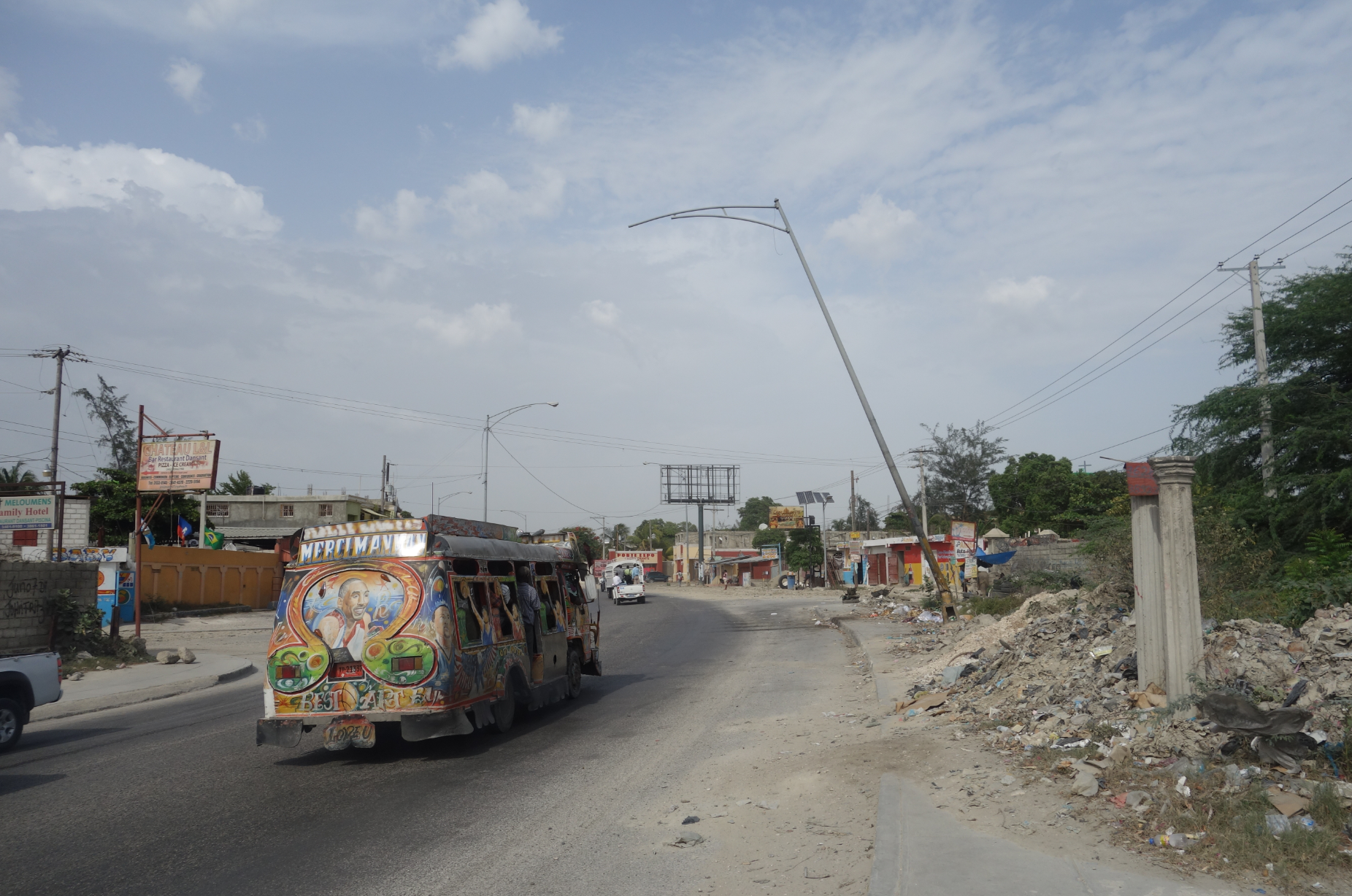
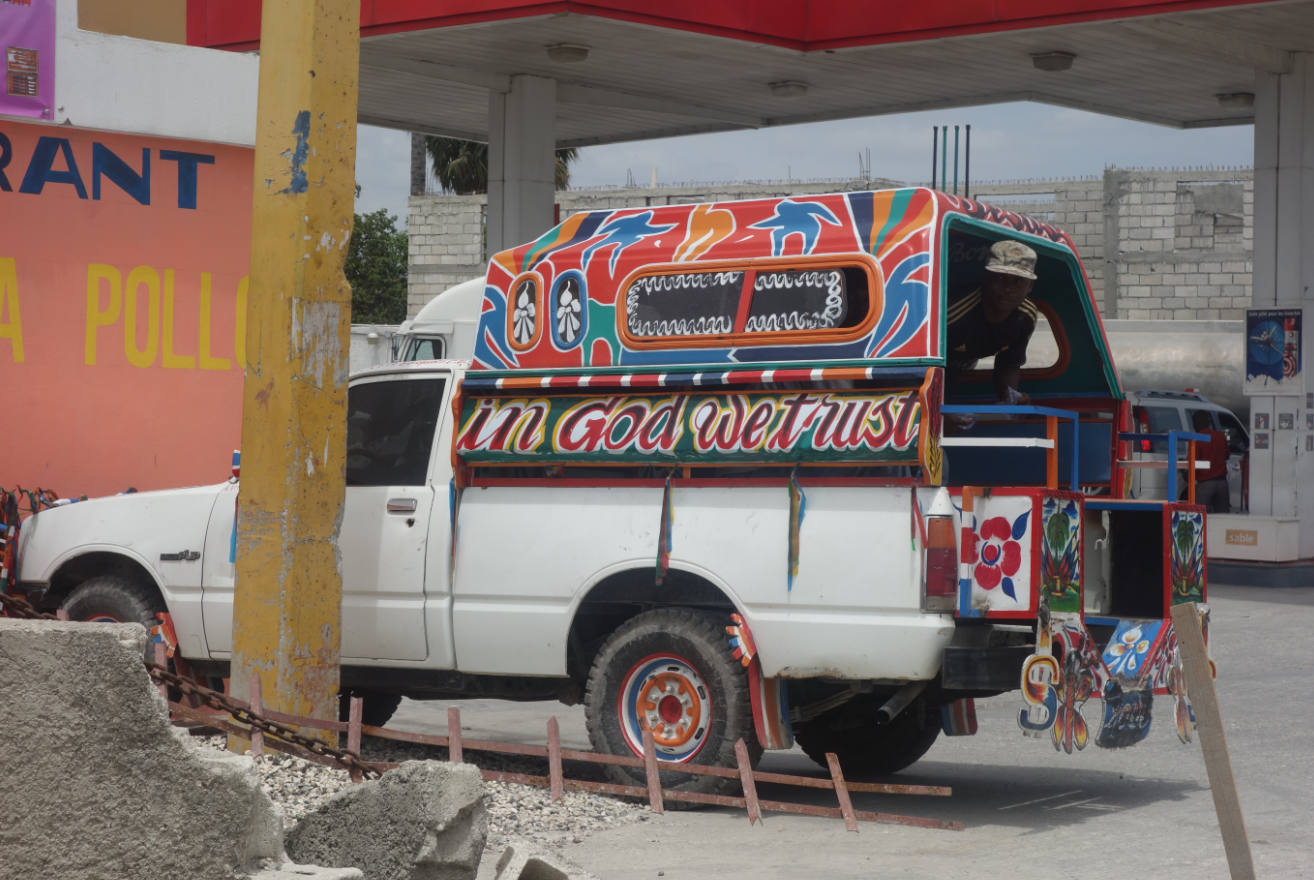
In addition to food, the other major area where contrast is on display is in transportation here in Port-au-Prince. No matter where you go around the city, if you stop and watch the roads for a few seconds you will see brightly colored trucks and busses called “Tap-Taps” that serve as the city’s informal taxi service. There are literally hundreds of these privately owned vehicles that make rounds in different areas of the city and which people use to get from place to place. Many people here do not have their own transportation, due primarily to the systemic poverty and joblessness described earlier, but these multicolored taxis provide access to the city to all who have a few Gourdes to spare. Click on the link below to watch what driving in Port-au-Prince looks like on a daily basis:

https://onedrive.live.com/redir?resid=dbd0addcd1c825e3!17836&authkey=!AB4pTEGh7043gH4&ithint=video%2cMTS

Capture30

Many “Tap-Taps” have Christian phrases, verses or even portraits of Jesus painted on them!

Capture31

Additional seating is tacked onto the end of most flat-bed Tap Taps… Not sure I’d want to sit there though!

Although the Tap Taps are numerous, another common sight on the roads around here are the black and white SUVs of the United Nations. The United Nation’s mission in Haiti has been ongoing since the country’s last coup d’état in 2004, and the organization’s presence is still widely felt throughout the country. the Logistical base for the UN’s operations is located in Port-au-Prince, so interspersed with the motorcycles, Tap Taps and regular cars you’ll see the black initials “UN”. Several times while we’ve been driving, I’ve seen several UN cars escorting the vehicle of some VIP to the airport, and its moments like these that the contrast between these vehicles and the Tap Taps of the common Haitian is absolute.

Capture32

At MINUSTAH, the UN Logistical Base in Port-au-Prince, where some of the UN cars are parked for the night.

Capture35

Can’t miss that bus…!!!!

– – – – –

Overall, life here in Port-au-Prince is very different, and there are massive social problems that must be addressed, but I feel blessed to be working in an environment that is looking to improve the situation. I’m settling in here and working hard to maximize Rebuild Globally’s ability to change lives through their tire sandals, and I’m also working to meet with many of the other dedicated men and women creating sustainable, long lasting change here in Haiti. I’m continuing to grow and learn more about this place day by day, and I’m looking forward to updating all of you in my next post next week! Stay tuned, and I’ll talk to you soon!

– Aaron D.

Capture34

Chilling up in the mountains just outside Port-au-Prince last weekend, there were even some evergreens up there!

– – – – –

Thanks for visiting aarondanowski.com! Be sure to stay up to date on my travels by “Following” my blog by clicking on the button on the right hand side of your page!

If you would like to contact me directly, please do so via my email: adanowski@zagmail.gonzaga.edu
There is a scene in the movie “Interstellar” that really struck me the first time I saw it. Cooper and his father in law Donald are talking on the porch before he leaves on a mission to space, and he is unsure if/when he will return. After a moment of silence staring out into space, the two of them turn to each other and say:

Donald: This world was never enough for you, was it Coop?

Cooper: What, because heading out there is what I was born to do? And it excites me? No, that does not make it wrong.

Donald: It might, don’t trust the right thing done for the wrong reason. The why of the thing, that’s the foundation

Cooper: The foundation’s solid.

Sunday night as I called friends to say my goodbyes and drove to the airport with my family, I began to realize how much I was going to miss everyone, but I was completely confident that my foundation was solid. I feel called to discover what I was born to do, especially if that means venturing outside the realms of the world I was born into. Although it may seem crazy to some, the journey excites me and I know I am on the right path to find my purpose. Monday morning that path led me to Port au Prince, Haiti, and over the next 9 weeks I will be here interning with a social enterprise named Rebuild Globally. The road here has been a long one, but I am quickly getting settled into my temporary new life here and taking time to reflect on my journey thus far.

Capture2

Flying into Port-au-Prince (June 1 2015)

Just over a year ago on May 21st 2014, I landed in Chennai, India as part of the Opus Prize vetting team visiting Gollapalli Israel, a social entrepreneur working to empower Dalit untouchables in the slums of India’s fourth largest city. The experience drove home the reality of chronic poverty and suffering that exists in the world, and it was a truly enlightening experience because it called me into a life of action.

Having attended Jesuit institutions of higher learning for the previous five years (Jesuit High School and Gonzaga University), I had a large vocabulary in the subject of social justice and activism, and I had done several service learning projects over that time, but seeing the human spirit of hope, creativity and individuality burning in the eyes of every individual I met in the slums of Chennai caused me to understand the implications of such an experience on my life. The only way I could fully repay these people who had so generously given me a window into their lives was to work to give them, and others similarly affected around the world, access to opportunities to achieve their innate human potential.

IMG_3714

After returning to the US and working with World Vision US the remainder of the summer, I went back to school with an intense sense of purpose: to use my education to ameliorate the lives of those less fortunate than me. At first I felt like I was wasting my time in classes that had nothing to do with my purpose (Macroeconomics and Managerial Accounting were a struggle), but over time I realized the tools that I received through these classes were essential to maximize my impact once out of school (sustainable access to opportunity means breaking the cycle of poverty and creating jobs, requiring at least a basic understanding of accounting and economic ideas, if only to try and reform them later).

Then, one chilly November night in Spokane I came across an internship posting as I prepared for my final Opus Night presentation on social impact careers (a talk you can view here). “Operations Intern”… “Port-au-Prince, Haiti”… “Knowledge of French Required”… “Interest in Social Entrepreneurship, Sociology and Business Preferred”. I wrote my cover letter as soon as I got back from the presentation that night, and the rest is history.

“The only way I could fully repay these people … was to work to give them, and others similarly affected around the world, access to opportunities to achieve their innate human potential.”

Capture8

From left to right: Annette, Betty, Andremene, Daphne, Kettly, Jesslie, Minouche, Myself, and Jolina. Read their stories at http://deuxmains.com/pages/artisans

My first week here in Port-au-Prince has been a whirlwind, but after feeling completely overwhelmed Monday, today (Friday) I feel like I’m really catching my stride. Haiti is a complicated country on so many levels, with its colonial history, its independence in 1804 (making it the second oldest republic in the western hemisphere), and the past several decades of political turmoil and disasters (both natural and unnatural). Working with Rebuild this summer is an unbelievable privilege, and I’ve loved getting to know the artisans this first week and contributing towards the future success of the social business by beginning to develop quality control measures, purchasing schedules and optimizing workflow and production. My journey is only just beginning here in Haiti, but with a solid foundation and a great support network helping me get adjusted, I’m optimistic about getting the most out of the experience!

Capture13

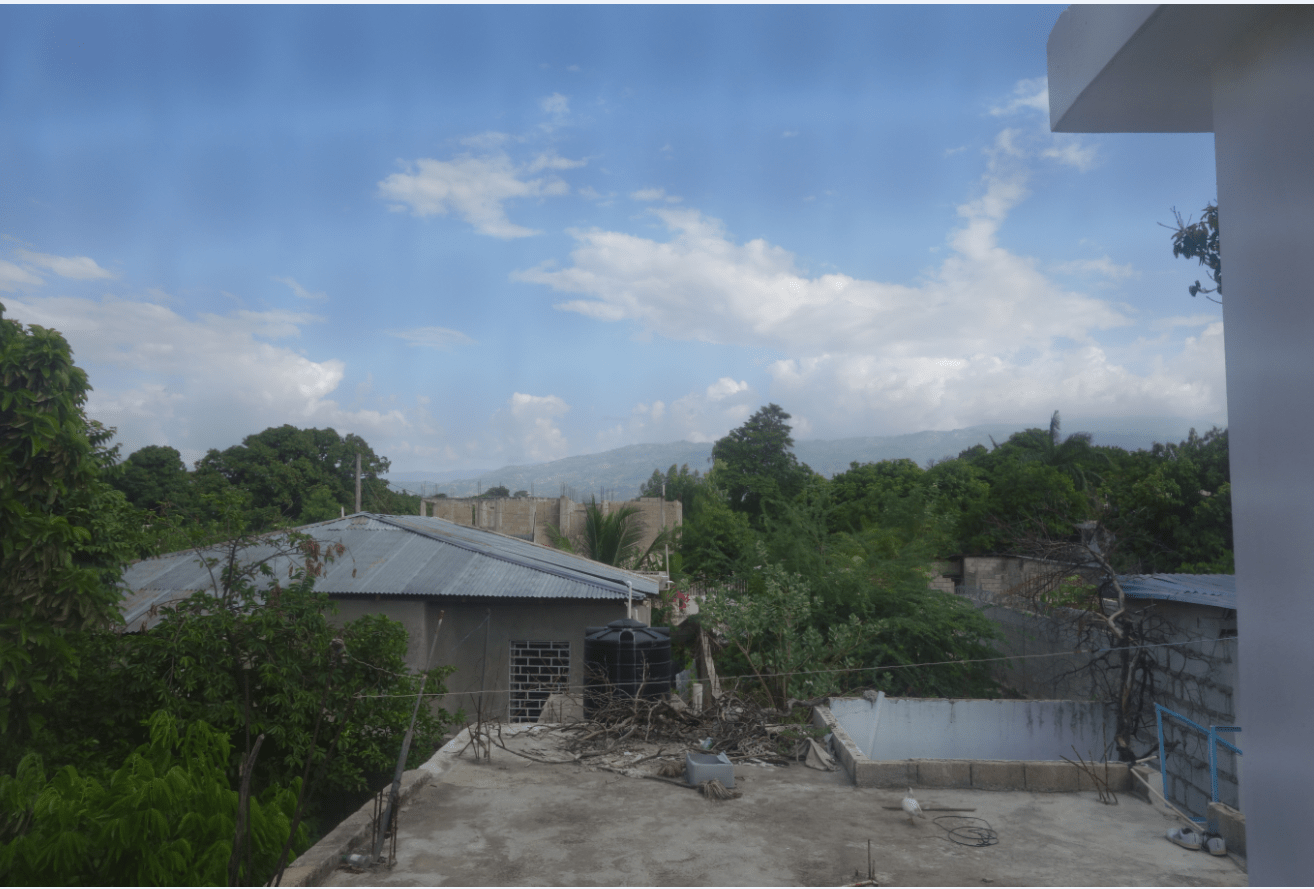
The view from my room… if only there were A/C!

– – – – –

Thanks for visiting aarondanowski.com! Be sure to stay up to date on my travels by “Following” my blog by clicking on the button on the right hand side of your page!

If you would like to contact me directly, please do so via my email: adanowski@zagmail.gonzaga.edu

Several weeks ago I was fortunate enough to participate in the first ever Zag Talks, Gonzaga’s local version of TED Talks. After thinking about it for a while, I decided to give my talk on the need to update our concept of work in the 21st century. You can watch the talk below:

Since giving this talk, however, I’ve begun to realize that despite making some strong points about the need for well-rounded organizations and meaningful work, it has several significant problems:

  1. First, it makes it sound like purposeful work is reserved for only the select few who are lucky enough to work for a triple bottom line organization. There are tons of people who experience purpose in their work with all types of organizations.
  2. Second, it makes it sound like low level jobs such as administrative assistants, hotel clerks and waiters are not noble careers. Many people derive a great deal of purpose from these jobs and others like them.
  3. Third, I don’t give a definitive reason why organizations should change their models and embrace a triple bottom line.

I want to expand on my talk and address these issues in this post. Based on my experiences with the Opus Prize and my exploration into the topics of social entrepreneurship and impact careers, I would like to make the claim that if we want to create a more peaceful, equitable world, we need to set a goal of providing every working age adult with a quality job that gives them a sense of purpose.

To understand my rational we need to consider Abraham Maslow’s Hierarchy of Needs. In Maslow’s hierarchy, there is a natural order in which human beings are driven to fulfill our desires, starting with the basic physiological needs to eat, sleep and stay hydrated. These physiological needs, as Maslow terms them, are essential desires that help us continue to survive. As these needs are taken care of, we gradually transition towards addressing our need for safety. This need includes our desire to be free from fear, overwhelming anxiety and chaos. As we structure our environment and make sense of our surroundings, we begin to feel a strong desire for belonging, which is the basic human hunger for relationships. We strive to overcome loneliness and become part of a larger group in order to develop a sense of who we are. Next, we encounter our desire for self-esteem and respect in the eyes of others. Fulfilling our desires for achievement, independence, recognition and prestige allows us to feel valuable and important, an essential piece of being human. These four categories of needs are referred to as deficit needs, meaning that you feel the desire to fill them when they are running low. If you have enough water you simply say you “Don’t feel thirsty”. If you feel secure, chances are you won’t think to yourself how nice it is to be safe. In this way, as you satisfy these needs, you return to an equilibrium rather than experiencing a psychological high. Typically you don’t feel any lasting sense of wellbeing after gratifying these needs, just the emergence of the next level of need.

If we want to create a more peaceful, equitable world, we need to set a goal of providing every working age adult with a quality job that gives them a sense of purpose.

The last level of Maslow’s hierarchy, however, is different than the other four. Self-Actualization refers to “man’s desire for self-fulfillment”, or in other words, the human desire to “become everything that one is capable of becoming” (quoted from Maslow’s book “Motivation and Personality”, p 46). The way this desire can be fulfilled varies greatly from individual to individual. For some people “it may take the form of the desire to be an ideal mother, in another it may be expressed athletically, and in still another it may be expressed in painting pictures or in inventions” (46). As opposed to being a deficit need, self-actualization is a being-need: as it is fed, it continues to grow stronger and it gives us a feeling of well-being and fulfillment. This is the epitome of humanness, attaining one’s potential by fully expressing oneself. Maslow estimated that only about 2% of people achieve this level of needs gratification. Since self-actualization is conditional upon the fulfillment of one’s lower level needs, our ability to achieve this level of humanness is inextricably tied to the health of our ecosystem. If our ecosystem provides us with the opportunity to seek information, speak freely, express ourselves and do whatever we want without hurting others, the odds of being able to self-actualize grow larger. Since this is the case, many people are not able to self actualize due to the conditions of their environment, not because of their lack of willpower or effort. A young Syrian girl in a refugee camp in Turkey stands little to no chance of achieving her full potential, while her counterpart in suburban Ohio who has strong support from her family, her community and the broader society in the form of public services has much more control over her ability to self-actualize.

“Human life will never be understood”, Maslow said, “unless its highest aspirations are taken into account. Growth, self-actualization, the striving toward health, the quest for identity and autonomy, the yearning for excellence (and other ways of phrasing the striving “upward”) must by now be accepted beyond question as a widespread and perhaps universal human tendency”. This is the foundation for my assertion that we must work to provide every working age adult with a purposeful job. It goes like this:

1. There is a universal pull on human beings to self-actualize and reach their potential.
2. If we make it possible for individuals to achieve their potential, the outpouring of human innovation and creativity will produce bottom-up solutions to the pressing social problems of the 21st century.
3. In order to help more individuals to achieve their potential, we need to shape the driving force of industrial society, the economy, in such a way so that it promotes the goal of human self-actualization. This can be achieved by providing everyone with the opportunity to have a purposeful job.

To put it mildly, our current economic system does not promote the goal of self-actualization… it promotes wealth accumulation, which can go directly against the idea of cultivating human potential. However with that said, I think it can be pivoted in order to align with such a vision. I believe it is possible to create an environment where the opportunity to self-actualize is a possibility for everyone, and where the benefits of self-actualization (a sense of personal well-being and peak productivity) would motivate individuals to work and succeed.

To understand why I think that, lets analyze the issue. The fundamental problem with our current economic model is that we’ve convinced ourselves that money is the end goal: it can buy happiness, and accumulating it gives us access to the things that fulfill our desires. I know that sounds like a broken record, we tell ourselves all the time that money isn’t the key to happiness, but do we live that out? Lets do a quick experiment: Watch these three advertisements and count how many times you see something other than the products delivering happiness:

– – – – –

– – – – –

These ads are classic examples of the double standard we have in our society: we verbalize that things don’t buy happiness, but we’re constantly bombarded with messages that tell us the opposite and we internalize them unconsciously. An article published last year reports that the average American watches 5 hours of TV per day, and that roughly an hour of that time is paid advertisements! If the average advertisement lasts for 30 seconds, that’s over 100 ads per day telling you, like the three ads above, that you need to buy things in order to be happy… and that’s not even counting the hundreds of other messages that reach you through other mediums. It’s a dangerous double standard, and if we want to reshape the economy to promote self-actualization, we need to start by shifting this message.

Rather than selling products that aim to increase profit, we need to sell products that, by their very nature, aim to improve the lives of our fellow man.

So how can we fix this problem? We need to pivot the economy. Rather than selling products that aim to increase profit, we need to sell products that, by their very nature, aim to improve the lives of our fellow man. We need to create a sense of purpose by moving towards a people-centric economic system. In this system, companies and organizations deliver value to society by creating purpose for their customers, their employees and their supply chains, and the profits they make go towards making their impact sustainable. This is the vision laid out by entrepreneur Aaron Hurst in his book “The Purpose Economy”, and it’s a vision that has begun to manifest itself through the rise of the sharing economy (e.g. Zipcar, Uber, Airbnb) and purpose driven products and services such as Tom’s shoes, Warby Parker glasses and Whole Foods organic produce. In the industrialized world, “most people’s basic needs for sustenance, shelter, and information are met. Accordingly, we have emerged from the Agrarian, Industrial, and Information economies to the Purpose Economy, that we might fulfill our higher-order needs: meaning and purpose” (The Purpose Economy, 44). In this way, Maslow’s hierarchy predicts the evolution of human society, and the transition from the Information economy to the Purpose economy.

– – – – –

But what exactly is purpose, and how can companies deliver it? As human beings we experience purpose in three ways, according to Hurst:

1. Personal Purpose: Doing things we love, attempting new challenges and expressing our voice to the world.
2. Social Purpose: Developing meaningful relationships that reinforce our sense of value, require us to engage, and which ultimately help us learn and grow.
3. Societal Purpose: Contributing to a greater cause we believe matters to others, to society and to ourselves. This is the most powerful source of purpose.

All of these sources of purpose are important, but according to Hurst, societal purpose is the most powerful. “Societal purpose isn’t isolated to volunteering and philanthropy, or careers in education and social work”, he says, “we can also derive purpose through decisions about how we consume, from decreasing our carbon footprint to buying local produce at the farmers’ market. We can also discover meaning through our daily work, where we help the people on our teams and provide customers with our products and services” (The Purpose Economy, 28).

Purposeful consumption and work is the beginning of a major shift in how we buy and sell products and live our lives. Over the past 40 years as the information economy has progressed work has become more segmented and specialized. As a result a workers’ average tenure at a given company has dropped to 4.5 years and work has become inherently unstable. As Hurst puts it, “The instability caused by these major structural changes and magnified by the economic recession brought with it a need to find stability and a future path within ourselves, rather than from an employer… purpose, rather than career longevity, now provides the stability we need” (36). In the Purpose economy, the purpose organizations create through their products and services is the key to ensuring high employee morale, customer satisfaction and supply chain stability. Take for example Rebuild Globally, the social enterprise I am interning with this summer in Port-au-Prince, Haiti:

Rather than orienting themselves around maximizing profit, Rebuild’s main priority is providing purpose for their stakeholders:

  1. Employees: By offering high quality employment and paying over two times Haiti’s minimum daily wage, Rebuild Globally offers its employees the change to make a living and develop themselves as individuals. Employees can afford to send their children to school and support their communities.
  2. Customers: Each purchase of a pair of sandals from Rebuild Globally gives the customer purpose because they know they are contributing towards the empowerment of Rebuild’s employees and stewarding the environment by reusing tires. Rebuild also runs an apprenticeship program for youth in Port-au-Prince partially funded by sandal sales, so each purchase goes towards empowering Haiti’s youth and future leaders.
  3. Supply Chain: Rebuild’s leather supplier earned more than the daily minimum wage just through their contract with Rebuild, allowing them not only to support their family, but also take part in the empowerment of Haitian artisans and youth.

– – – – –

One important note to address is that, although there will always be undesirable jobs in society, this does not mean that the people working in those jobs are exempt from the possibility of finding purpose in their work. Aaron Hurst makes the claim that purpose is not a noun describing meaningful jobs, it’s a verb describing the way you approach your work. Angelo Bruno and Eddie Nieves are a perfect example of this concept in action. These two men worked as partners on the same garbage route in Manhattan for almost a decade, and after Angelo retired, the two spoke about the lessons he learned from being a garbage cleaner:

Angelo found purpose in his job by imbuing it with social and societal purpose. Thanks to the relationships he cultivated and the impact he saw his work having, the value of his work became apparent to him and he found a deep sense of purpose that helped him to serve his community for over three decades and that made it difficult for him to give it up.

This is the value of the Purpose economy. It creates meaning and connection, it helps us grow as people, and ultimately, it gives us the ability to address the social problems of the 21st century by empowering more people to be all they can be. By helping people reach their potential and fostering a human-centric society, we truly can change the world.

You can buy Aaron Hurst’s book “The Purpose Economy” on Amazon by clicking here.

Many of my friends here at Gonzaga feel drawn to a nontraditional path after college. For some that means delaying their career to travel around the world, others choose to serve with the Peace Corps, Jesuit Volunteer Corps or Teach For America. Still others mean they want to find a career that allows them to work towards the upliftment of their brothers and sisters around the world. After reflecting on my own desire to travel and dedicate my life to the service of others, I’ve realized that this emerging generational desire to travel, serve and find meaningful work is a result of the quest for purpose in the modern age. In many ways, we live in a golden age of human achievement. Ever since the industrial revolution at the turn of the 19th century, disruptive technology has resulted in an increase in mass prosperity in Europe and North America. Smartphones, the internet of things, digital personal assistants, GPS, social media, iPods, tablet personal computing and hybrid cars are the latest iterations of this cycle. While these technologies have improved our lives by saving us time and offering us convenience, we’re busier than ever. Rather than dedicating the bulk of our time pursuing basic physiological and safety needs, we’re aiming to fulfill higher needs for self-esteem and self-actualization. Self-actualization is a natural state human beings gravitate towards as their basic needs are met. It involves moving further and further up the hierarchy of needs until you have a deep understanding of you inner values and morals and live according to them. According to Abraham Maslow in his book “Motivation and Personality“, there are many benefits to society and individuals as they move closer to self-actualization:

  1. The pursuit and gratification of higher needs have desirable civic and social outcomes. The higher the need, the less selfish it must become, so people who have enough basic satisfaction to look for love and respect rather than food and safety tend to develop qualities such as loyalty, friendliness, and civic consciousness, and become better parents, husbands, teacher, public servants, etc.
  2. Higher need gratifications produce more desirable subjective results (more profound happiness, serenity, and richness of inner life)
  3. The pursuit and gratification of higher needs leads to greater, stronger, and truer individualism. People living at the level of self-actualization simultaneously love mankind most and are the most developed idiosyncratically.

Traditional post-college paths emphasize security, but increasingly young people are seeing to identify purpose and meaning in their lives as they attempt to fulfilling their higher needs for self-esteem and self actualization. In my mind, there are three primary reasons young people are choosing to pursue travel, service and impact careers:

1. We feel disconnected from the world

The United States is heavily insulated from the rich multiculturalism that defines the world today. Students rarely learn second or third languages, US news services give more coverage to the latest pop culture trend/scandal than meaningful international events (Left Shark anyone?), and the emphasis on geography in schools is abysmal. According to a National Geographic survey from 2006:

  • Only 37% of young Americans could find Iraq on a map
  • 6 in 10 young Americans didn’t speak a foreign language fluently.
  • 20% of young Americans thought Sudan was in Asia.
  • 48% of young Americans believed the majority population in India was Muslim, not Hindu.
  • Half of young Americans couldn’t find New York on a map.
  • Fewer than 30% of young Americans thought it was necessary to know where countries featured in the news were located
  • Fewer than 20% owned a world map.

We live in the age of globalization and interconnectedness, and thanks to the internet and the proliferation of accessible information, more young people are realizing their relative insulation and are beginning to cultivate a global identity and perspective. As they strive to find purpose and meaning, young people are increasingly trying to connect stories of human pain and suffering to places on a map. Young people from privileged backgrounds are realizing that their lives are not “normal” experiences in our modern world, and this spurs them to travel and find their place in the global community.

2. We recognize the world is broken and empathize with the marginalized

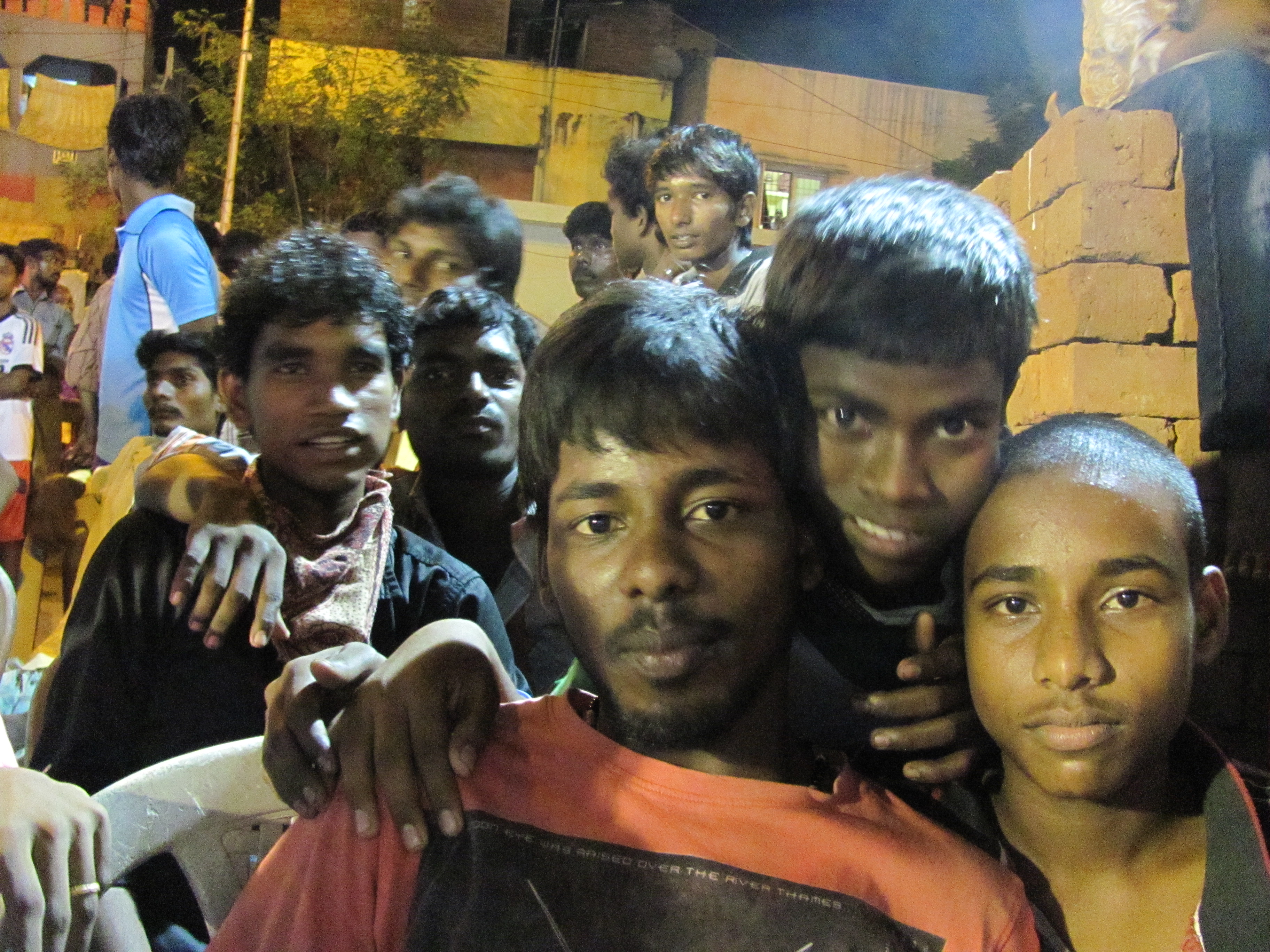
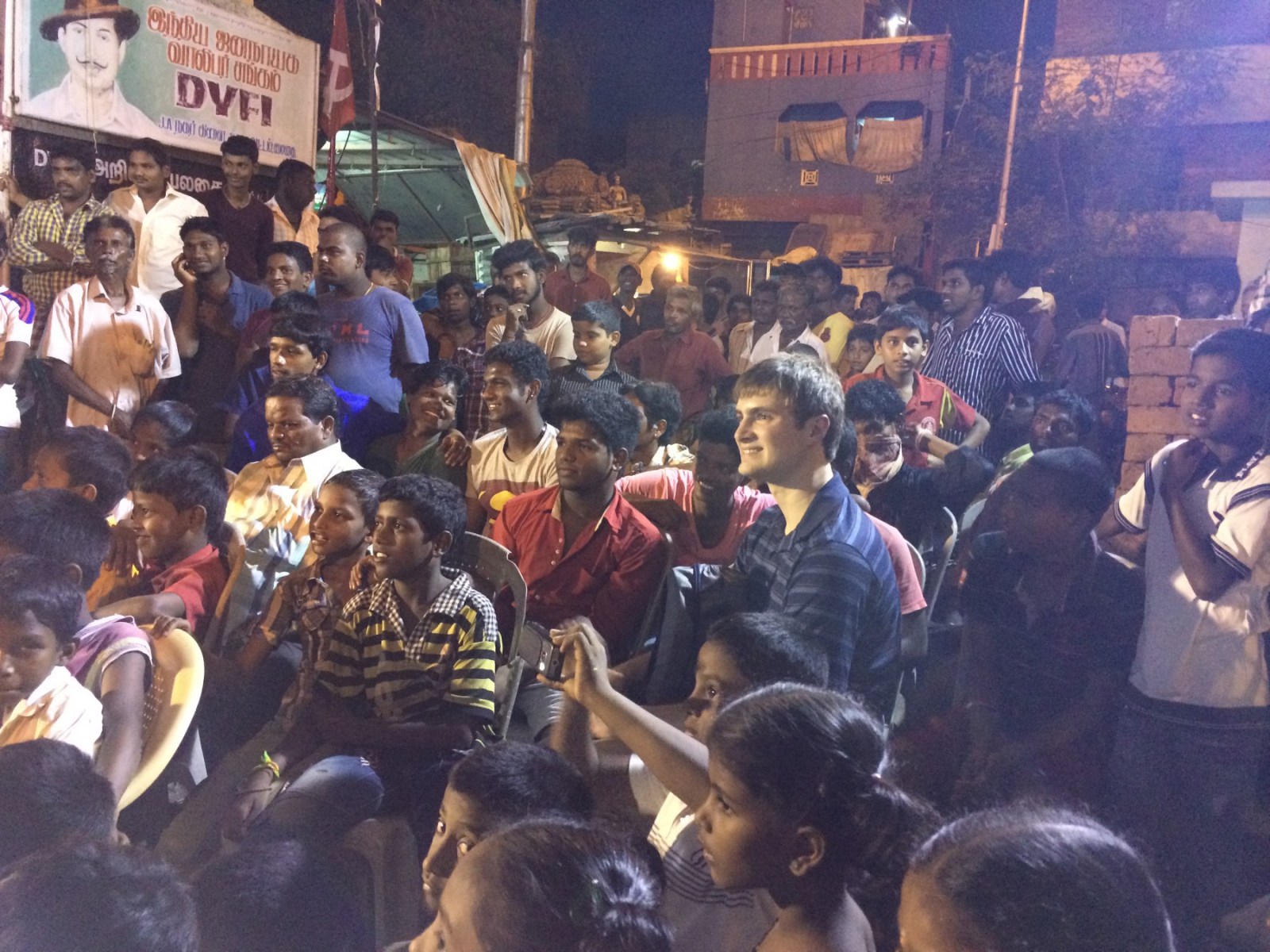
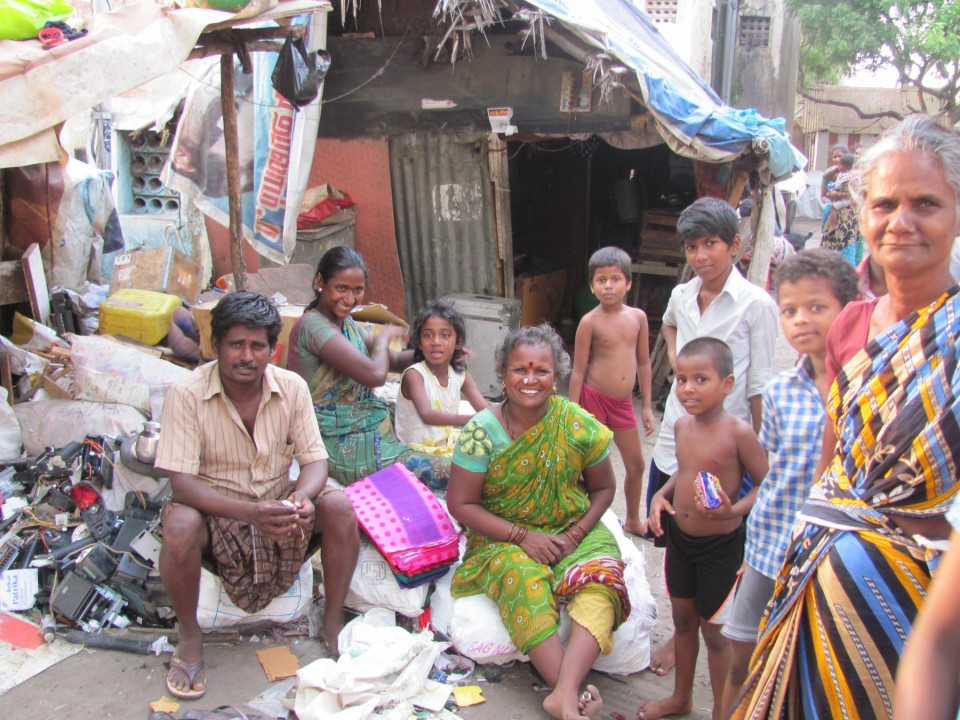
This will make sense in the context of a quick story: When I was in Chennai, India with the Opus Prize, I was blessed to get to meet many “Dalits”, known in the US as “Untouchables”, who live in the slums of Chennai. When I looked into their eyes, I saw myself looking back at me. We didn’t speak the same language and were different in many ways, but we shared an essential element of humanity that I could immediately relate to. That has stuck with me… nothing explains why its them and not me sleeping under tarps and scrap metal. IMG_3727IMG_3714 That is what I mean when I say the world is broken. Some of us win the genetic lottery and have access to opportunities that are simply out of the question for much of the rest of the world. This is where empathy comes in: Because I can imagine myself in their shoes, I feel a moral obligation to use my privilege to work towards universal access to opportunity, happiness and basic human dignity.

3. We recognize we’re spiritually impoverished and need help from the poor to remedy it

One of the best short articles I’ve ever read on this subject is titled We See From Where We Stand. Its by a man named David Diggs who lived in Haiti from 1988-1997 and co-founded the nonprofit Beyond Borders. When speaking about his experiences with visiting groups from the US, he says: “The more time I spent with visiting work groups, the more I saw them as rich refugees from the material world who came to Haiti hungering for more meaning in their lives. A week of really being with the poor of Haiti could have awakened them from their neediness and opened them to seeking the deep changes that world bring lasting satisfaction. But they were always so busy ‘helping’ the Haitians, that they never found time to be with them… the closer we stand with the poor, the more we can see from their perspective. Important things that were one invisible to us become clear. We see that we are all in need, rich and poor. The poor know they are in need. By contrast, we, the wealthy and powerful of the world, are often oblivious to our needs. We frantically try to fill our emptiness with more and more stuff, more and more activity, but without satisfaction. Our endless pursuit of material wealth is a sign of our spiritual poverty. But being with the poor — as opposed to merely doing things for them — can bring a spiritual awakening and be the beginning of our liberation. We see from where we stand, and , for many of us, to stand with the poor is to begin to see God for the first time.” Traditional post-college paths promise security and stability, but they don’t often allow much space to discover yourself. For young people in my generation, that is a crucial piece of their quest for purpose and meaning. I believe that the trend towards alternative post-graduate paths is here to stay, and this new stage of life will generate the social changemakers our world so desperately needs.

On June 1st I will be travelling down to Port-au-Prince, Haiti to intern with a social enterprise named Rebuild Globally, a four year old organization that has hired 21 local Haitian artisans to produce sandals out of recycled tires. Since I’ll be posting regularly during my time there, I want to set the stage by taking a deeper look at the context in which the organization is working, with the ultimate aim of setting up future discussions concerning the systemic and chronic issues the country faces on its long road to recovery and development.

January 12th marked the fifth anniversary of the deadly Haiti earthquake that killed over 230,000 people and injuring an additional 300,000. The images that emerged following the disaster were harrowing and captured the world’s attention, with any previous semblance of infrastructure and order in tatters.

Amidst the rubble in the  aftermath of the quake.

Haitian women sit on rubble from a collapsed building in Port-au-Prince, Haiti, January 20, 2010.

Hundreds of thousands of Haitians lived in tent cities that sprung up after the earthquake. Today an estimated 80,000 Haitians have yet to find permanent housing.

The public outpouring of support in the aftermath of the earthquake was one of the largest in human history. Over 9 billion dollars in aid were committed to the recovery efforts, thanks to major celebrity appeals (Haiti “We Are the World” is a good example) and coordinated government efforts. Five years later, the rubble has been cleared from the streets, but Haiti is still feeling the repercussions of that day and the eyes of the world have moved on. How can we measure the wellbeing of the nation?

To get a better sense of where things stand today, lets look at some facts from the UN’s 2014 Human Development Index, an international ranking system which synthesizes country data on health, education and income levels. Haiti ranks 168th out of the 187 countries measured, placing it between Togo and Afghanistan. The average Haitian born today can expect to live 63 years, go to school for 5 years, and for the rest of their life their annual income will be approximately $1600. For comparison’s sake, a person born in 2014 in the US (which ranks 5th on the list) has a life expectancy of 79 years, will go to school for 13 years, likely receiving at least a marginal amount of college education, and from there can expect to make about $52,000 a year.

Comparing Haiti to the US is extreme, but even when compared to its neighbors in the Latin America and the Caribbean Haiti finishes dead last: Costa Rica ranks 68th on the list, Jamaica is 96th, and Ecuador is 98th.  Haiti has the lowest human development index in the western hemisphere; the next lowest is Nicaragua and 132 followed by Honduras at 129 , 36 and 39 spots higher than Haiti. Perhaps the most striking contrast comes when comparing Haiti and the Dominican Republic, which share the island of Hispaniola. The DR comes in at 102nd on the UN report, 66 spots higher than Haiti, and a Dominican born in 2014 can expect to live 10 years longer, have 50% more schooling, and earn 6.6 times more money per year than a Haitian born that same year… staggering.

A map of Central America and the Caribbean. On the right side of the map, Haiti and the Dominican Republic share the island of Hispaniola.

The root of this disparity lies in Haiti’s French colonial past. Columbus originally discovered the island of Hispaniola on December 6, 1492 and claimed the island for the Spanish crown. Ultimately, as the Spanish discovered the mineral riches of Central and South America, they took little interest in the island and its relative lack of resources. Spain ceded the western part of the island to the French in 1697, who named it Saint-Domingue and imported slaves from West Africa to serve on coffee and sugar plantations, turning it into one of the most prosperous colonies in the New World. By the 1780’s, nearly 40% of sugar imported by Britain and France and 60% of the world’s coffee came from St. Domingue.At the same time, over 450,000 slaves were under the domination of 70,000 whites and freed blacks. Escaped slaves organized the only successful slave revolt in history, taking over control of the entire island by 1800 and declaring independence in 1804 and renaming itself Haiti. Years of warfare had destroyed the plantations that had made Haiti wealthy, and decades of political instability, military coups, and harsh dictatorships have ensued ever since. A new constitution was ratified in 1987 that called for an elected president and parliament, but corruption, UN interventions and repeated popular uprisings against political leaders have continued to this day. Current president Michel Martelly has delayed elections for three years, resulting in the dissolution of parliament and major protests in the streets of Port-au-Prince calling for his resignation.

Haitian protestors burn tires as they call for the resignation of current President Michel Martelly.

With all of this chronic political upheaval and economic uncertainty, how much did the earthquake of 2010 truly impact Haiti’s  human development index ranking?” In the 2009 edition of the HDI, Haiti was ranked 149th out of 182, 19 spots higher than they are right now. In 2011, its rank dropped to 158th out of 187, mainly as a result of the damage done by the earthquake. However, that doesn’t explain why the country is 10 spots lower now, after 9 billion dollars of private and public aid have been spent on rebuilding the country. When you start looking into the data, Haiti’s life expectancy has improved since 2009 (63 years vs 61years) and so has average annual income ($1,600 vs $1,155).

The important conclusion we need to draw is that Haiti’s drop in human development rankings since 2009 cannot be attributed to the earthquake itself. Instead, there are underlying systemic issues that have resulted in other countries improving at a greater rate and overtaking Haiti in the rankings. Between 2009 and 2014, Senegal, Nigeria, Rwanda, Uganda, Zambia, Timor-Leste, Lesotho, Benin, Mauritania, Cameroon, Ghana, Sudan and Tanzania all passed Haiti… so the big question I will try to answer during my trip this summer becomes this: How must the strategy being used in Haiti to improve conditions for its inhabitants change in order to involve and empower Haitians to create a stable, secure and prosperous country?

We live in uncertain times, and as we push deeper into the 21st century we face some huge global issues: violence and global unrest, wealth inequality, public health crises, human rights issues, the education gap, climate change, rampant food insecurity… the list goes on. To compound the issue, traditional means of resolving such conflict (government, international agreements) are too far bogged down in their own bureaucratic processes and partisan ideologies to effectively address them. When it comes right down to it, we’re going to need a new method of solving these pressing social and environmental issues.

Over the last 20 years, an entire new paradigm has begun to emerge around how to create social impact. It used to be that the world operated on the assumption that “doing good” meant government or nonprofit work, but today there are efforts to break down the walls separating the public, private and social sectors in the name of ensuring long-term societal wellbeing. On the business side, there is a movement towards mission driven business that meld traditional business practices with social value creation. The B-Corps movement that started in 2007 is a great example of this shifting paradigm. On the nonprofit side, there are organizations such as Ashoka,the Skoll Foundation, Echoing Green and the Schwab Foundation that have cemented themselves as social impact talent scouts, seeking out revolutionary “social entrepreneurs” challenging the status quo and redefining how we approach improving social conditions around the world. In short, there are more ways than ever to go about changing the world. The problem is, these ideas are still not widely promoted to high school and college students due to their recent emergence…

We need to raise awareness about these new opportunities and stop telling students they need to choose between making a difference and earning a livable income. We need to engrain social value creation into students’ dreams in order to foster a generation of changemakers who aren’t afraid to challenge the status quo and change the world. Ashoka runs a college campus program called AshokaU that certifies colleges which are actively promoting social entrepreneurship in higher education, and Net Impact is a nonprofit organization dedicated to connecting undergraduates, grads and professionals passionate about making a difference through their careers. We have an opportunity to equip a new generation to solve the biggest social problems of our time, and all we need to do is connect them with the knowledge and resources necessary for them to leave their mark.

I’m dedicated to ensuring this cultural shift happens on college campuses around the US, starting right here at Gonzaga University, where I am currently a student. I’ve already given talks here on campus and at the National Jesuit Student Leadership Conference this summer, but I’m eager to spread this message further.

This website is my latest effort to carry forward my vision: That all colleges empower their students to make a living AND change the world. As this site takes shape, its format will aim to encompass the scope of that vision:

  • Home Page: You’ll be greeted to the site by a slideshow of new blog posts about relevant social issues, the people trying to solve them, and my own experiences navigating the waters of social impact.
  • About Aaron: A brief bio detailing my background, my interests
  • 2014 Opus Prize: My involvement with this annual faith based humanitarian award started me down the path to all these ideas. You can learn more about their work here.
  • Blog: The hub where you can browse through my history of posts on social impact, changemakers and my travels.
  • Speaking: An overview of the various talks I have in my repertoire. I target college students and young professionals and I speak at conferences and colleges in the US.
  • Contact Me: Some contact info for you to get in touch with me if you are interested in learning more or would like to have me come speak at an event you are involved with!

Together we can change the world, and I look forward to working with you to call a new generation into action and make grassroots, positive, sustainable social change a reality!

– Aaron