
I couldn’t wait any longer, I had to leave… right away. I grabbed my jacket, did some quick warmup stretches, put my headphones on and started running. As I exited the neighborhood and started towards the overpass, I had a vague inkling that something big was happening, but I never expected an overcast December afternoon in 2014 would change the course of my life. All I knew was that I had to keep on running…
4 miles later I arrived at the bookstore out of breath, my heart pumping in my ears. I took off my jacket as I strode into “Powell’s Books”, walked up to the kiosk at the front desk and typed “How to Change the World, David Bornstein” into the search box. “2 Resuits: Section 131b: Polit/Activ/Peace”. I ran over to the shelf, bought the book, and stuffed it into the worn navy drawstring bag slung across my back. With a chuckle to myself I realized Mom was probaby back home wondering where I was… little did she know! I put my headphones back on and ran all the way back home before plunking down on my bed, pulling the book out of my bag and opened the front cover.
 Powells Books at Cedar Hills Crossing
“This is a book about people who solve social problems on a large scale.”
– David Bornstein, “How to Change the World”, Page 1
I’m not exaggerating when I say that that afternoon changed my life. Although I had heard the term “social entrepreneur” tossed around before, the words took on new meaning as I tore into my new book. It was no longer just a concept… social entrepreneurship became human in these pages. I read about a Harvard Divinity School graduate working to bridge the college gap for inner city youth in America, an agronomist from Porto Alegre bringing electricity and prosperity to the rural poor in Brazil, and a dissatisfied general practitioner physician who quit her job at a hospital to focus on addressing the causes of chronic disease in Rio de Janeiro. These stories were a revelation, a testament to the power of human faith and will power over the “unsolvable” problems in this world. I was hooked.
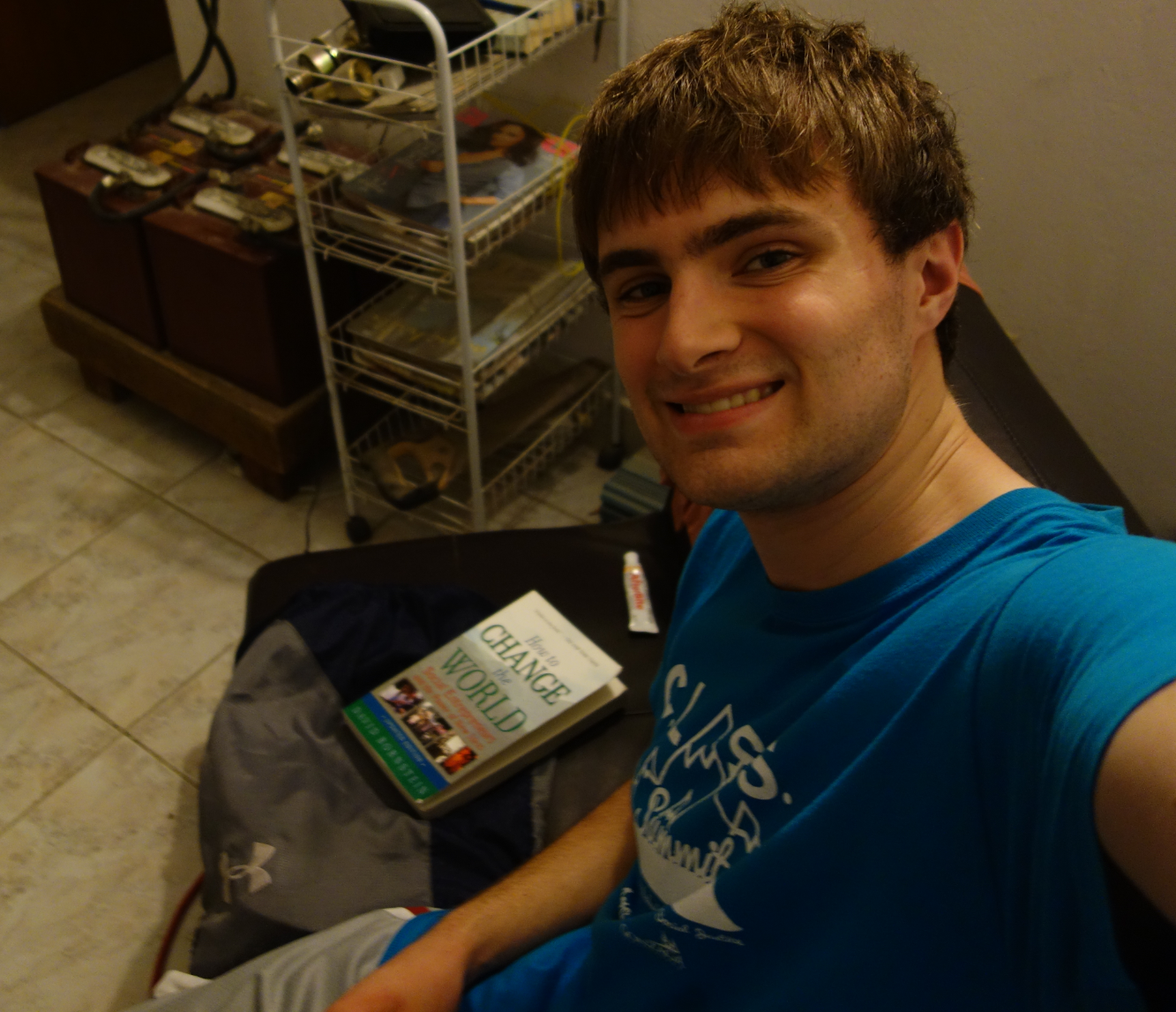
The book, the drawstring bag and me here in Port-au-Prince
The excitement I felt reading David Bornstein’s book was the flash in the pan, an exciting epiphany that powered me for a short time, but that experience has given way to a more temperate, long-burning desire to shape my life around social entrepreneurship and social impact. In the 18 months since first reading those stories, I’ve travelled over 36,000 miles to visit social entrepreneurs in India, Washington DC, and Haiti, and by the end of December, two years since setting out on that fateful run to the bookstore, that total will reach 60,000 miles (enough to circumnavigate the earth… twice) as I return from 4 months in Cameroon learning from development experts and social entrepreneurs in the West African nation.
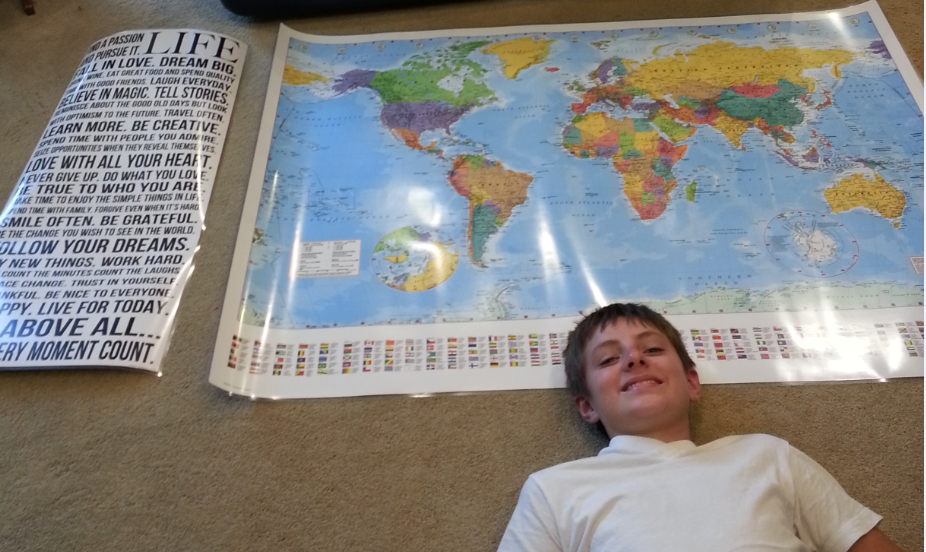
My youngest brother Paul posing with the World Map I bought 2 years ago for my dorm room. I look at it everyday at school.
This past week I thought a lot about that long-burning passion. I wanted a way to explain the emotions I had experienced ever since I decided to come to Haiti. I wanted to describe the excitement I felt when I first applied for this internship on a cold November night in Spokane, rapidly drafting a cover letter in French in my dorm room at Gonzaga. I wanted to encapsulate the shock of adjusting to life down here and coming to understand the imperfect reality of scaling a social business in Haiti. And I wanted to describe the ordinary, unglamorous drumbeat of activity that contribute towards the success of Rebuild’s mission over the long term.
I wanted a way to explain the emotions I had experienced ever since I decided to come to Haiti.
That process yielded a concept that I call “The Inspiration Curve”, and at its core, it describes what happens when people’s expectations meet reality. There are three parts to the Inspiration Curve, but before I explain it I want you to think of a goal or a dream you’ve pursued at some point in your life. Maybe it was a dream job (I wanted to be a professional basketball player for a long time), a mission for your life (“I want to have a successful marriage”), or a cause you cared deeply about (“I want to help the homeless”, “I want to teach the next generation”, “I want to discover a cure for cancer”, etc). Got something in mind? Lets look at the three stages of the Inspiration Curve:

- Love at a Distance: You identify something you desire (e.g. a new job, a spouse, a societal change), and you imagine how awesome it will be when you have that thing. The amount of inspiration you have to reach your target is very high.
- The Sudden Drop: As you take steps to reach your target, you encounter unexpected challenges and resistance that weaken your level of inspiration. You start to realize your expectations were out of touch with reality, and you are not receiving the happiness or wellbeing you expected. In fact, you are working harder than you were before and receiving less reward in return.
- Choices, Choices: Each time you face a new obstacle on the path to your target, you must (consciously or unconsciously) reassess the value of reaching your target based on your values, your beliefs, your current needs and your future plans. Once you’ve done that, you can choose one of three paths:
- The Uphill Climb (the blue line): You decide that the target is in line your values and beliefs, and you commit to exert as much effort as it takes to overcome the obstacle in your path. You can’t live the life you want without reaching your target, so you push forward. Each time you choose this path and overcome an obstacle, your level of inspiration increases and you press forward with greater dedication.
- The Hobby (the orange lines): You realize that the value of achieving your target is not worth how much effort it will take to reach it. You identify the limit of how much effort you are willing to put into pursuing your target and you scale back your expectations to match the benefit you receive from your effort. Your level of inspiration remains constant over the long run, enough to fuel your effort and to ensure a steady stream of benefit, but not enough to convince you to overcome the next volley of obstacles.
- The Change of Plan (the green lines): You realize that you are not inspired to continue pursuing that target. Maybe you have identified a new, more attractive target, or your values, beliefs, needs or plans may have changed. You stop chasing that target and adjust your course to seek another target.

My target right now is to become a social entrepreneur, and I was inspired to work at Rebuild this summer not only because I believe in their mission and their work, but also because I wanted to discover whether I could continue “The Uphill Climb” towards my target… or if the challenges would overwhelm me and force me to change my trajectory. The jury is still out, but one thing is for certain: After three weeks in Port-au-Prince, I feel more confident in my ability to overcome the obstacles that stand in my way.
“I think the heart of it is that entrepreneurs for some reason deep in their personality know, from the time they are little, that they are on this world to change it in a fundamental way.”
Bill Drayton, “How to Change the World”, Page 127
I would be remiss if I didn’t say I am not up for the task on my own. I’m blessed to have a strong support system of friends and family, and with my feet firmly planted in my faith, “I can do all things through him who gives me strength” (Phil 4:13). Even so, whenever I’m feeling overwhelmed or frustrated or tired, I love to reflect on the prayer of Ken Untener:

It helps, now and then, to step back and take a long view.
The kingdom is not only beyond our efforts, it is even beyond our vision.
We accomplish in our lifetime only a tiny fraction of the magnificent
enterprise that is God’s work. Nothing we do is complete, which is a way of
saying that the Kingdom always lies beyond us.
No statement says all that could be said.
No prayer fully expresses our faith.
No confession brings perfection.
No pastoral visit brings wholeness.
No program accomplishes the Church’s mission.
No set of goals and objectives includes everything.
This is what we are about.
We plant the seeds that one day will grow.
We water seeds already planted, knowing that they hold future promise.
We lay foundations that will need further development.
We provide yeast that produces far beyond our capabilities.
We cannot do everything, and there is a sense of liberation in realizing that.
This enables us to do something, and to do it very well.
It may be incomplete, but it is a beginning, a step along the way, an
opportunity for the Lord’s grace to enter and do the rest.
We may never see the end results, but that is the difference between the master
builder and the worker.
We are workers, not master builders; ministers, not messiahs.
We are prophets of a future not our own.
Bishop Ken Untener of Saginaw
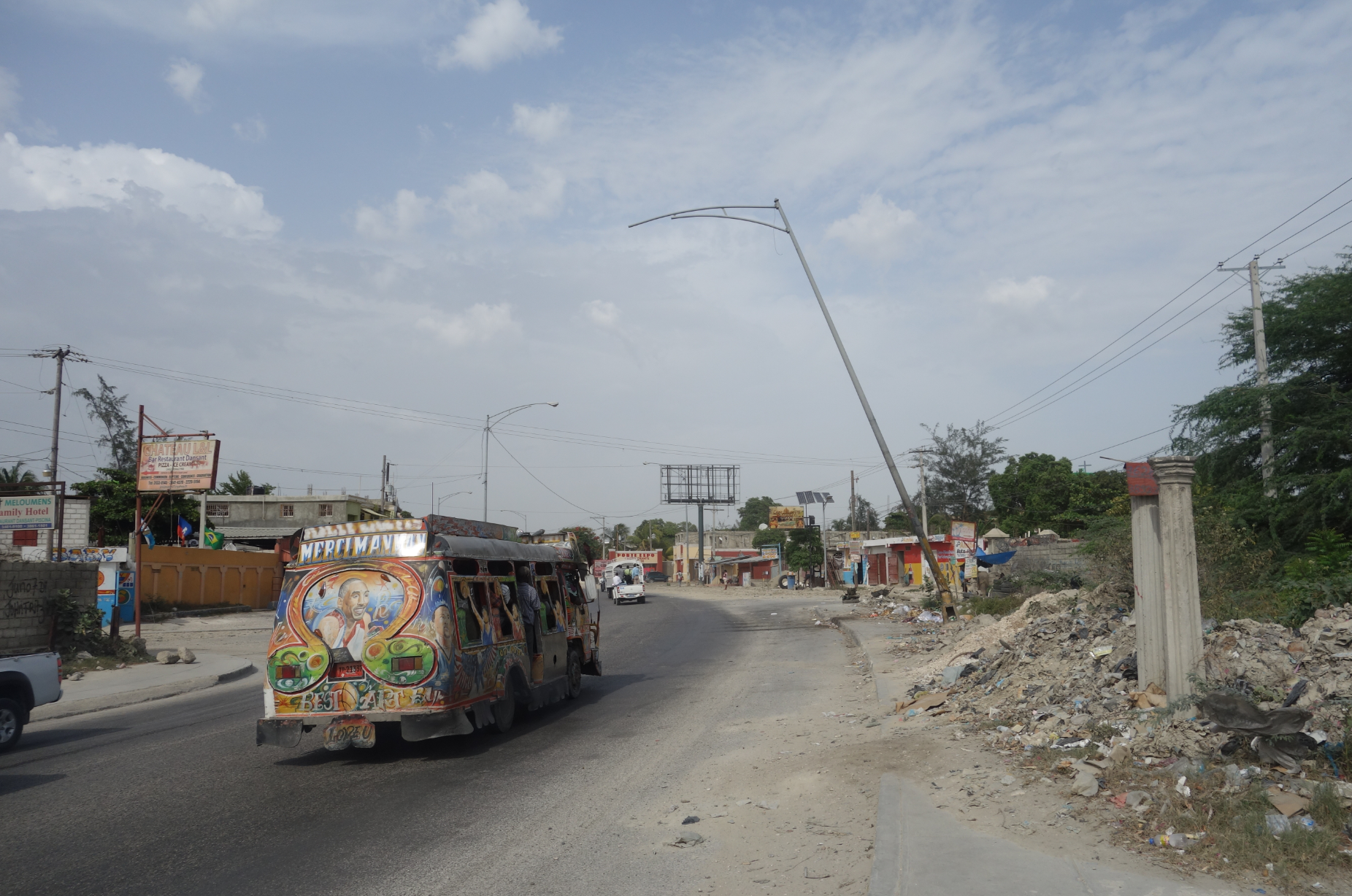
I hope it gives you the same peace it gives me when I read it. I’ll check back in next week, hopefully with more stories to tell and lessons learned!
– Aaron D.
– – – – –
Thanks for visiting aarondanowski.com! Be sure to stay up to date on my travels by “Following” my blog by clicking on the button on the right hand side of your page!
If you would like to contact me directly, please do so via my email: adanowski@zagmail.gonzaga.edu


I am proud to be your Dad. Share your heart, talents and God given power my son.
LikeLike
Love love love reading these. You are such and inspiration and a blessing to the present and the future!! Keep up the good work!! Can’t wait to see why next week has in store!!
LikeLike
Aaron I just read your post. You continue to amaze me. I love the quote! I can also really relate to your inspiration curve. That has been my journey at GU. There have been times when I have wanted to just give up.., then I will meet with a student or have an epiphany through prayer and reflection and it will give me the strength to keep moving forward. Lisa is back in the office today so I hope we can schedule our Skype time.
Judi Sent from my iPhone
LikeLike
Morning! So love reading your posts…and that is my favorite prayer! Sending love and prayers, Julie
LikeLike
Thinking of you so often, fellow traveler…. love, the other adanowski
LikeLike
Pingback: Week 4: When to Persevere and When to Quit | Aaron Danowski