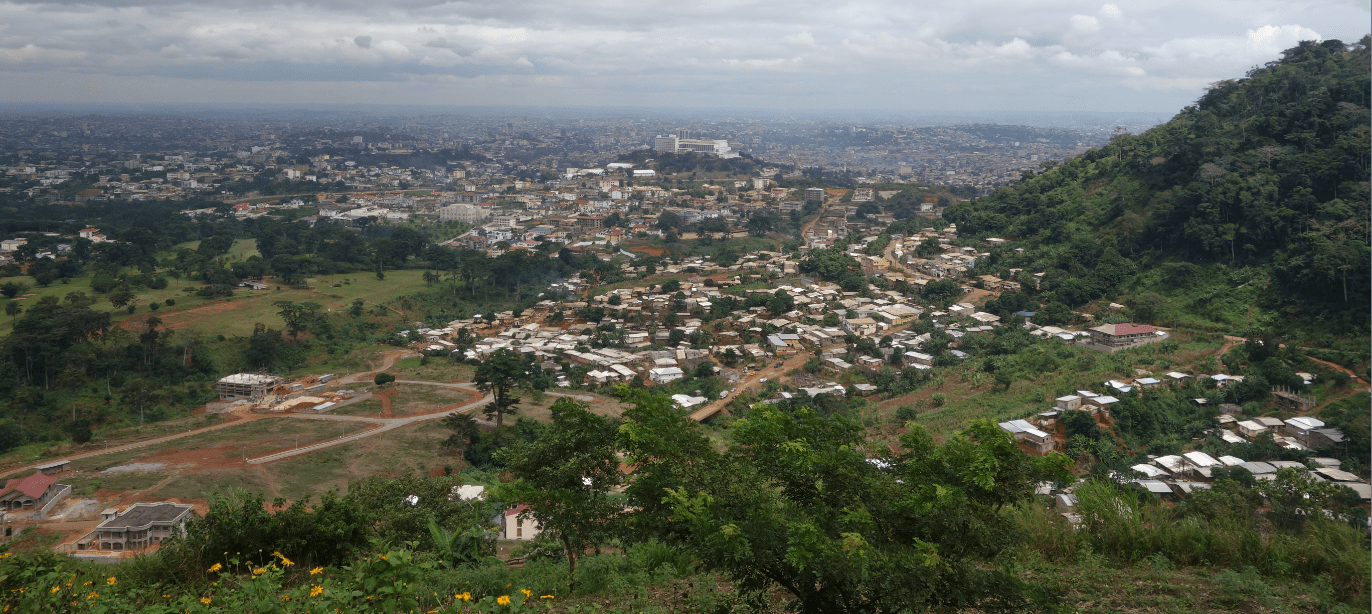
Greetings from Yaounde, Cameroon! I haven’t had a good internet connection in about a week, but I’ve been kept busy by the SIT Cameroon program orientation and starting classes on Monday, so this is my first real opportunity to check in and offer my initial insights from over here in Africa.
One of the biggest themes I notice looking back on my first couple weeks here is that I’ve had a really difficult time separating my experience in Haiti from this one here in Cameroon. Its tempting to compare the two countries and lump them under the term “developing” or “third world”, but upon closer inspection they really are quite different. When our group went downtown to explore the city of Yaounde during orientation last week, I immediately felt at ease, connecting with the routine I had established over the summer in Haiti. My friends and I were the only white people around, the chaotic traffic and the street venders felt familiar, and the red soil beneath my feet looked similar to that I had encountered in the hills above Port-au-Prince. All the differences between the two countries seemed to favor Cameroon in my opinion: there wasn’t as much trash littering the streets, the electricity stayed on all the time, and the weather was a pleasant 75 degrees with occasional rain showers, rather than the persistent 100 degree heat and humidity I grew accustomed to in Port-au-Prince. In addition, it’s nice being around other college students who understand why you decided to study abroad in Africa. Ever since I choose to spend this semester in Cameroon, people have constantly asked me why. Why go to Sub-Saharan Africa? Why go to a country with terrorist attacks happening in the north? Why not go someplace “fun” like Paris or London? The six other students on the program all share a common understanding that studying in Cameroon was something we had to do.

The past several days I have begun to understand that living and learning here in Sub-Saharan Africa is inherently complex. The physical considerations of living here don’t bother me as much as they did in Chennai or Port-au-Prince (I’ve become quite good at brushing my teeth using bottled water and identifying when it’s ok to eat raw fruits and vegetables), but the mental realities are far more challenging. Yes, its only been a week and a half, and yes, I still have lots of time left here, but I’m already scared about what it will be like going back home. I’m scared at the prospect of returning to an environment where not everyone agrees about the importance of international development. I’m terrified of becoming good friends with the other students on the program and then being flung back across the country and feeling alone when we return to “normalcy”. And I’m worried about being able to describe the imbalance of power that exists between the global North and South to anyone who hasn’t walking past tin shacks and begging children every morning. In short, I’m afraid of facing the reality of “life as usual” in the US, and knowing in my heart that the wealth and prosperity I am used to in the US is a result of extractive foreign policy decisions that have impoverished millions of men, women and children around the world, from the DRC to Cambodia, Ecuador to Afghanistan.
It’s funny, I now understand why its so appealing for Americans to create a bubble and focus solely on domestic issues. It distracts us from dealing with the negative impact we have on much of the rest of the world. Looking outward requires you to be willing to acknowledge that our nation’s success is not as glorious as we like to imagine. Ever since the end of World War II, we have made it a point to control our interests overseas by calling anyone who disagrees with privatization and westernization a “communist”, and as a result we have enriched American companies, and secured access to foreign oil, and tricked ourselves into believing that we are doing these countries a favor by helping them “develop” to become just like us.
I wouldn’t have agreed with that last statement if you had told me that 4 months ago, but now I have met and spoken with men and women in the global South who have lived their lives with the consequences of western “development”, and it has changed my perspective. Meet several of them below:
It’s the young farmer I met in the hills outside Port-au-Prince who can’t afford to feed his mother and younger siblings because subsidized American imports undercut the price of the vegetables he grows.

It’s the elderly Dalit “untouchables” I spoke with who have spent decades cleaning human waste from the sewers and streets of Chennai with their bare hands, and who live under tarps and in decrepit apartments on the outskirts of the city.

And it’s the twenty four year old here in Cameroon earning a masters degree in physics who, when asked what his dream is, answered “to get a job… any job”, because his country suffers from high youth unemployment and hasn’t been allowed to develop domestic industries to transform its natural resources into goods to sell in the rest of the world.

This is the legacy of neo-colonialism, and the reason why the US has lost much of its respect in the developing world. It’s because we have tricked ourselves into believing that it’s possible to advance our national interests and at the same time “develop” other countries to become richer and self-sufficient. It’s a conflict of interests: The US has benefited immensely from taking advantage of countries like Cameroon, and as long as US businesses and politicians benefit from this current system, they won’t want to “develop” the countries or help them become “self sufficient”. If left unchecked, US companies will continue to enrich themselves at the expense of the poor by earning favorable contracts with foreign governments (See Frontline’s episode on Firestone in Liberia), the US government will remain unwilling to allow democratically elected officials represent the voices of their citizens if those views contradict US interests (read Confessions of an Economic Hitman by John Perkins), and the global North will continue to pressure Southern countries to export raw materials at discounted prices in exchange for increased loans from the World Bank and the IMF that cripple their economic future. All of these things carry forward the legacy of European colonialism, and together these things are referred to as neocolonialism: forcing independent developing countries to be economically dependent on developed countries.
Now that I understand this phenomenon better, I’m not sure what I’m going to do about it, but one thing is for certain: I know I need to do something. Some may say “This is all well and good Aaron, but there’s no better alternative! It’s unfortunate that capitalism doesn’t help everyone, but that’s just the way the world works.” I say to these people, we can’t afford to think that way. If this system of neocolonialism is allowed to continue, we will see an increase in violence, war, famine, and unrest the world over. Lack of opportunity and high rates of poverty lead to terrorism and extremism (Iraq, Afghanistan), political instability (Syria, Libya, Egypt), and increased incentive to migrate to developed countries, either legally or illegally (Latin America, European migrant crisis). The more I travel, the more I realize how important it is for leaders in the developed world to recognize they have a responsibility to represent not just their nation’s interests, but rather the interests of the global poor. In our increasingly globalized and connected world, we must recognize that the wellbeing of those in the developed countries can only be ensured by ensuring the wellbeing of those in the developing world. Only by working to achieve mutually beneficial, equal national and international relationships will we create a more stable, secure, and prosperous world. We often worry about dictators and oppressive rulers taking advantage of those they govern, but history has shown us that those who seek after their own interests will not survive. Dictators, kings, emperors, and Fuhrers have been swept away by the sands of time, overthrown by popular uprising and the power of the popular majority. In the end, the surest way to create prosperity and stability for oneself is to look out for the interests of others.
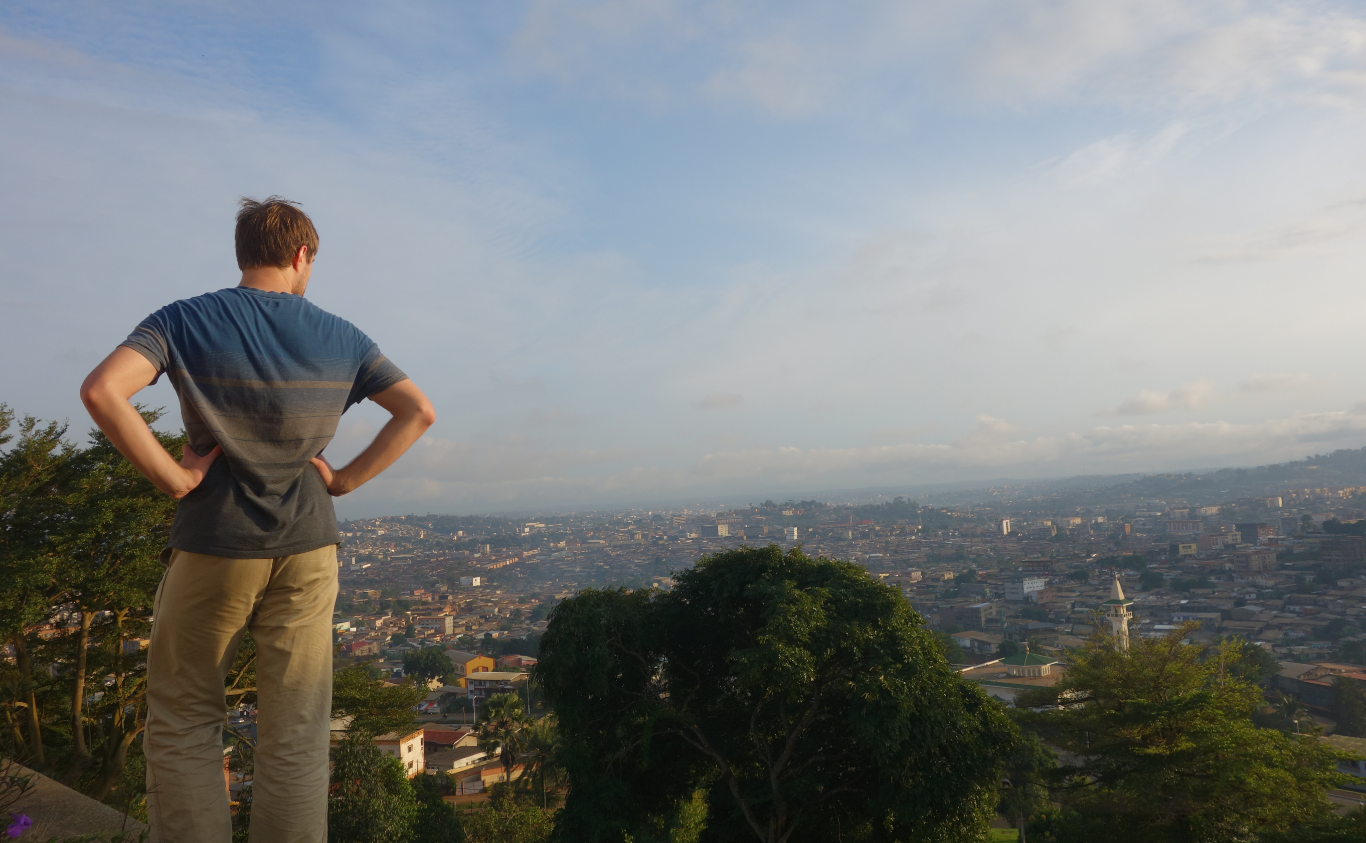
Today, the biggest obstacle keeping us from pursuing true international development through international cooperation and is a decentralized, almost invisible enemy: neo-colonialism. The idea that we must protect our interests at all costs, and the notion that we can’t afford to trust anyone but ourselves results in a global economic system that works to enrich and empower those who already control the wealth and the power. OXFAM recently reported that by 2016, the richest 1% of the world population will be wealthier than the bottom 99%. Another report says that last year there were more refugees fleeing violence and war than ever before. Still other statistics indicate that youth unemployment in many areas of the world is over 40%. All of these things point to one simple fact: The system is broken… and the rich and powerful countries are beginning to experience the negative consequences of creating such an unequal global system.
If we in the developed world truly believe in the values we claim to uphold: freedom, democracy, and opportunity for all, then we must examine the structures of which we are a part and be unafraid of asking ourselves that most powerful of questions: “What if?” What if there’s a better way forward? What if we recognized its in the best interest of rich countries to allow poor countries to develop on their own, not according to our goals and objectives? The world needs men and women who recognize that apathy and resignation are the most dangerous phenomena of our day and age. The time has come for the developed world to acknowledge that our system is broken, and that only by uniting, cooperating and trusting one another can we ensure that we live in a world with freedom and opportunity for all.
– – – – –
Thanks for visiting aarondanowski.com! Leave you comments below, and be sure to stay up to date on my travels by clicking on the “Following” button on the right hand side of your page!
If you would like to contact me directly, please do so via email: adanowski@zagmail.gonzaga.edu


 Aaron Danowski
Aaron – so good to read about your experience in Cameroon and your reflections thus far. I look forward to keeping up with you through the blogs this semester. Keep writing – I’ll keep reading!! Take good care and know I am looking forward to a long lunch when you return to hear all about the people you have met and the experiences you have had!! Sending love, Julie McCulloh
LikeLike
Hello Aaron!
Great to hear your thoughts and see you building a new adventure in Africa.
You are correct that its the people “on the ground” who matter (Haiti, Cameroon, etc.).
And I have no doubt you will reach out to many organizations there to find/build the “good”.
Remember even God’s good seed spread out does not equally yield. But we are called to sow it.
As for Cameroon being “allowed” to grow, just be aware that only this week, Mum in Montréal reported she heard 3 radio ads to “invest in Cameroon”! Are you behind that? Smile….
Love Dad
LikeLike
Pingback: On The Frontlines of the Climate Justice Movement: Breaking Free From Fossil Fuels | Aaron Danowski