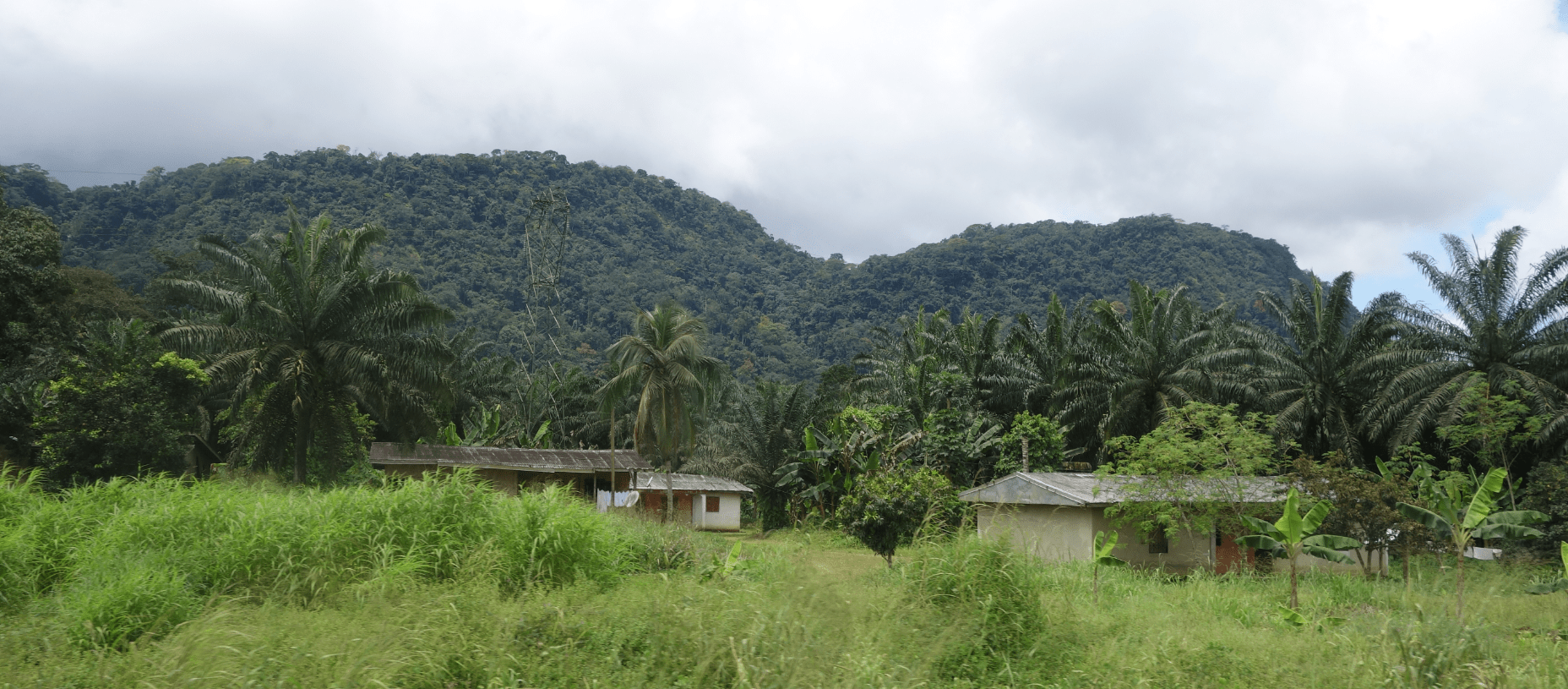
When I was in seventh grade, I remember being selected by several of my teachers to attend a conference at Portland State University on Africa: Past, Present, and Future. I remember running out of the principal’s office towards the outdoor common area, pumping my fists and thinking to myself “This is awesome!! I get to miss class on Friday for this!”
Several days later, sitting at a wooden desk in a dimly lit classroom at PSU, listening to men and women my parents’ age network and exchange business cards, I kept to myself, preferring to make sure my pencil was still sharp and flip through my notebook. I momentarily glanced up at the backlit woman standing at the podium in front of the classroom, and observed her as she greeted attendees. She was short, no more than five foot two, in her mid-forties, with straight blond hair. She looked up, smiled, and waving at a colleague across the room before turning back to her computer and furrowing her brow as she and made last minute adjustments to her notes. The small talk suddenly died down, the doors at the back of the classroom swung shut, and the woman launched into her presentation:
“Good morning everyone, thank you for being here today! I want to kick off our hour together by asking you a quick question:
What is Lesotho?
Is Lesotho a type of food prepared by the Massai tribe in Kenya, consisting of braised beef, rice, and steamed vegetables? Is Lesotho it a small, densely populated country which is completely surrounded by South Africa? Or is Lesotho a communal dance practiced in rural Namibia during an annual male initiation ceremony?”
After pondering the question for a couple seconds, I decided to go with the food option, which got my young adolescent mind wondering what would be served for lunch that afternoon. Probably some traditional African food from Ethiopia or someplace, catered by a local restaurant… Suddenly, I was snapped back to attention by a shout from the front of the room:
“Lesotho is in fact a country! How many of you guessed correctly?”
I don’t recall how many people raised their hands, or honestly anything else from the rest of that day. The only thing I remember is the thought that hit me at that moment, an idea that burned into my conscience at thirteen years of age in that classroom:
“Lesotho is an African country… and I never knew about it until today. What else is out there just waiting for me to learn about it?”

Meeting with the Bagyeli tribe to discuss the effects of modernization on their traditional way of life
– – – – –
I haven’t thought about that moment or that conference in years, but it occurred to me the other day as I was journaling at my homestay on the coast of Cameroon that, in many ways, the idea that took root in that moment was one of the major reasons I felt the need to come to Cameroon. I’ve become addicted to learning, to uncovering the unknown, and to expanding my image of reality 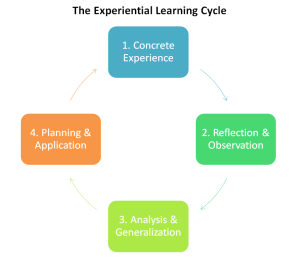 by experiencing the world from different perspectives. One of the things that attracted me to SIT for study abroad was the fact that all their programs are centered around the experiential learning cycle (see the diagram on the right), so at every step of the program we’re constantly encouraged to reflect and analyze our experiences, identify key insights, and then apply them to future experiences. As a result, many of our classes turn into field trips: One day our French class will consist of going to the beach and striking up a conversation with local fishermen on their daily routines. The next day, our Social Pluralism and Minorities class will spend the day visiting groups of autochthonous Cameroonians struggling to adapt their traditional forest-dwelling way of life to a new age of modernity. After that, we’ll meet with a local NGO leader to debrief the experience and discuss key takeaways from the visit, before going to visit a local development organization striving to address women’s issues in a comprehensive manner, targeting education for at-risk children, HIV and AIDS prevention sessions for prostitutes, and professional training for women to dye cotton garments and earn an income.

Our french teacher, Thomas, talking to Haley as we head down to the beach to talk with local fishermen for class
In addition to the experiential learning we use in the classroom, we use the same process to experience, analyze, and learn from everyday life in Cameroon. Thus far, I’ve spent two weeks living with an upper class host family in the capital city of Yaounde and two weeks with a lower-middle class host family in the coastal town of Kribi, and they have been incredible teachers in their own right! I speak only in French with my host families, I’ve learned to wash my clothes by hand, and in Kribi I learned to live without running water by using a well behind the house, taking bucket showers and using a squat toilet. Even for upper class Cameroonians, washing machines are extravagant luxuries as opposed to basic necessities. I’ve learned what it means to live life around personal relationships as opposed to time, stopping to have in-depth conversations with strangers about their hopes and dreams for Cameroon and Africa in general on my way to run errands at the supermarket. I’ve learned firsthand how Cameroonians strike a delicate balance between ethnic diversity and national unity in a country with over 240 ethnic groups and 280 different languages. I’ve dug into Cameroonian history with local experts and learned how to understand popular sentiments towards France, China, the US, and neighboring countries such as Nigeria and Equatorial Guinea. And I’ve had long discussions with my American peers about how we can take this experience back home and educate people on the realities of development aid and westernization here in Cameroon. All of these experiences have expanded my concept of reality, challenged what I believe about the world, and advanced my understanding of what my personal role in the world is, and what role everyone in the US and around the world has to play in creating a more fair, just world through political and economic reform.
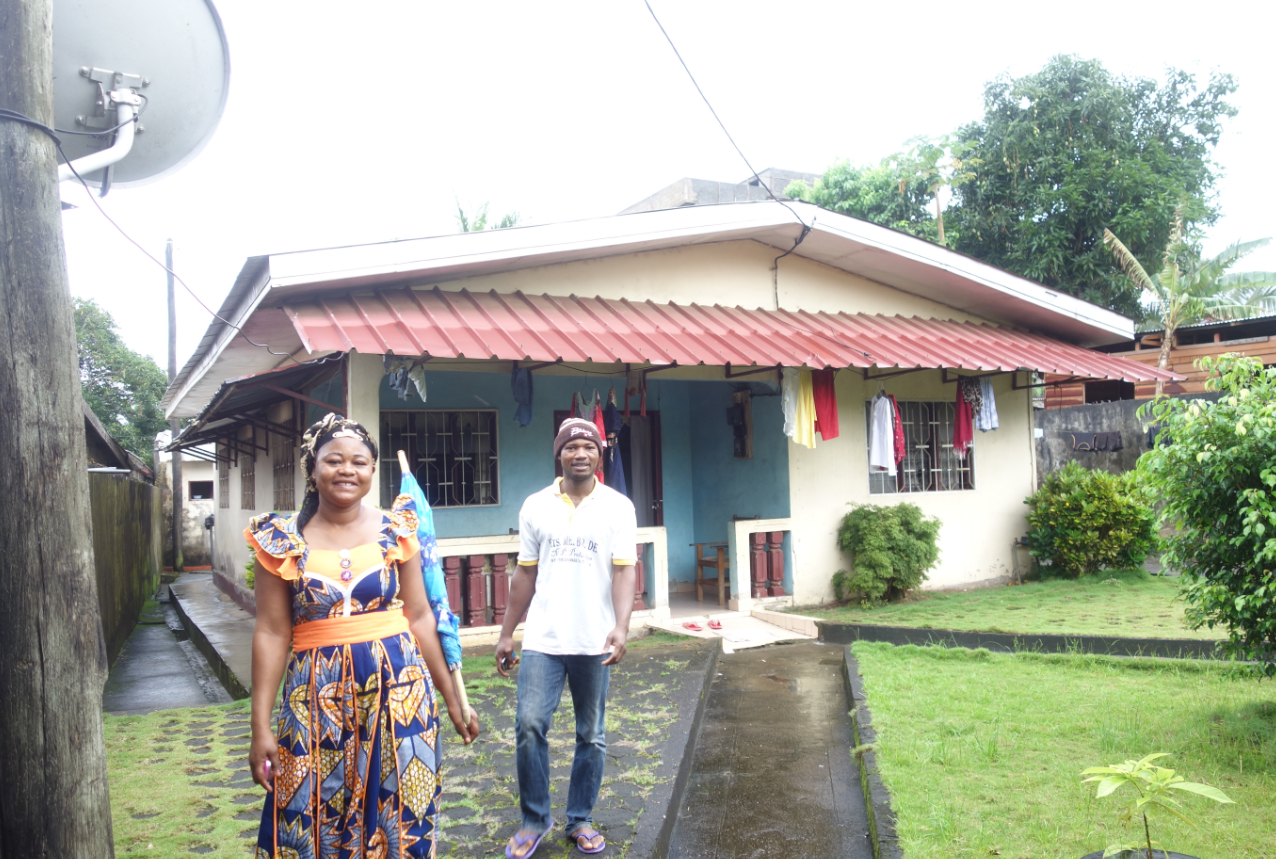
My host family in Kribi (Mama Julie and her brother Salomon)
Starting with my personal role, I’ve realized that, although I will not be able to “fix” neo-colonialism on my own or single-handedly replace the current paradigm of big business with social entrepreneurship and social innovation, I CAN use my career to work with other passionate, dedicated individuals on behalf of the millions of people excluded from our modern political and economic systems. Jesuit education often cites the importance of pairing charity with justice to achieve social change, and in my mind, justice can only be served by working towards more inclusive, flexible social structures that grant everyone the chance to live a healthy, fulfilling life. Not pursuing justice for the millions of African youth currently unemployed, underemployed, or idle as a result of neo-colonialism, the hundreds of thousands of innocent refugees escaping violent conflict in Africa, the Middle East, and Latin America, or the chronically homeless men, women, and children back in Portland, Oregon would be fatal to my sense of integrity, because they are not solely responsible for their state of affairs. The social structures that surround them never gave them a fair shot to succeed. I can’t change it all on my own… but I need to do my part, and that’s why I need to find a career that works to create social change, rather than one that feeds into the status quo. And I know I’m not the only one that feels this way. I’ve talked to hundreds of students and young professionals from all over the US who want to use their careers to solve social problems and create more inclusive social structures, and ultimately they are the reason I feel confident enough to maintain this blog. Nine such students are here with me on this trip, dozens are back with me at Gonzaga University, and hundreds from all over the world stood in unity with me at the AshokaU Exchange in Washington DC and the Net Impact Conference in Minneapolis, Minnesota this past year. I firmly believe that it only takes a few passionate people working together to prime the gears of change, and I want to use my voice to encourage like-minded people to join me in making a living and changing the world. For resources on how to make this possible, check out the Resources page of my website or email me directly for individualized advice on how to turn your passion for social change into a career!

Asking questions with my peers at the Bagyeli site visit
For anyone reading this who is already established in a career or is retired, we need your help too! I know that working for a big company is often most people’s only option to put food on the table and provide for their families, and even if someone believes the system they are a part of is taking advantage of them or other people, chances are they won’t feel like they are in a position to change it, especially if it means potentially putting their job at risk. If this is you, I have a different challenge for you: Are you willing to acknowledge that you still have a critical part to play in the process of systemic reform? If not, this might not be the right blog for you… but if so, congratulations! You are part of a community of millions of hard working Americans willing to throw their support behind substantial efforts to fight the unfair, unjust status quo (e.g. income inequality, the lobbying power of big business, and the role of big money in politics), and I want to encourage you in your efforts too. Change is possible, but only if we all work together and BELIEVE it’s possible. If a few passionate people dedicating their careers to creating more fair and just social systems (like my colleagues I described above) can prime the gears of change, support from people like you is the fuel we need to get these gears turning!
Your role is straight-forward, but by no means easy: To eradicate the biggest threat to justice and equality of our day and age… the deceptively subtle feeling of apathy. Apathy is the insidious feeling that convinces people that it takes too much effort to try and go against the status quo, and that the best thing to do is just kick back and enjoy the ebb and flow of popular opinion. How do we fight apathy? By using three readily accessible weapons:
- Information: The first weapon is to stay informed on current events by accessing the information at your fingertips! Watch the PBS NewsHour on TV or online, read BBC News (their smartphone app is excellent), read non-fiction books on current issues, and cross-reference different sources of media to understand the root causes of these events.
- Community: Get together with other people in your social circle (a group of friends, neighbors, family members, religious community members, co-workers) and schedule regular times to meet as a “Social Awareness Group” to discuss the current political, economic and social events you’ve been reading about. Commit at the outset to create a safe space where all ideas and perspectives are respected, and where the goal is to create a dialogue about what is happening and what is being done to address it, not just a time to lament how terrible the world is becoming.
- New Experiences: Go together with members of your “Social Awareness Group” and seek to interact with change agents in your community and see the world from different perspectives. Volunteer with a local nonprofit and speak to beneficiaries, attend guest lectures at local colleges and universities, watch performances and documentaries with political messages, and debrief each experience in your “Social Awareness Group”, making sure to discuss potential action items in addition to lessons learned.
With these three weapons, you can eradicate apathy in your own life and inspire others to do the same. By engaging with critical social topics in this way, you will come across passionate people pursuing systemic change fulltime, and you can play your part by supporting them with your time, expertise, money, or simply by spreading the word about their work! Whether you’re 8 or 81, rich or poor, a single mom or an empty nester, you can employ these three weapons in your own life and become a positive change agent in your community. All it takes is acknowledging the need for systemic change, exposing yourself to social issues and passionate change agents, and believing in the value of your support.

– – – – –
Thanks for visiting aarondanowski.com! Be sure to stay up to date on my travels by clicking on the “Following” button on the right hand side of your page!
Leave you comments below, and if you would like to contact me directly, please do so via email: adanowski@zagmail.gonzaga.edu


 Aaron Danowski
Thanks for these posts, Aaron. I’m glad you’re getting so much out of your experiences so far.
At work I’ve run into a few folks who speak Pular — from Guinea, basically– and more folks — mostly from Tanzania — who speak Swahili. I love Swahili, it sounds so smooth and refined that it beats out Zulu as my favourite indigenous African language.
LikeLike
Hey Aaron – Sorry it took me so long to read this. I truly enjoy reading these blogs. I remember last spring, talking over lunch and saying, in one year, you would have seen and experienced things you’d never even imagined… and you are doing it! And I am so looking forward to your return and our next lunch when I will pepper you with a thousand questions and can’t wait to listen to all the answers.
In the meantime, please keep writing and letting us know what you are experiencing and learning. Sending love, Julie
LikeLike